| |
| Post Contender: Lon Bender on Drive's Sound Design |
|
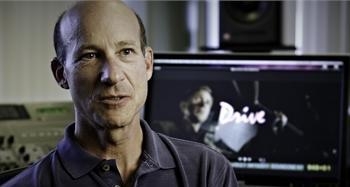 When veteran sound designer Lon Bender of Soundelux (www.soundelux.com), Los Angeles, teamed up with colleague Victor Ennis and director Nicolas Winding Refn to build the sonic portions of the movie "Drive," they thought, at first, their work would focus on the typical, time-honored art of enhancing spectacular cinematic car chases. But the film subsequently earned acting and director award nominations at festivals and won Best Director for Refn at the Cannes Film Festival, illustrating filmmaker claims that the movie's strength is not so much the "wow" nature of its car chase sequences, but rather, the personal and psychological nature of the piece. When veteran sound designer Lon Bender of Soundelux (www.soundelux.com), Los Angeles, teamed up with colleague Victor Ennis and director Nicolas Winding Refn to build the sonic portions of the movie "Drive," they thought, at first, their work would focus on the typical, time-honored art of enhancing spectacular cinematic car chases. But the film subsequently earned acting and director award nominations at festivals and won Best Director for Refn at the Cannes Film Festival, illustrating filmmaker claims that the movie's strength is not so much the "wow" nature of its car chase sequences, but rather, the personal and psychological nature of the piece.
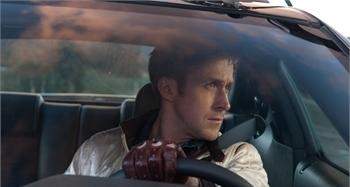
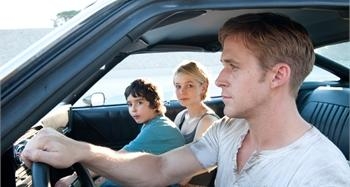
According to Bender, (pictured, above) this was the area where sound design most directly supported the story. In the picture, he explains, the Driver character (Ryan Gosling) and his vehicle are essentially one and the same, and sound design reflects that. What we hear in the film is pretty much from the Driver's POV only, depending on what is going on in his head at any given moment.
"The movie isn't about the car chases," Bender said during a recent conversation with Post Contenders. "It's about the car being part of the character, so our mission was to sonically create mood in the car — the way it interacts with the world, the way the driver interacts with the world while driving or being chased. The goal was to go into his personality. In the opening of the movie, for example, he's in a car with several hundred horsepower and a special engine, and no one can catch him. And yet, when thieves leap into his car after robbing a warehouse, you expect him to floor it. But exactly the opposite happens. Our director compared him to a fish swimming in dangerous waters, where the police cars are the sharks. He doesn't go at high speed, but rather creeps along, stealthily and silently dodging his pursuers. The specific sounds you hear are from the POV of a person who is hiding, and the sound of the car was used to tell the story of Driver's personality. He's in his own world in his car, and this was one of the most interesting aspects of the film."
Bender, who won an Academy Award in 1996 for "Braveheart" and had another nomination in 2007 for "Blood Diamond," is effusive in explaining how he and Ennis were able to work much in the style of a picture editor, alongside their director all the way — experimenting, fixing, changing, and evolving sounds for the picture with Refn's input, using Avid Pro Tools 9. Ironically, Bender, though a longtime industry veteran, did not start personally using electronic editing platforms until about six years ago. In that time, for his own work, as well as for the industry, he feels a massive technical earthquake has shaken new creative possibilities onto the landscape.
 "I only came back into the world of editing design and mixing in the last five or six years," he explains. "Therefore, I skipped many (technology advances) and most Pro Tools (versions). I only got into it when (Pro Tools) was already fairly powerful. Now, I can play all these tracks together, and split them into groups, such as dialogue and music coming from the film editor's OMF tracks, and sound effects, sound design, backgrounds, and Foley. I can bring each group up on VCA tracks, so I can see them all together on the Control 24 console that I am currently using. I can fine-tune and enhance the tracks prepared by my editorial crew before presenting the material to the director or editor, so that they can get a sense of what the final tracks will be." "I only came back into the world of editing design and mixing in the last five or six years," he explains. "Therefore, I skipped many (technology advances) and most Pro Tools (versions). I only got into it when (Pro Tools) was already fairly powerful. Now, I can play all these tracks together, and split them into groups, such as dialogue and music coming from the film editor's OMF tracks, and sound effects, sound design, backgrounds, and Foley. I can bring each group up on VCA tracks, so I can see them all together on the Control 24 console that I am currently using. I can fine-tune and enhance the tracks prepared by my editorial crew before presenting the material to the director or editor, so that they can get a sense of what the final tracks will be."
Bender's point is that working this way he can be more creative than ever before — a benefit that really paid off on "Drive." He says Pro Tools, over the last few years, has intrinsically informed every aspect of his approach to sound design, because it lets him design sounds far closer to the final version, and far closer to his true intention, far earlier in the process.
To accomplish this, Bender conducts a single, massive session for the entire movie, dubbed the Super Session, in which he imports and uses virtually every element created and tweaked for the show — dialogue, Foley, backgrounds, effects, everything. The Super Session taxes Pro Tools 9 and all of its 192 available voices to the limit, but Bender says its more than worth it in order to be able to organically create "relationships of one (element) to the next in advance of our mix."
The Super Session evolves in the intimate setting of Bender's editing room, working directly alongside the filmmaker. In the case of "Drive," this permitted him to build a detailed template to be used in the final mixing session — a process handled near the end of the project at Sound One in New York by mixers Rob Fernandez and Dave Patterson.
 "These are large sessions where everything is playing, and everything is close to how I want it and how the director wants it to sound," Bender says. "We worked on the Super Session with Nick every day for more than a week. Then, the mixers were free to take it up a step with details and reverbs and clarity, and creating space and time. Their focus can be on the mix, rather than first auditioning a bunch of sound effects, which is a legacy way of working. The (old) structure of starting the mix with a bunch of individual tracks, a bunch of stereo tracks, some LCRs, and some quads and 5.1s — that is not the way to go anymore in terms of what is going to get to the console. Standardizing 'X' number of 5.1s, or even 7.1s now, leaves you in good shape." "These are large sessions where everything is playing, and everything is close to how I want it and how the director wants it to sound," Bender says. "We worked on the Super Session with Nick every day for more than a week. Then, the mixers were free to take it up a step with details and reverbs and clarity, and creating space and time. Their focus can be on the mix, rather than first auditioning a bunch of sound effects, which is a legacy way of working. The (old) structure of starting the mix with a bunch of individual tracks, a bunch of stereo tracks, some LCRs, and some quads and 5.1s — that is not the way to go anymore in terms of what is going to get to the console. Standardizing 'X' number of 5.1s, or even 7.1s now, leaves you in good shape."
Indeed, one of the newest industry trends that Bender is particularly excited about is 7.1 surround sound — an area of sonic growth he is currently working in for the first time with director Gary Ross on his upcoming film, "The Hunger Games." Bender believes that 7.1 is the next major step in the evolution of post sound release formats. He elaborated on the importance of this development during his recent conversation with Post Contenders. CLICK HERE to hear him discuss 7.1.
In any case, Bender says he is particularly proud of the intensely creative work he and his colleagues were able to do on "Drive." The ability to seamlessly use technology like Pro Tools 9 to enhance and streamline the creative process with out-of-the-box directors like Refn, he suggests, could potentially make sound design and its execution an even bigger player in the filmmaking process.
"In this movie, we were able to utilize sound to tell the story of the protagonist's emotion," he says. "Sound design is the art form that we use to bring to life the story the director wants to tell."
CLICK HERE to hear Post Contender's extended podcast interview with Lon Bender.
—By Michael Goldman
'Drive' Images – Richard Foreman. Courtesy of FilmDistrict and Bold Films and OddLot Entertainment. |
| |
 |
| |
| Post Contender: Joe Letteri |
| |
| 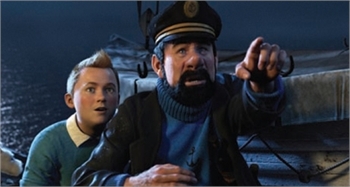 Weta Digital's renowned visual effects' supervisor, Joe Letteri, is no stranger to awards season certainly. The work he and his colleagues did recently to help Steve Spielberg insert performance capture into the stylized animated work "The Adventures of Tintin" is bound to get a serious look this year, even if the category might be difficult to define — animation or visual effects? Weta Digital's renowned visual effects' supervisor, Joe Letteri, is no stranger to awards season certainly. The work he and his colleagues did recently to help Steve Spielberg insert performance capture into the stylized animated work "The Adventures of Tintin" is bound to get a serious look this year, even if the category might be difficult to define — animation or visual effects?
In the upcoming January issue of Post magazine, writer Dan Restuccio takes a closer look at the work. In the piece, Letteri explains the origins of the film's performance capture techniques in Weta's earlier breakthroughs with "Lord of the Rings," "King Kong," and "Avatar." A series of important advances in realtime performance data capture and processing at Giant Studios is also discussed, along with interesting new spherical harmonic lighting techniques, and of course, how Spielberg incorporated performance capture into his preferred shooting style. Check out that article in the January issue of Post, and watch your inbox for more Post Contenders. |
| |
|
|
|
|