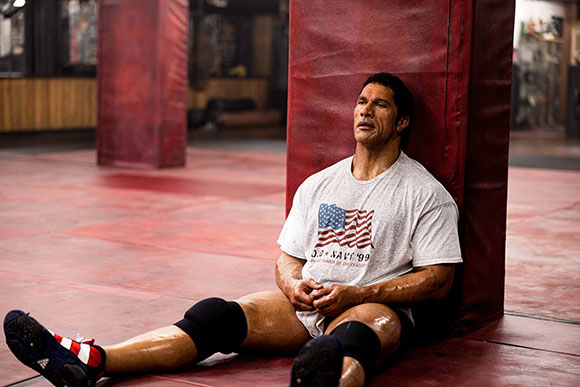
The Venice Film Festival Silver Lion winner, The Smashing Machine, from writer/director/editor Benny Safdie and starring Dwayne Johnson and Emily Blunt, spans VHS, 16mm, and 65mm IMAX formats, then was meticulously finished at Harbor to achieve a unique texture the team dubbed “25mm.”
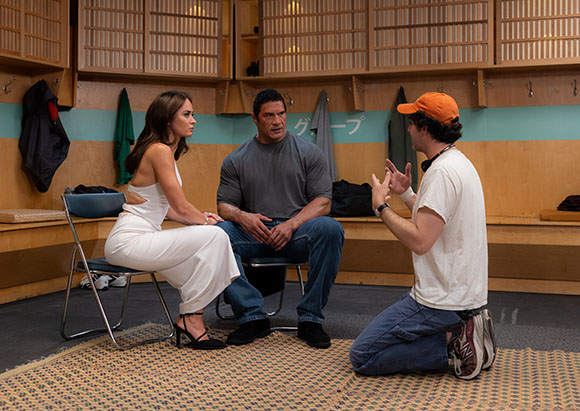
The Smashing Machine is a biographical sports drama, and its look development began in early 2023 in the Harbor (https://harborpicturecompany.com) kitchen. Safdie, cinematographer Maceo Bishop and Harbor colorist Damien Vandercruyssen were on break during the color grade for The Curse, Safdie’s A24 x HBO series starring Nathan Fielder and Emma Stone.
Rocky III happened to be playing on the television.
“Huh,” Safdie said. “This looks pretty good.”
The trio dissected what made the third Rocky film visually distinct from its predecessors.
“It has a vibe to it,” Safdie noted. He bookmarked the idea for later.
Now with the premiere of The Smashing Machine, Safdie realized that vision with a unique sports biopic that, in his words, attempts to make viewers feel like “you’re accessing somebody else’s memories, and they become your own. That’s why the pacing is the way it is.”
Realism as a cinematic tenet
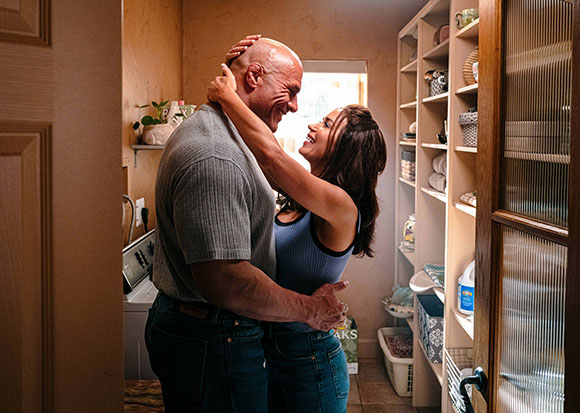
Safdie wanted realism inThe Smashing Machine, but he didn’t want to regurgitate the 2002 documentary of the same name (directed by John Hyams). Instead, he saw this film as being in conversation with that earlier work. Watching Hyams’ doc, Safdie noticed it didn’t really explore Mark’s relationship with his girlfriend Dawn (played in the new film by Emily Blunt), especially their home life. He saw that as rich, emotional territory worth examining with the same intensity and care as the fights.
He also believed there was more to say about the fights themselves. Safdie wanted to make them more cinematic, using music and editing to take the audience on a different kind of ride.
To achieve this, he and cinematographer Maceo Bishop committed to a unified cinematic language. The fights in the ring and the confrontations in the house were shot with the same visual grammar. The camera was always positioned outside, whether beyond the ropes or in the next room, observing from a hidden vantage point.
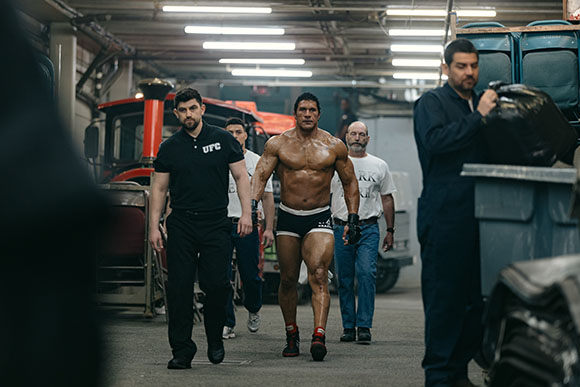
This meant that Maceo had to elbow through crowds of extras to reach the ring and set up long shots from adjacent rooms to capture Mark and Dawn’s arguments.
He and camera operator Matthew Tichenor also realized that if they switched positions, they could get double the coverage without double the setup.
“I’d take Matt’s shot and he’d take mine, which gave us a different perspective,” Maceo says. “Matt’s a different person, who’s feeling and seeing different things. You’d get a strange, fresh view of the character. Matt might start on Emily, then carry Dwayne, maybe catching the back of his head until he turns.”
In addition to concealed camera work, lighting posed a particular challenge inside the house. All lighting had to be practical, installed in ceilings or placed inside or outside windows. Benny notes that Maceo’s setup created a realistic but saturated and beautiful look that was both emotionally resonant and authentic.
This approach echoes their work on The Curse, where Safdie and Maceo committed to a consistent visual language.
“You can’t change the look of something just because it suits your needs better,” Safdie says. “So for the ending [of The Curse], if you’ve seen it, the style doesn’t change. If it did, you’d realize we were hiding something. We wanted it to feel real, so we made it look the same. That’s what we did here. The way we shot the fights in the ring was how we shot the fights in the house. Everything had the same language, which meant you knew where you were as an audience member, your position and point of view.”

Film stock & grain manipulation: The birth of 25mm
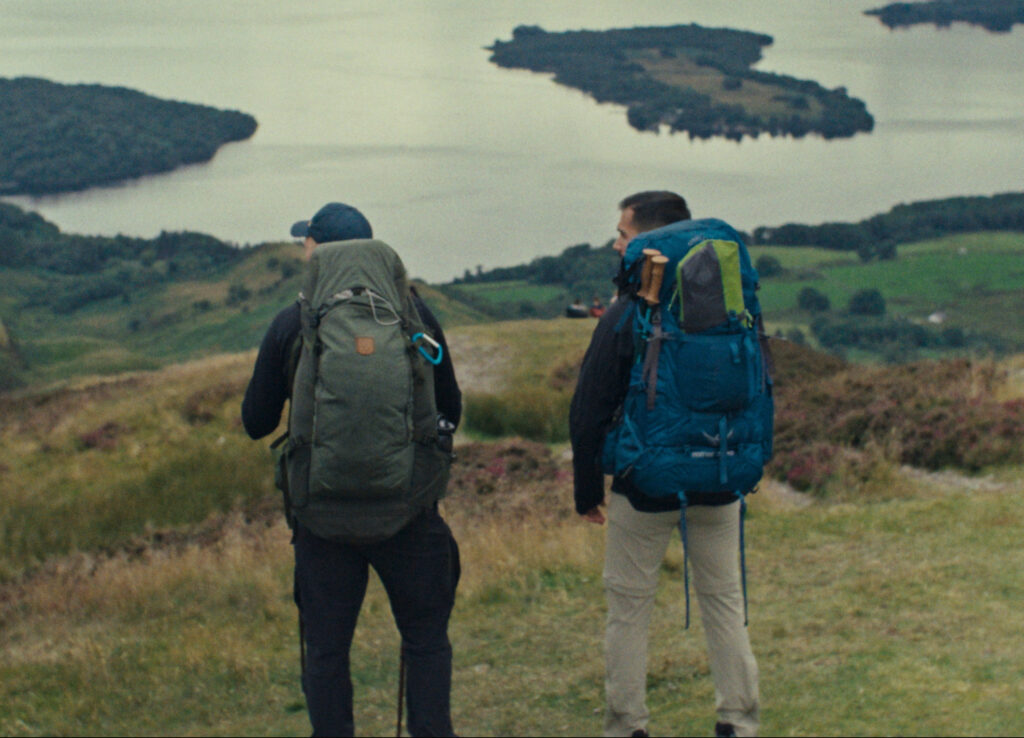
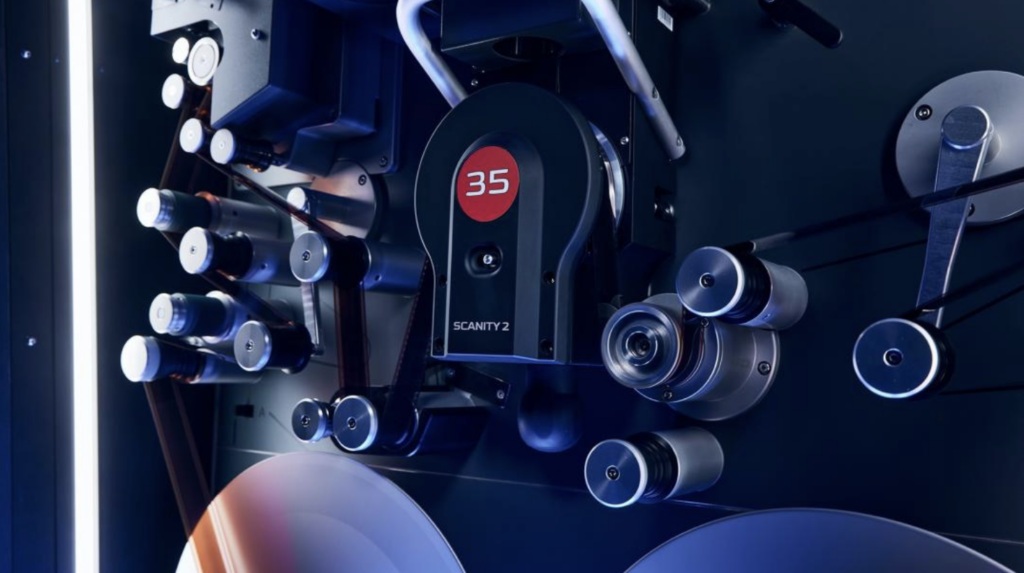
The look drew inspiration from 16mm documentaries like War Room and Sherman’s March, but scaled to IMAX. Tests revealed that scanning 16mm at 4K exaggerated grain harshly. Benny and Maceo realized the older docs achieved a smoother grain via optical blowups to 35mm and chemical adjustments (like reducing the development time).
Enter colorist Damien Vandercruyssen and VFX supervisor Sean Devereaux. Vandercruyssen used Baselight’s Neat Video plug-in to blend 90-percent degrained footage with 10-percent raw scans, preserving life in the image.
“We removed the 16mm chunky grain and added 35mm grain, which allowed us to maintain the energy and camera movement of 16mm but retain, and in some cases enhance, all the details,” Devereaux explains. “We spent months testing algorithms and toolsets to get this just right. The sharpness and clarity this process introduced is remarkable and looks even better on an IMAX screen.”
Devereaux, in close collaboration with Harbor lead finishing artist Chris Mackenzie, implemented a process where the computer learned the grain structure during scanning, enabling precise control. After degraining, they reapplied 35mm grain and scaled it up, creating a hybrid texture dubbed “25mm.”
“Locking down the degrain/regrain process was the most challenging (creatively and technically) across 900-plus VFX shots and wildly different exposures,” Devereaux notes.
“It’s a Frankenstein’s process,” Safdie adds, “but that’s why 25mm ended up being kind of perfect.”
Format blending & ‘A journey of resolution’
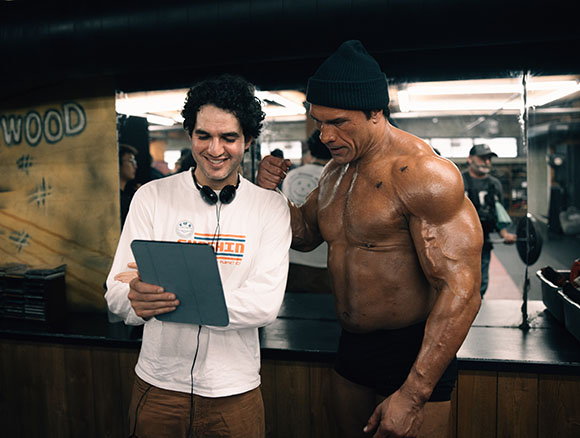
But 25mm wasn’t the only format. The team layered degrained/regrained 16mm prints between VHS footage and 65mm IMAX.
“It was a journey of resolution,” Safdie says. “Starting on YouTube — an evocative memory — into a hyper-detailed reality.”
That evolution set the tone for the entire process.
Safdie recalls the VHS challenge: “The VHS work was the most fun to figure out. Our in-house compositor, Ryan Weiber, took footage shot on an old late-’90s broadcast HD camera and ran it through a real VHS player. We didn’t fake anything. The opening of the film really is VHS footage!”
Safdie adds context: “It was an exact representation of what VHS would look like at this size. It’s like playing Nintendo on a massive screen and having it be pixel-for-pixel exactly the same.”
Color work brought its own artistry. Vandercruyssen “pushed and pulled” the footage to enhance its ghostly quality and the way colors hit the tube —a process he calls “bleeding sat,” or bleeding saturation. Safdie and Bishop remember it fondly: “‘Bleeding sat’ and ‘push and pull’ became our guiding stars.”
Bishop ties it back to the film’s attitude: “We were rough with the film from the beginning. You [Safdie] were talking about the ’90s thing — there was something more rock’n’roll about MMA at that time. We embraced that in testing, and then with Damien’s color work, knocking it around a little bit, we said, let’s see what we can do.”
Memory, distance and reality
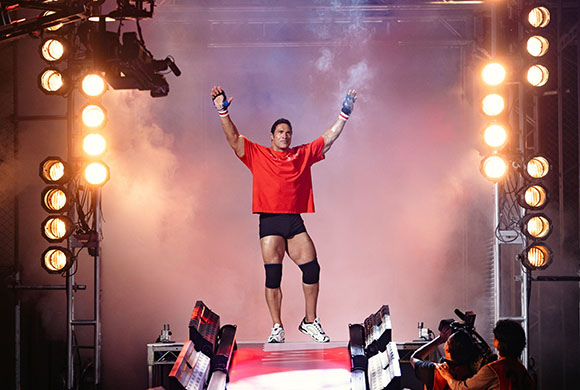
With The Smashing Machine, Benny Safdie mixes fact and feeling, distance and proximity, VHS, 16 mm, and 65 mm IMAX formats to offer a different kind of sports biopic. Deadline’s Damon Wise describes the film as a “Buddhist Raging Bull,” a review which tickled Safdie, and encapsulates the theory behind the journey.
The first seed of the look was planted in the Harbor kitchen, thanks to Rocky III. Three formats, several scans, some de-graining and regraining, pushing and pulling, and bleeding sat later, Safdie, Bishop and Vandercruyssen present The Smashing Machine in 25mm.