Netflix’s All the Empty Rooms is a 2025 documentary short from director Joshua Seftel that follows Steve Hartman and photographer Lou Bopp as they travel the United States to memorialize the bedrooms of children killed in school shootings. The project won the Best Documentary Short Film Oscar at the 98th Academy Awards back in March.
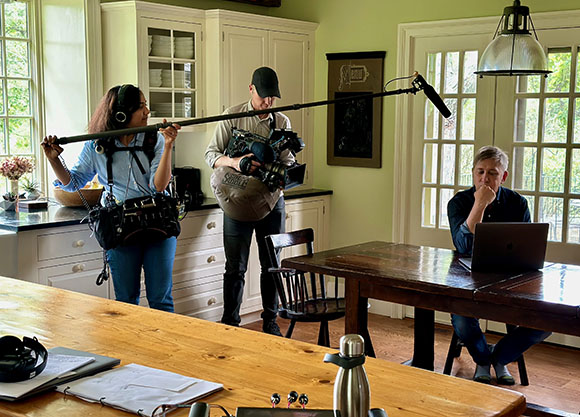
Matt Porwoll served as cinematographer on the short and says he came to work on All the Empty Rooms through a prior connection with Seftel, as the two had collaborated on previous documentary projects.
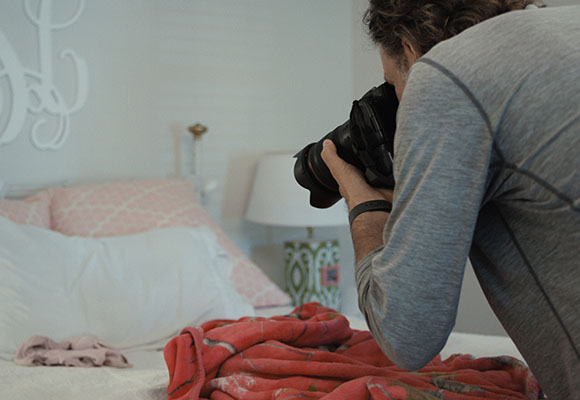
“When he approached me about this film, following Steve Hartman and photographer Lou Bopp as they documented the preserved bedrooms of children lost to school shootings, I was immediately moved by the story’s profound sensitivity and its quiet call for empathy and change,” he shares. “The project demanded an approach that prioritized trust and restraint above all else, and I knew my experience in cinema-style documentary work, especially in emotionally charged environments, aligned perfectly with what Joshua envisioned. From our first conversations, we were aligned on keeping the footprint minimal and the cinematography invisible, letting the spaces and the families’ stories speak for themselves without intrusion.”
Porwoll relied on a Canon C500 Mark II as his primary camera body, supplemented by the Canon C70 for its compact size in tighter situations.
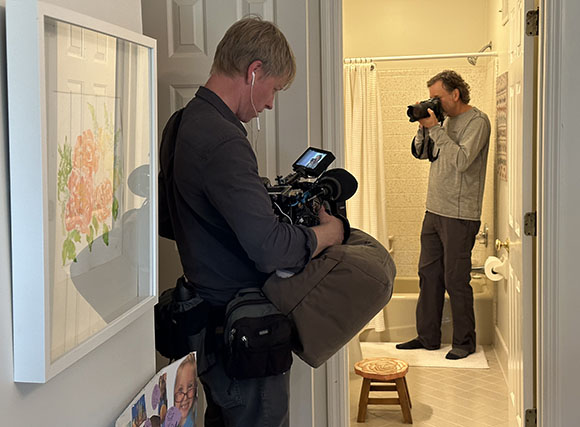
“We shot in DCI 4K Super 35 using Canon raw ST with Canon log 2 and Cinema Gamut, which gave us amazing latitude in post while delivering the reliable, natural color science I’ve come to trust from Canon, particularly its subtle warmth in skin tones and overall fidelity in challenging, available-light conditions.”
His lens package centered on the Angenieux EZ zoom series, paired occasionally with a Canon 70-200mm f/2.8 for longer framing.
“The zooms allowed me to remain agile and responsive without ever changing lenses or adding crew, preserving the intimacy and flow of each moment. Everything was handheld to mirror the exploratory, in-the-moment process of discovery, no gimbals, sliders, or tripods, so the camera could move as quietly and organically as we did.”
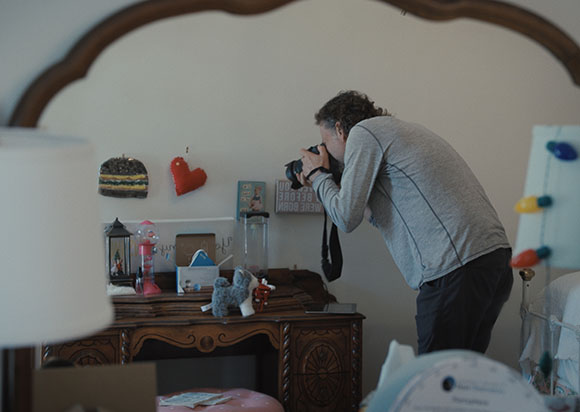
One scene that stayed with Porwoll follows Lou Bopp as he photographs Jackie Cazares’s room in Uvalde. The camera drifts slowly past her carefully-organized closet, clothes grouped by color, everything exactly as she left it.
“Even the smallest details speak volumes,” he notes. “Jackie’s handwritten name under her desk. The pink and purple lights that surround her room. All reminders of the person that made that space hers. The handheld movement is deliberate but unobtrusive, allowing the audience to feel the gentle search alongside Lou, absorbing the personality embedded in these untouched objects. Later, when we cut to the archival home video of Jackie excitedly preparing for a father-daughter dance and declaring she’ll marry ‘Dadda,’ the cinematic footage gives way to that brighter, vibrant past. The quiet intimacy we captured in the room makes the emotional weight of that joyful memory hit even harder, underscoring the unbearable absence without ever forcing the feeling.”