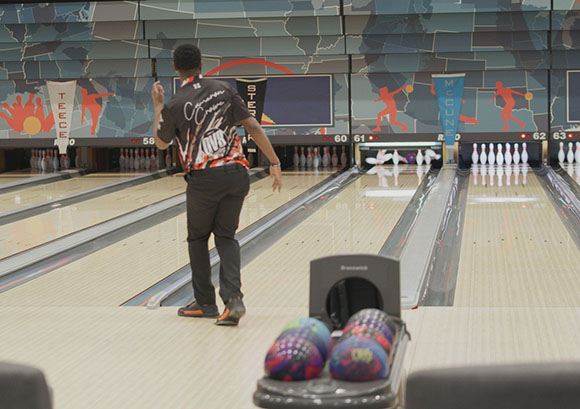
Born to Bowl is an HBO Original documentary series that takes viewers inside the colorful world of professional bowling. The five-part series chronicles five stars of the sport – Kyle Troup, Anthony Simonsen, EJ Tackett, Cameron Crowe and Jason Belmonte – as they chase much-needed prize money on the Professional Bowlers Association (PBA) Tour.
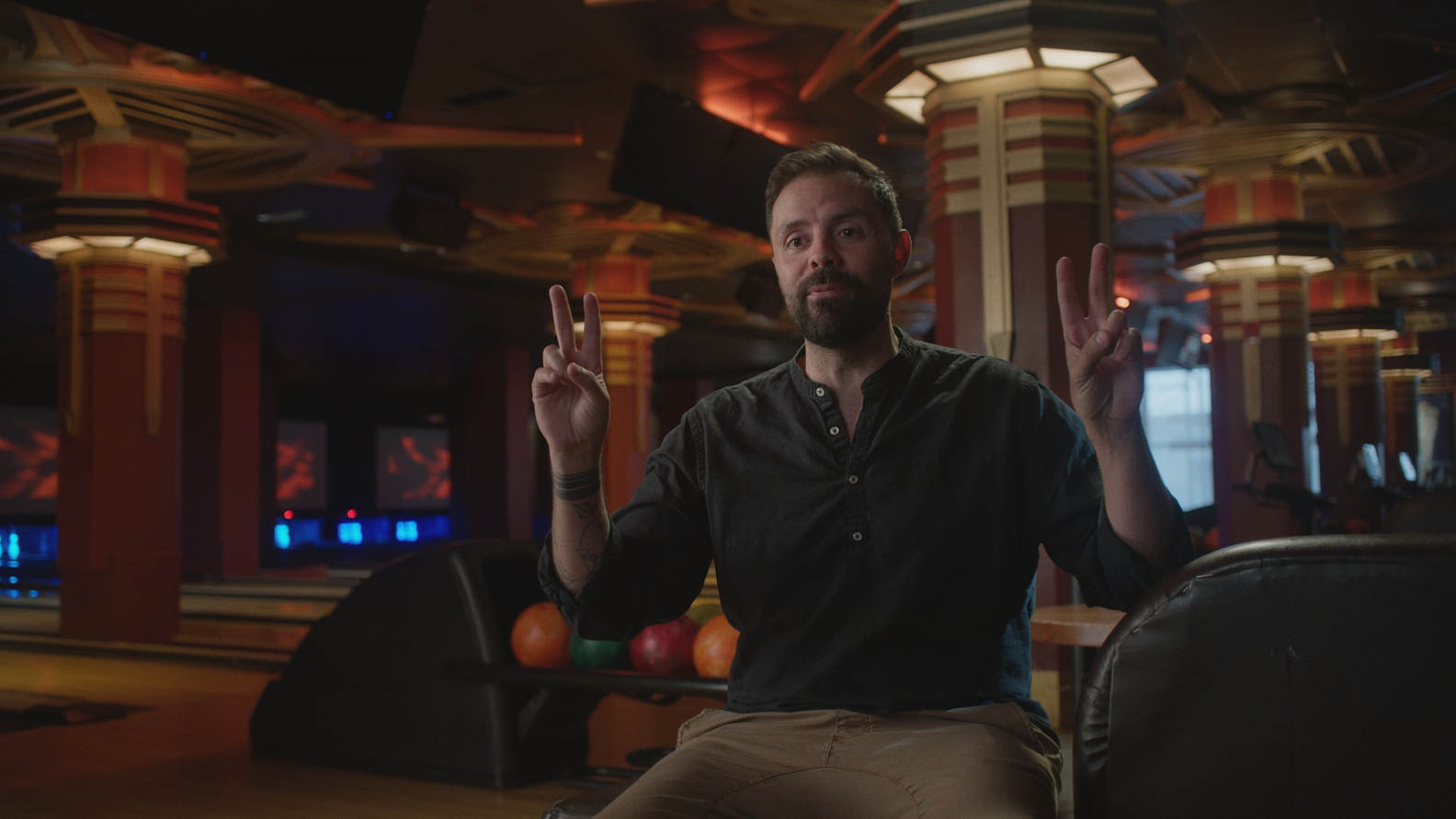
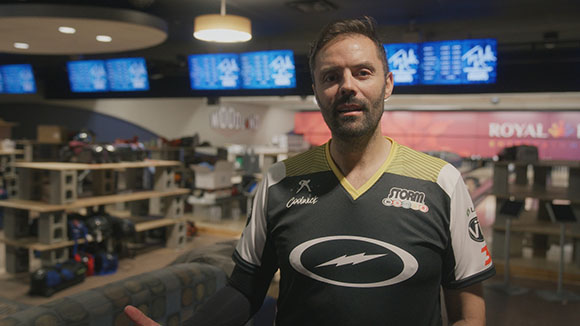
Born to Bowl was directed by James Lee Hernandez and Brian Lazarte, and is narrated by Liev Schreiber. Scott D. Hanson (pictured, right), ACE, edited the show and recently shared details with Post on how to series came together.

Scott, what was your vision for the show’s pacing and tone in the edit?
“When I joined the production, our directors, James Lee Hernandez and Brian Lazarte, already had a clear vision for a lighthearted, humorous tone. As editors, myself, Rick Milewski, Benedict Kasulis and Will Simpson worked to execute and build on that vision.
All the cutters, the story producers Jordan Bogdonavage and Amy Chaffin, and our assistant editor Corrine Pickett, all brought different ideas to the table. Brian and James know how helpful it is for everyone to have the freedom to try things. We took some swings that missed, but that trust led to some great moments that did get into the show.
“It’s a lot of fun to explore a niche sport within a subculture of America that many people may not be familiar with, and the key was to do it in a way that felt humorous while still being respectful. The tone was always rooted in celebrating these individuals — their quirks, their passion and the world they inhabit, without ever slipping into punching down for cheap laughs.”
How did you approach shaping character arcs across episodes through editing?
“We knew who our five main characters were for the season, and early on we considered structuring the show so each episode focused primarily on one person. In practice, that didn’t hold up — their stories overlap too much across the calendar of the tour.
“We ultimately landed with episodes weighted toward certain characters depending on what was happening to them at a given point in the season. For example, Kyle Troup’s run early in the season at the US Open — and the emotional turn at the end of qualifying — naturally positioned his story as the backbone of Episode 1.
“From there, we followed the season as it unfolded. When Jason Belmonte returned to Australia in the middle of the season, that became a natural centerpiece for an episode. We were constantly calibrating which stories to tell, and balancing the actual sequence of events with what would create the most cohesive and engaging arc across the season.”
Were there moments where the edit significantly changed the emotional impact of a scene from what was originally shot?
“Because everything was shot in a vérité, fly-on-the-wall style, there wasn’t much need to shift the emotional intent of a scene in the edit. The material largely stands on its own. A moment like Kyle’s qualifying at the US Open carries real weight on its own. In those cases, the best thing we could do as editors was to just get out of the way.
“Where we did more shaping was in finding humor. That often came through editorial choices — cutting to archival footage, pulling in a funny one-liner from an interview or juxtaposing moments in a way that commented on the action in an unexpected way. Those little moments helped add to the personality and tone of the show.”
What was the most challenging sequence to cut, and how did you solve it?
“One of the biggest was finding a way to incorporate the necessary exposition about the sport itself. Coming into the project, I underestimated how much strategy is involved in professional bowling — things like oil patterns, ball selection, lane conditions, travel and the overall grind of the tour. All of that context is important for the audience to fully appreciate what these athletes as characters are going through.
But we didn’t want to do a bland ‘Bowling 101’ exposition fest. Whenever the story gave us an opening, we looked for ways to step slightly outside the main narrative and explain oil patterns or ball reps in a fun way. The goal was always to add clarity without slowing the momentum of the cut.”
How did you handle rhythm and visual energy in the bowling sequences to keep them engaging?
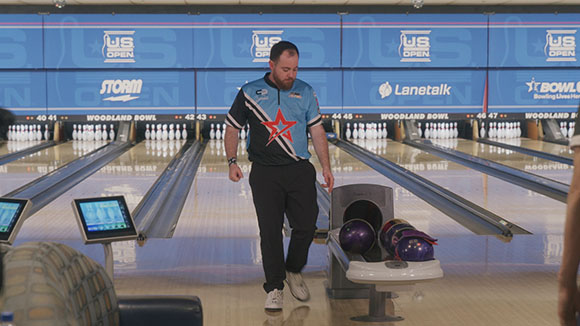
“One of the advantages on this documentary show is that the bowlers are working through very consistent, prescribed routines. And they do those routines over and over, which, from an editorial standpoint, starts to resemble a scripted environment, where you have multiple takes of the same action covered in different ways.
“In early qualifying rounds of a tournament, the only cameras are those of our production. And at most, we would have three cameras floating around the entire bowling center while everyone bowled. But thanks to the sheer volume of games and shots the bowlers take, our cameras can capture it from a range of perspectives — a wide shot, details on the hands or feet, close-ups of their eyes, the pins, or reactions from other players and the crowd. That coverage gave us the ability to approach the edit much like a scripted scene, building tension or emphasis through shot selection and timing. Once you get into the televised rounds, the broadcast coverage — with 10 cameras or more — naturally provides even greater flexibility to heighten a moment or stretch it for suspense.”
Can you talk about your collaboration with the directors, showrunners and the sound & music teams?
“James Lee Hernandez and Brian Lazarte both come from editorial backgrounds, and Brian is still actively cutting as one of the show’s editors. That made collaboration very straightforward — editors talking to editors. We all had a mix of backgrounds and instincts, but we were able to focus on the intent of the scene or bit of the story, rather than on the mechanics of putting something together. And, like on any project with multiple editors, I came away with some new tricks and tips.”
How much creative freedom did you have to experiment in the editing room?
“There was a lot of creative freedom, and the show really required it. Bowling, on its surface, can feel repetitive, and if you’re simply watching frames play out, it can be monotonous. Outside of key tournament moments, the show is less about scores or outcomes, and more about how each player is navigating the experience.
“The story had to come from the characters — their mindset, their frustrations, their ambitions and how they handle pressure in realtime. So, a big part of the experiments in cutting the show was finding ways to amplify their point of view in any given situation, whether it was making a cut in a tournament or dealing with a setback.
“Humor also required a bunch of trial and error to keep the show engaging and moving forward. Sometimes that wasn’t coming directly from the vérité footage itself, but from how we chose to juxtapose moments with archival material, like old bowling commercials, instructional videos or clips from bowling films. That was some of the most fun stuff to put together.”
Looking back, is there a scene or episode that you see as a highlight editorially?
“No single scene jumps out, but I’m especially drawn to Kyle Troup’s storyline, particularly in the first episode. I spent a decent amount of time on that episode, so it holds a certain place for me.
“More broadly, I’m proud of the moments where we were able to highlight the friendships and rivalries. Whether it’s Jesper and Kyle, Anthony and Cam, or EJ and his competitive dynamic with Belmo. After all, conflict does make for the best stuff in stories.”