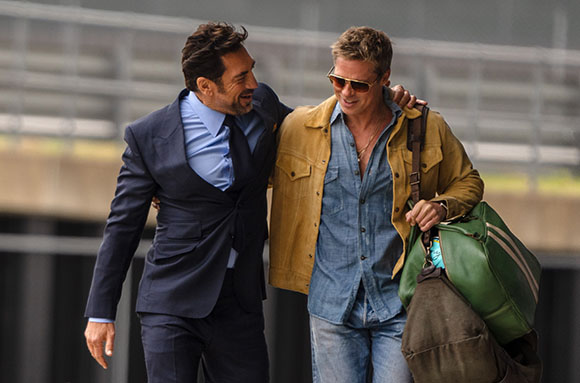
Oscar-winning re-recording mixers Juan Peralta and Gary Rizzo, CAS, faced a unique challenge in editing F1 The Movie: how to make audiences feel the speed, danger and precision of Formula One racing? In a behind-the-scenes video series with Avid, Peralta and Rizzo dissected their creative process behind the film, explaining how they used Avid Media Composer and Pro Tools to bring director Joseph Kosinski’s vision to life through collaboration, experimentation and authentic sound.
Gary Rizzo, CAS
“On F1, I was the re‑recording mixer with dialogue and music. We take the elements that each department has brought — whether it’s dialogue, music, or sound effects — and our job is to figure out which sounds, and how we need to play those sounds, to be most effective with the sound mix of any given scene within a film. Joe’s idea and scope was to make it so honest and so authentic that you believed you would be in the car with these drivers. Not only with the drivers, but with the crowds, teams, and crews — that it was an absolutely bulletproof, completely believable experience in the cinema.
“The hard part of this job is the overall arc. Does act one play correctly against act two? Does Act 2 have the shape and play correctly against Act 3? If every race was covered by music and sound effects and by the PA all the time, all these races would likely sound too similar. So, we learned pretty quickly that each race had to have its own signature.
“We have booms, lavs, comm mics. This team is on radio communication a lot in this movie. We have ADR, loop group recordings. We have this wonderful music that was brought to us by our music editors. Between all of the needledrops and all the songs, there were upwards of 500 some‑odd tracks coming in just for music. It becomes a job of track management.
“At some point, it is easy to make a film like this too loud. You can kind of tell when you’re overcompensating with sound. We’ve got a lot of spoken dialogue — some on camera, a lot off camera. We’ve got a lot of nuances to music, and we’ve got authentic cars that were meticulously recorded, chosen by Lewis Hamilton to be sure it was so authentic — it was an absolutely bulletproof track.
“Joe Kosinski is not afraid of us experimenting. Every department was on board with that experimentation. Nobody came in with the fixed mindset of ‘this is how it must be.’ No — we’re finding our way with this movie. And it was part of the beauty of the teamwork that we had. Everybody was communicating well. It was one of the greatest collaborations I’ve ever had.
“What I love about this job is that every day is a different puzzle. It’s a different challenge every day. You never really know what you’re going to run up against, and every puzzle has a unique solution. It is problem‑solving as much as painting, as much as a total feel, vibe, experience. It involves just the right amount of nerdy technology as it does with pure aesthetic. It’s this wonderful coming together of all the things I love that makes me want to come in to work every day.
“It has never really felt like work — it feels like fun pretty much every day, but especially on this job. As frightened as I was about the concept of Formula 1 when I got in, this job was joy. Joy because I was surrounded by great people, some true friends – filmmakers that I have grown with over the past 12 to 15 years. We put a lot of consideration and a lot of heart into this while having a lot of fun. One of the best experiences in my career so far.”
Juan Peralta, Skywalker Sound
Working with input from Sir Lewis Hamilton, Peralta ensured every rev, gear shift, and braking point was accurate down to the millisecond and delivered the kind of thrill that makes an audience grip their seat.
“What makes F1 exciting is that it is the peak of motorsport racing. It is the top of the top. One of the edicts we got from the producers of this movie was to try to make it as authentic as possible, but at the same time trying to explain it to people that maybe don’t know Formula 1 or don’t really have any kind of reference to racing in general. We also were making a fun movie — we want people to enjoy it and just be on for the ride.
“F1 was very helpful for us in getting us footage and sounds. Our editorial team here was in charge of categorizing and cataloging all of it. ‘Here are all the cars coming to this corner, this is the gears they’re in, this is how fast they were going, and this is where they’re braking.’ As long as we had all those recordings, we were able to create a palette of what we needed for that sequence.
“Al Nelson, our sound designer and sound supervisor on this show, his job was to try to find the right car sound from all those recordings we got from F1. One is going to be for Joshua and one’s going to be for Sunny. And then the question was: ‘How do we make it cinematic? How do we make it interesting? How do we make it big?’
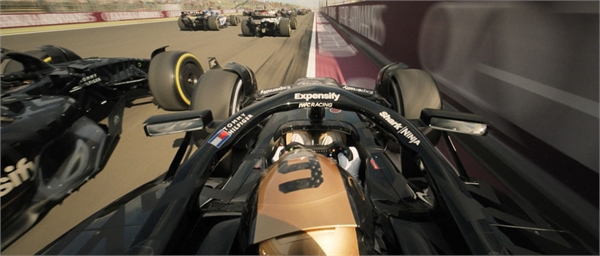
“We wanted to give every race its own character and its own vibe. A good example of this is in the Silverstone race at the very beginning of the movie. We drop into what would be Brad Pitt’s point of view. Once we do that, I treat that completely different. Now I’m going to try to put the audience in the perspective of sitting in that vehicle as it’s going close to 200 miles an hour cutting through traffic. That’s how I decided to make it slightly different. Once you’re on board, now we’re going to feel some low end — now you’re going to feel like your seat is shaking a little bit, and now you’re feeling like you’re in the car.
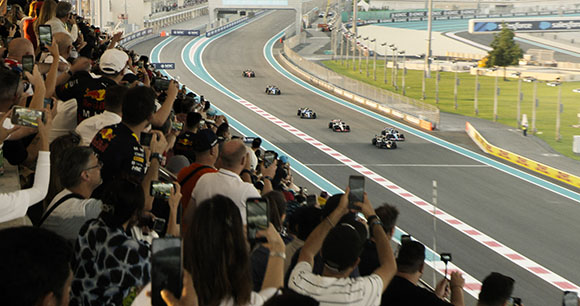
“The Silverstone sequence is Sunny’s first race back in Formula 1. This is the first time we’re actually getting a real taste of a Formula 1 race in this movie. Joe Kosinski, in his pursuit of creating a very authentic movie, wanted every race to sound slightly different. So, in this scene he basically said, ‘Let’s try this with no music whatsoever.’ So, in that case, I had to really make sure that the effects department is able to carry the scene with effects only. Thankfully we still have dialogue and PA, but we have to hold our own for the entirety of this race.
“Going into Silverstone with no music means I have a bigger palette to fill. I did more crowd work in that race than I would normally do in other races. So anytime the car is going through grandstands, you’re going to hear the crowd bloom up as the car goes by and then as it leaves that grandstand, you’re going to hear it die down until the next grandstand comes up. A lot of it was also a lot more downshifting and upshifting. You’re going to hear that more clearly in Silverstone than you would in other races. The one thing you’ll get at Silverstone is a way more detailed racing environment than you would in the other races since we’re making space for music and other things.
“Watching other people watch the movie is very satisfying because the reactions they have are all the things I was always thinking about while we were working on the film. I love storytelling. To me every movie is a challenge on how we can tell the story in the best way possible. How is sound going to accentuate all these emotions and all these different parts of the movie? Every movie I work on, I can’t wait to get started because I know it’s going to be different. The people are going to be different. The experience is going to be completely different. And then of course, how’s it going to sound in the theater? How are people going to respond? The great thing about Joe is that he’s not afraid to try things. He’s not afraid to go bigger, or to go louder. He’s one of those guys that is just all about the story and the emotion. Gary and I bring something to the table. Joe knows what he wants.”