It: Welcome to Derry brings the Stephen King franchise back to television, with a storyline that follows the events of the 1960s that lead up to the author’s first film.
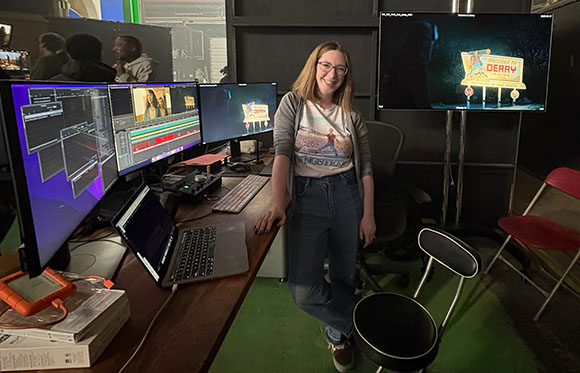
For editor Esther Sokolow, the series marked a reunion with co-creator Andy Muschietti, who trusted her to edit the first two episodes, among others, with the challenge of establishing a tone that ensures each scare is earned. Here, Esther shares insight into the process, as well as details on the tools that were essential to her work.
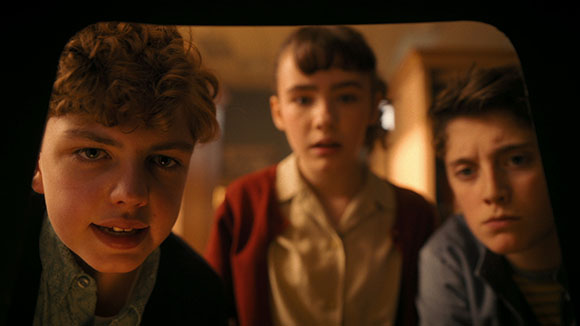
How did you approach the pacing and tone when you first signed on?
“One of the things I love most about the It films is that the horror grows out of the character connection first. The scares land because you care about the people in danger. When I first signed onto It: Welcome to Derry, it was important to me to honor the tonal language that Andy Muschietti and Jason Ballantine (editor on It and It: Chapter Two) had already established, especially the way they balance horror, humor and heart.
“In television, you also have the ability to stretch tension across longer emotional arcs. That changes how you build suspense entirely. You are not just building individual scares, you are managing how fear accumulates over time.
“A lot of the work became about knowing when to subvert expectations. If every scene is operating at a ten, the audience eventually gets numb. So Andy and I shaped episodes so that the quieter emotional beats carried as much weight as the larger scare pieces.
“Horror pacing is very visceral. Moving a cut just a few frames earlier or later can completely change whether a moment feels inevitable or surprising. We were constantly calibrating that rhythm.”
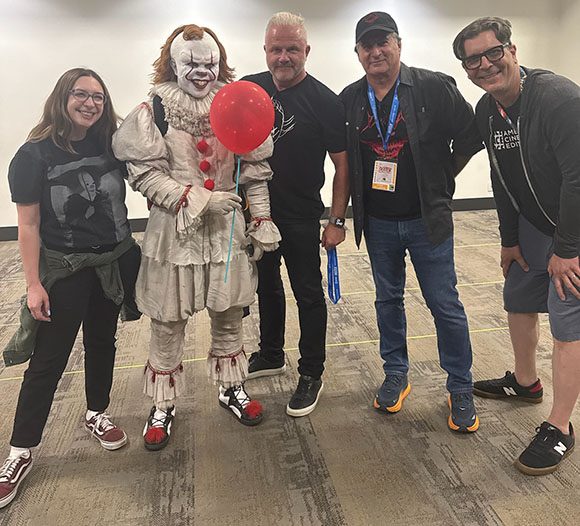
Tell us about your editing setup and workflow.
“I cut on Avid Media Composer 2024. It was a fairly traditional, shared-storage setup in Los Angeles, and I worked very closely with my assistant editor, Janie Gaddy Casey. Janie and I would review scenes together before showing them to Andy, looking for places to push performance, pressure or emotion further. Janie was an essential creative sounding board throughout the process.
“At times, the workflow became more nimble when I traveled to Toronto to cut on-set for complex sequences. I would bring consolidated media on a hard drive and cut alongside incoming video tap dailies. That allowed Andy and me to evaluate material in realtime while scenes were still being shot.”
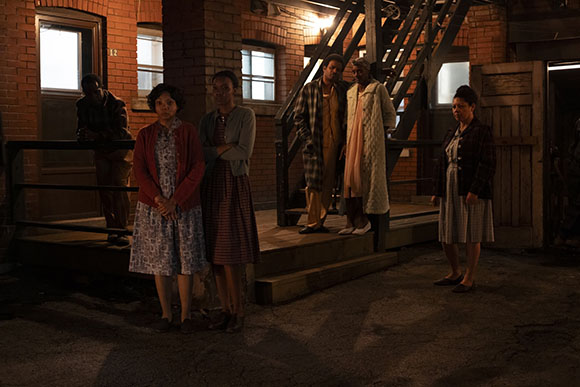
Did you use draw on any additional tools or plug-ins?
“Evercast was a major part of our process, especially when Andy was working remotely in post. It allowed us to stay in the same editorial rhythm despite distance and time zones.
“Some of the most memorable sessions were with our composer Benjamin Wallfisch, who would join remotely and improvise at the piano while we watched scenes. Those moments were invaluable. In horror, music is rhythm. Sometimes a single cue would reshape the timing of an entire sequence or reveal where we were landing too early.
“On the visual side, we used Sapphire and Boris Continuum plug-ins extensively for temp VFX. I like building sequences as fully as possible in the offline so everyone can feel the intended tone before final VFX are complete.”
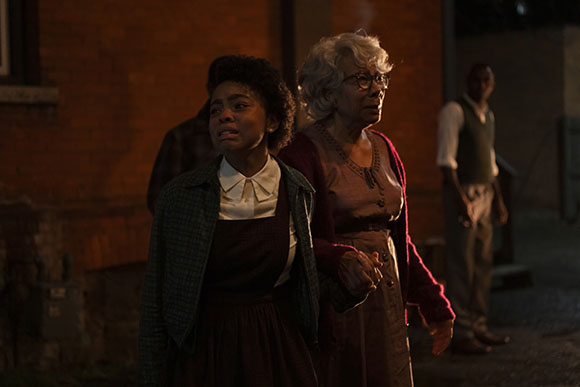
How were you able to leave Easter eggs through editing?
“Andy and I are always leaving small breadcrumbs that the audience may not immediately pick up on the first watch, but they might still subconsciously feel under the scene, or remember later once more information has been revealed.
“In the barracks during Leroy’s attack sequence, I cut that sequence very intentionally to give us key details about Leroy. Though the audience doesn’t know it yet, Leroy has had an injury in war that has damaged his fear receptors. When the masked assailant cocks the gun and points it at Leroy’s face, we go into an extreme close-up on the gun, make the gun cock sound deafening, but then in the first cut to Leroy, he is unflinching. You immediately get the sense that he is someone who is capable of withstanding enormous pressure.
“Then, there is a moment where we subtly orient the audience toward Dick Hallorann in the background of the chaos. We had already met him earlier in the episode, but here, we begin to suggest that, from Leroy’s perspective, this man might not be exactly as he seems. It is never stated outright, but through Leroy’s reaction, the framing and a shift in the sound design, you start to register Leroy picking up on something unusual about Hallorann that exists outside of the immediate logic of the moment.
“A few episodes later, that pays off when Leroy tells Hallorann he felt him digging through his brain. The edit is doing a quiet bit of work there, planting the seed of that unease just enough that it stays in the audience’s memory without them fully realizing why.”
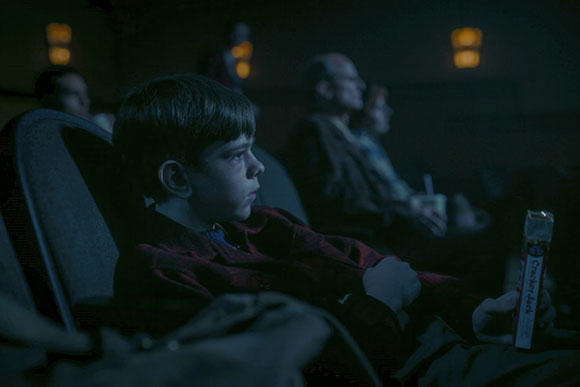
Sound plays an important role in shaping the tone and scares. What are some of your favorite sound and music moments?
“Sound was absolutely essential to building the show’s tension. My assistant editor Janie Gaddy Casey and I spent a huge amount of time shaping the sound design while editing, even before our sound designers Brandon Jones and David Butler came in to build it out further.
“’The Station Wagon’ cold open of the pilot was especially fun because of the contrast between the ratcheting anxiety against the sing-song quality of the music playing on the radio. There is something deeply unsettling about cheerful or nostalgic music continuing underneath escalating terror. We loved leaning into that juxtaposition heavily in post.
“That sequence also had sonic challenges that required careful dialing in, when the family is chanting ‘O-U-T’ in the car, and Matty is frantically trying to escape. Because of scheduling realities, we were not always filming every piece of the scene together with the full group of actors, so the sound bed was critical to preserve emotional continuity and momentum. We spent a lot of time shaping the cadence of the kids and parents spelling out ‘O-U-T,’ making sure it retained rhythmic energy while still feeling grounded and organic.
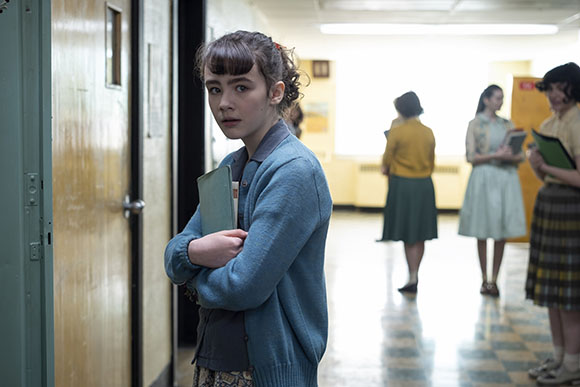
“Also in Episode 1, when we first meet Lilly and she walks down the hallway to her locker, we hear the rhythmic booms of lockers slamming shut and the growing voices whispering thoughts about her. It is the audience’s first time meeting Lilly, but that moment sonically tells us so much about her. You know she feels judged, she feels like people think she is crazy and does not belong. Her ability to trust her instincts is faltering, and she is trying to push past that discomfort and tell herself everything is in her head. That becomes a major part of her emotional arc, and sound helps establish that right at the start of meeting her.”
Scares are a crucial part of the It franchise. How do you approach editing those to keep the audience on their toes?
“For me, the key to a good scare is unpredictability. Audiences are fluent now in anticipating horror, so if a sequence feels too mechanically constructed, people can sense where a scare is coming before it happens. A lot of the work becomes about disrupting rhythm. Sometimes that means holding longer than expected, sometimes cutting earlier than feels comfortable, sometimes removing a scare entirely and letting the audience’s imagination do the work instead.
“I also think the best horror sequences rarely operate on only one emotional frequency. If you can make the audience laugh, relax or emotionally connect right before a scare lands, they become much more vulnerable. Andy is especially brilliant at that tonal balancing act. Some of my favorite moments in the show are scenes that are funny and uncomfortable at the same time.”
Can you walk us through one or two challenging sequences, or sequences you liked to edit the most?
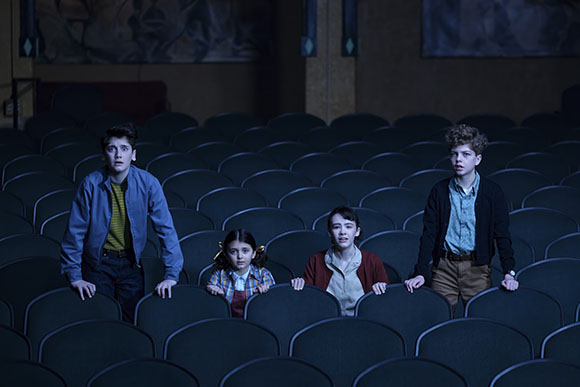
“One of the most challenging and rewarding sequences to shape was the Capitol Theater massacre at the end of Episode 1. Originally, some of the aftermath was going to be revealed later, but once we started building the pilot, it became clear the audience needed to experience the massacre alongside Lilly in realtime. Ending Episode 1 there makes the horror feel immediate and inescapable.
“Andy, Barbara Muschietti, and I spent a great deal of time talking about how to preserve the feeling that Pennywise is emotionally toying with the characters before he attacks physically. A big part of the editorial approach became treating Pennywise almost like a predator playing with his food. We spent a lot of time refining what the audience does and does not know at any given moment. Lilly is trapped inside the horror unfolding in front of her, while Ronnie is isolated in the projection booth, trying to understand what is happening without seeing the full picture. Intercutting between those perspectives also let us stretch the sequence in unsettling ways.
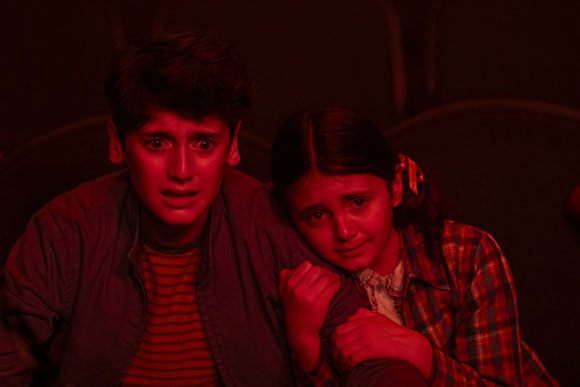
“There were also a lot of technical and collaborative layers involved. We worked closely with the VFX department to integrate the kids into The Music Man footage playing inside the theater, and Andy and I spent a lot of time calibrating the rhythm of the attacks and reveals. One moment I especially loved shaping was the beat with the two girls hiding beneath the seats. We intentionally elongated the beat so it feels like they might actually escape. Giving the audience that brief sense of hope before pulling it away feels very true to Pennywise’s nature.”