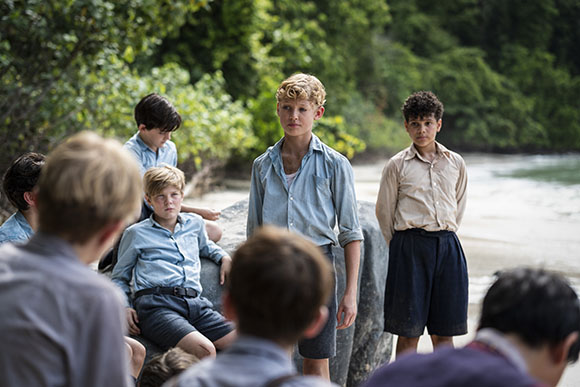
Netflix’s Lord of the Flies is based on the 1954 William Golding novel and follows a group of schoolboys that find themselves stranded on a tropical island following a deadly plane crash. The series began streaming on May 4th. Ande Schurr served as production sound mixer on the project and recently shared details with Post.
Lord of the Flies was shot in remote jungle and ocean locations in Langkawi under brutal conditions. What was the biggest sound challenge you faced day to day on-set?
“The biggest sound challenge was never one thing, it was the constant logistics of staying ahead of the moving parts. The cast was spread across hiking paths, winding trails, sometimes back at a base camp halfway up a hill, sometimes all the way down at the shoreline. In the bush. Just finding everyone could take real effort. Tides came in, weather rolled through, gear was under threat of being washed over or rained out.
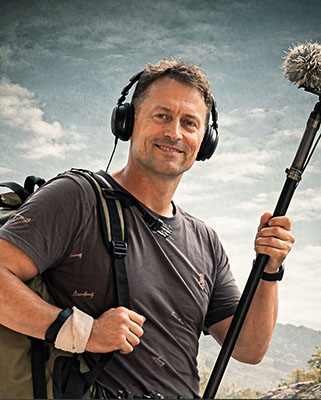
“There were three of us – myself, boom operator Adytio Santoso and sound assistant Reza Feryanto – and we’d split three ways: one on-set; one with costume and makeup, keeping a finger on the pulse of which actor was about to be ready and needed to be mic’d; and one protecting the rig. You don’t pre-rig everyone. What’s the point before they’ve got costume on? Each mic placement has to be tailored to that specific costume.
“And the real challenge was the costume itself. The boys spend the series stranded on a tropical island in 85 percent humidity, so naturally, they take their shirts off. You’ve already lost the option of booming everything – the surf is too loud, the boom magnifies the environment. The job becomes finding a place for the microphone where there isn’t one. A sound mixer’s job is separation, just like the DOP’s job is separation of faces from backgrounds. We worked closely with costume to find pockets, hidden corners, anywhere we could rig a DPA. A position that worked beautifully when an actor was standing was useless the next take when they were sitting. So we had a handful of spares ready, carefully prepared and selected for the different scenarios that might come up.”
You often woke before dawn to record the jungle bird chorus. Why was it so important to capture authentic ambient sound for this series?
“A lot of films are made in environments where immersion isn’t possible. Shoot a Bollywood feature in India and almost everything is ADR, and the performance can still be incredible. That’s not a knock. But on Lord of the Flies we had something rare: the chance to capture a total ambient world that the boys themselves were responding to. The sun, the crashing waves, the storms in the distance, the dawn chorus, the conch – that was the sonic environment they were performing inside. Their performances came partly from it.
“When you’re given that opportunity, you take it. I’d head out before dawn with the Ambeo and find a spot where the quiet night would break into vocal dawn. It totally belongs. Post doesn’t have to recreate anything from scratch, they have the real thing, in the right key, in the right air. The bird the boys actually heard is the bird the audience eventually hears. That continuity is real.”
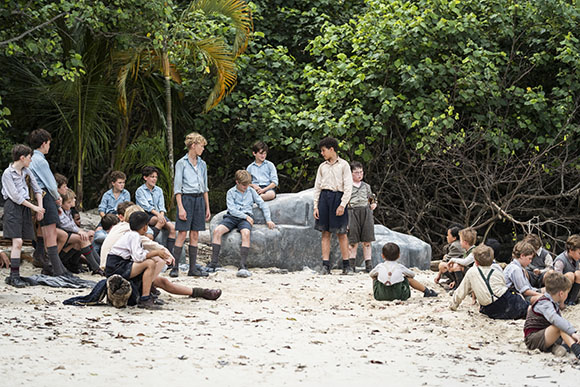
Director Marc Munden reportedly used some of your bird recordings live on set to help cue the young actors. How did sound become part of the directing process during filming?
“It worked because Marc has a total love of sound. These boys are young, mostly first-time actors, and any chance to deepen them into the world is worth taking. My feedback loop became, when I found something special on a dawn recce, I’d send Marc a recording over WhatsApp. If it was unusual enough, he’d ask for it on-set.
“The clearest example was the scene where Simon, played by Ike Talbut, approaches the boar’s head on its stick. We had captured a bird call earlier with a unique, musical quality. Marc played it back live, just before the take. Ike’s a real actor, so you don’t see him visibly respond. He’s already in the moment, but the call became one more layer carrying him there. Sound became something useful to the scene.”
You left ambisonic microphones overnight on some of the islands and captured unexpected ambient recordings that made it into the final show. What were some of the most memorable sounds you discovered?
“For overnight captures I’d often use the Zoom H3-VR, a more budget ambisonic recorder than the Sennheiser Ambeo, but in genuinely immersive environments, the difference is small enough that it didn’t matter. It also meant I could leave a mic close to the lapping waves without worrying. Large memory card, long record, set and forget.
“The most memorable capture was rain on the mangroves. After an overnight storm, the trees stay loaded with water for hours, and that slow, deep plop, plop of drops falling into wet mud went on long after the rain itself had stopped. Often where we left the mic, we had the ocean on one side and dense forest on the other, two completely different ecosystems in a single recording. Nothing in between.
“Then there were the dogs. On the Langkawi mainland, I’d often head out before five in the morning with the Ambeo, looking to record wild tracks of the dawn chorus, and that’s when I’d come across packs of wild island dogs, six to 12 at a time, moving together. One wrong step and you can say goodbye to your ambient recording. The whole take would be barking for the next 20 minutes.
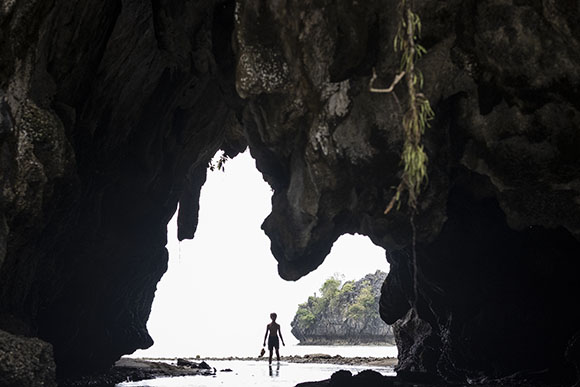
“The other one was Dedap Cave. We left the rig inside overnight, and Reza found us a position. I asked him twice, ‘Are you absolutely sure the water doesn’t rise to this level?’ He went back, checked again, told me it was the only place it could go. I trusted him, and we left it. What we got back the next morning was extraordinary. The hollow echo of the cave with the sea roaring faintly through one entrance, the laughing birds who sheltered inside, and the gentler mangrove sounds breathing on the other. You can only put a mic in the right place and then you let the night do its work.
“One memorable surprise was the call to prayer from the Malaysian mainland. It travelled clean across the water and threaded itself through hours of overnight recording. Langkawi sits only about 30 kilometres off the Kedah coast, and at night, with a cool, still surface, sound skims along the water for miles. The conditions that made the recording beautiful were exactly what made distant mosques audible from across the strait. I searched through the file carefully and found the gaps that were usable – thankfully enough clean material. A reminder of how close to civilization we still are, visually, in the middle of the jungle, and how the right conditions can carry it right to you.”
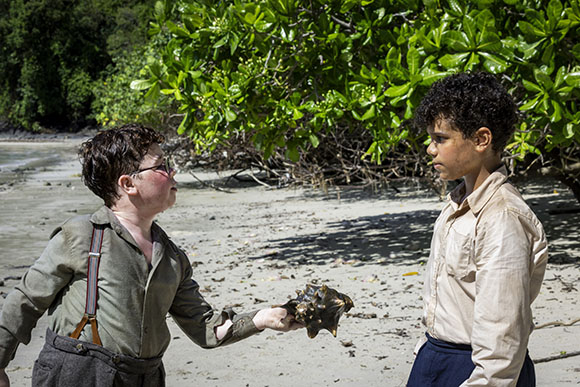
One of your favorite moments is Piggy holding the conch shell and naturally creating that ‘ocean inside the shell’ resonance. Why did that moment stand out to you as a sound mixer?
“It was a tender scene to begin with. Piggy is at his wits’ end, the fire has spread, the little ones are scattered in the forest, and there’s nothing left to do. He grabs the conch, the symbol of calling people together, and after a couple of failed attempts, he manages to blow it. He’s risen, in a moment of tragedy, to reach through and pull the group back.
“And then, at the very end of that, you hear his breath inside the shell, and that faint ocean resonance. The take would have been complete without it. But that small additional layer pushed the moment into another dimension. It stood out for me as a mixer because it looks like a happy accident, and in some ways it was. But it’s also what a careful rig is set up to catch when it happens. The reward of preparing carefully and then staying out of the way.”
The waterfall scene sounds incredibly difficult technically, especially with the noise levels drowning out communication on-set. How were you able to preserve clear dialogue in that environment?
“Step 1: tick the technical boxes before the creative ones. DPA 6061s went on every speaking actor with the splash kit, IP58-rated, so no matter how wide the shot or how fast the camera moved, we were covered. Wisycom MCR54 receivers in the Sound Devices 833 recorder, with the SL2 mount connected to Betso Sharkie active antennas, gave me the range to cut through. Eliminate every variable you can before you try to solve the real problem.
“Step 2: get to the location alive, gear up the mountain, dry on arrival, in good spirits.
“Step 3: shot selection. My boom op, Adyt, is getting me not just the scene, but also slate and AD instructions, so I always know what’s going on. Then I’m watching Marc and the DOP, Mark Wolf, like a hawk. If they look happy with a single wide take, there’s a moment where I have to speak up. If I don’t, that’s on me, and it’s not really me who needs the coverage, it’s the edit. No one denies you what you need when you actually need it.
“Step 4: rehearsals. I record every one and label them clearly. They’re rehearsals, they stop and start, they’re rough, but I’m getting clean audio where I can, and good performances often show up there. Then once we’re rolling on the actual takes, I’m tagging the moments that aren’t working, an actor brushing against their mic, a costume issue, an angle creating noise. By the time we shoot, we know what we need.
“Then it’s constant interplay. The boom operator can step in, we can quietly cheat the actors’ positions a fraction, we can suggest a tight on a specific line. Nothing produces the result on its own, it’s the accumulation, the same wavelength with director and DOP, chipping away at the problem.”
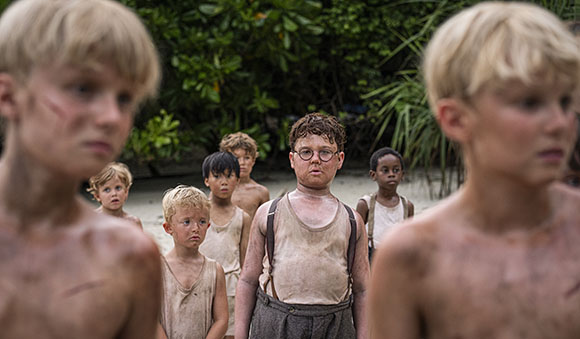
A lot of the boys’ chants, arguments, and group scenes were apparently captured live, on-location. Why was it important to preserve that raw production sound rather than recreate it later in post?
“The work audio post can do these days is extraordinary, with depth, perspective, frequency response and full sonic reconstruction when it’s needed. Production and post both play vital roles, and they aren’t in competition. But on a shoot like Lord of the Flies, we had a rare chance to capture everything in the moment, on this location, with these kids. When that happens, the recording carries something unmistakably real. It’s very authentic.
“The way I think about it (is), imagine you’re writing a heartfelt letter, and you use AI to draft something perfectly polished. Then imagine the scribbled, slightly rough version the person actually meant to send. Both get the same message across. But the polished version can draw attention to itself. Its very perfection can stand between the reader and the meaning. The rougher one disappears into the feeling it’s trying to convey.
“Lord of the Flies is a story about kids on an island, shot on film, adapted from a book from a different period of time. There are already hurdles in front of an audience’s belief. The chants, arguments and group panic captured live with those kids in that environment give the audience something they don’t have to work to accept. It just is.”
You’ve worked on projects like Monkey Man and Hunt for the Wilderpeople. How did Lord of the Flies compare in terms of physical demands and creative challenges?
“Lord of the Flies was another level, the most demanding job I’ve done, and the most satisfying in proportion. Every project before it prepared me without my realizing. On Wilderpeople we had the New Zealand bush, the cold and wind of the Mount Ruapehu foothills, and chase sequences with Sam Neill and Julian Dennison moving through difficult terrain. That teaches you to hold the point of focus while everything around you is moving.
“Monkey Man was different. 360-degree gimbal fight choreography that taught me everything about trusting your wireless. Modern radio mics are virtually invisible on the smallest actor, and the range on a Wisycom MTP61 transmitter, paired with a Betso Sharkie, is the real game-changer. The Sharkie is a compact, wideband UHF LPDA active antenna, directional and light enough to carry on my bag rig around my waist. Although it makes me look like a penguin! You can stand well back and trust the capture, even when the whole set is moving. The onboard recording on the transmitter is your safety net if anything cuts out. By the time I got to Lord of the Flies, those instincts were second nature.
“Where Lord of the Flies asked for more was the sustained physicality. Multiple islands, jungle, ocean, kids, weather, cast and crew of that scale, over an almost four-month shoot. There’s no single hard moment. It’s the duration of difficulty that’s the test. The 1st AD, Ben Rogers, an ultra-marathon athlete, told me at the start he was treating the whole shoot like an ultra-marathon: protein bars, gear, sleep patterns, meals, the lot. The whole approach calibrated for an expenditure of energy and effort sustained over months. I totally understood what he was getting at and prepared myself in a similar way of morning body warmups, careful gear protection, sun care and of course, alignment with my team, because we only arrive at the destination together.”
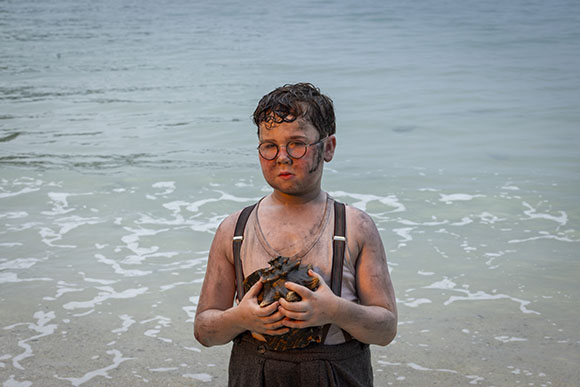
After audiences watch the series, what are the sound details or moments you hope they feel emotionally — even if they don’t consciously notice them?
“I hope they hear the conch, Piggy’s breath inside the shell, the small ocean that’s been waiting there the whole time. I hope they hear the richness of the water and the forest, the two ecosystems pressing in from either side of the island. I hope they hear the clarity of the boys’ voices in the middle of a screaming, alive natural world. The fact that you can understand every word said by a child in the middle of all that is, on its own, a kind of intimacy.
“Emotionally, I hope they feel the tenderness. The soft whispers in the moment Ralph is dragging an injured Piggy to safety. That’s the moment sound stops being about realism and starts being about care. If audiences walk away holding that moment in their chest, sound did its job.”