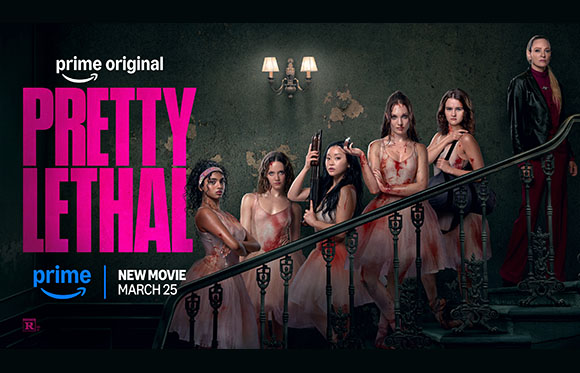
Pretty Lethal is a new Amazon Prime action/thriller about five ballerinas who find themselves in a fight for their lives when they seek shelter at a mysterious roadside inn run by a former ballet prodigy. The film premiered at SXSW before receiving wider release on Amazon Prime Video.
Directed by Vicky Jewson, Pretty Lethal was edit by Richard Smither (pictured), who was challenged with balancing both tone and pacing in order to deliver its rollercoaster ride of emotions.

Here, he shares insight into his work on the film, which stars Iris Apatow, Lana Condor, Millicent Simmonds, Avantika, Maddie Ziegler and Uma Thurman.
Richard, how did you approach the pacing and tone for Pretty Lethal when you first signed on?
“My main goal when pacing an action film is to have the audience feel like they are moving forward at an exhilarating rate, and then ending with the desire to rewatch the film immediately. It should feel like a well-designed rollercoaster. I learned a lot about action film pacing from comparing the theatrical and director’s cut of Aliens. I love both versions, but the theatrical cut was streamlined to keep me exactly in the right place till the end, and that’s my goal when editing.
“Pacing is also really linked to structure and making sure each scene flows from the previous one. If you have scenes or even too many lines that aren’t needed, they risk dropping the energy level of the film and weakening the audience’s immersion. For example, we worked hard to create a B story for Devora that complemented the action scenes of the ballerinas. The mix of mystery and action keeps you engaged, and then we could combine both storylines into a unifying ending.
“Tonally, the film has many strong and potentially competing elements, and it’s really about using all the tools at my disposal to either enhance, reduce, or change the tone of each one so that the whole film feels balanced. That could be favoring certain performances, or using temp music, etc. For example, I could add darker music to a more comedic performance to ensure some level of threat was communicated to the audience.”
Tell us about your editing setup and workflow.
“We started editing in August 2024 with both Lincoln (my assistant) and me working remotely on Avid Media Composer at home. Rushes would upload from the shoot in Budapest overnight, and then Lincoln would make my Avid scene bins and distribute the rushes. Due to the number of fight scenes we had and high expectations, I spent quite a bit of money on some quality sound effects. Lincoln would often do a pass on the sound, and then I would adjust my edit and do a second sound pass. The big bar fight was quite demanding sonically, but really fun to create.
“We had the film down to about 93 minutes by Christmas and screened the director’s cut just after the New Year. We then had producer notes and screenings until April, when the film was locked and finished. Amazon bought it later that year, and we then had a further three weeks of notes, mainly speeding up the opening and making a few other tweaks elsewhere.”
Beyond your Avid NLE, what additional tools or plug-ins did you rely on?
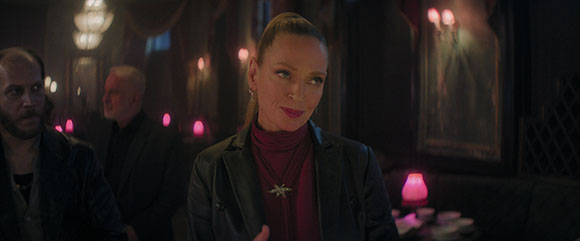
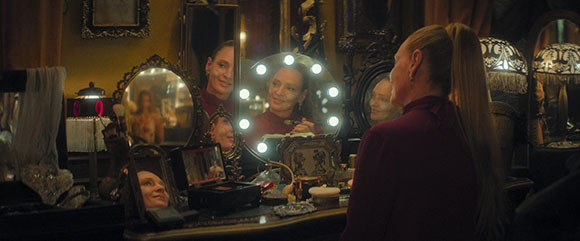
“We used Adobe Photoshop to help create a cool new sequence in the film. We needed to flesh out some of Devora’s backstory and decided to create a moment where she stared at a photo of a younger version of herself in the bar. I had found some old photographs of Uma modelling in a ballet costume, which partly inspired the idea. We took head shots of Uma in her earliest work and, using Photoshop, merged them with a ballerina alone in her dressing room. This worked well enough to convince the producers the idea would work and ended up in the final film.”
Can you talk about how you used transitions, title card, opening credits, and other elements to maintain the flow and leave Easter eggs?
“Vicky and I love to put in cool transitions into her films. One idea I pitched was when Devora dropped the bullet through the camera that turned into Ms. Thorna’s passport falling onto the fire. I worked closely with Rupert Whitaker, who shot the bullet and the following fire scene, to make it work, and it was very satisfying to see it work in the film.
“Transitions like that are like magic tricks, and I think they lift the audience. I used to rent The Highlander a lot as a child, and it has some of the most fun transitions I can remember. The opening credits were created by footage shot by Rupert Whitaker of a ballerina preparing their kit mixed in with some alternative shots Vicky had shot for the opening dance scene. I particularly love the shot of the ballerina spinning and seeing the muscles defined on her back. Strength and elegance in one image. Vicky thought we could intercut this footage with the main titles and then kick off the film with a classic song to get the audience onside immediately.
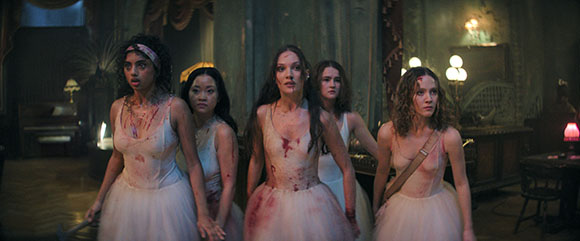
“The main title card placement was an idea I had when putting together the first assembly for director Vicky Jewson. We had this fun shot of Devora closing the inn doors into the camera, and it screamed out for a cut to black. I also felt the film had reached a turning point and had become an action/survival movie. A break here allowed us some time to take in the death of Ms. Thorna and get excited about what would happen to the ballerinas now trapped in the inn. Creating things like titles and transitions that aren’t in the script is a fun part of editing and helps enhance the story and enjoyment for the audience.”
Sound and music play an important role in Pretty Lethal. What are some of your favorite sound and musical moments? “Sound and music were great tools we could use to build tension and pacing in the film. I really enjoyed dropping the music out at the beginning of the basement fight and letting the sound effects have their moment. We were very lucky to have Oscar-winning Glenn Freemantle and his team do the sound on the film, and they did a brilliant job. The decision was partly inspired by the cave troll sequence in Fellowship of the Ring. It’s important to remember how you felt as an audience member and be able to use it when editing your own movies. We could then bring music back halfway through the fight, and it would feel fresh and maximize the potential to land the climax with a bang.
“I also temp-tracked the film with a wide range of music, which was demanded by all the eclectic tones and characters in the film. The first music I added was from The Hateful Eight for Devora. This implied her threat and scheming nature. The soft bells also hinted at her childhood and worked nicely with her music box. Action scenes had a variety of sources, from Logan to the Bourne films. For quite a while, we used “Suspiria” for the mythology surrounding Devora, but that theme was reduced in the edit, and it was eventually removed.”
Fight sequences and ballet scenes both require their own rhythm. How do you approach editing those?
“There are some obvious similarities, but they provided quite different challenges in this film. Convincing the audience that an actress is a professional ballerina is a formidable challenge, and our dance choreographer, Will Tuckett, did a brilliant job. Maddie Ziegler is a world-class dancer, and she became my anchor when cutting. Lana Condor also had some ballet experience and that was helpful too. The key was to include the authentic moments of the actors and then intercut them with real ballerinas.
“The final dance sequence was all shot in a day by Vicky and the cast, which was a real achievement. Editing was quite a challenge, as we didn’t have previs to work from, and the choreography was quite demanding for actors. The music used on the day wasn’t the music Vicky wanted for the film, so I had a look in my music library and found an uplifting orchestral score to cut to. In particular, I wanted to highlight the power and beauty of Bone’s solo performance.
“Once I got that working, I adjusted the dance to try to hit all the right points in the music. A few frames in either direction, and it might not work, but we got a good result and Vicky felt the emotions she was hoping to achieve.
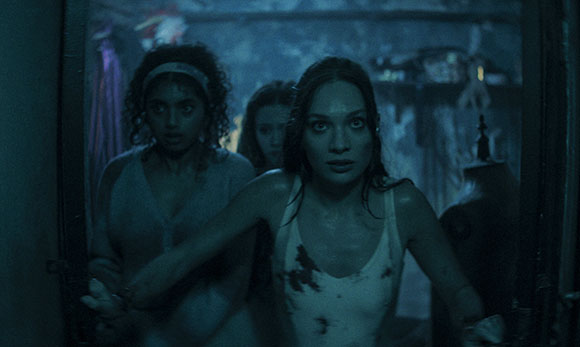
“The action scenes were all brilliantly designed, and even I struggled to tell when the actor or stunt performer was in the scene. Like the dancing, I am trying to create a rhythm, but in a fight it’s all about building tension and creating excitement. You need to be just quick enough to get the pulses racing but not too fast and just providing eye stimulation.”
What sequences would you point to as challenging or interesting from an editing perspective?
“I really enjoyed cutting the Osip fight with Bones. There was a long buildup of tension, and then the fight itself was messy and brutal. I tried to make every decision make sense and show each character using their brain to try to defeat the other. That makes things believable and pulls the audience into the fight. We always wanted to cut away to Grace during Bone’s fight, but when I assembled it, I decided to shift the moment later than the original concept in order build more tension and suspense. The footage Vicky and the action team captured was amazing, and I was very fortunate to be able to cut it. I cut this fight just a day before showing the assembly to Vicky and we didn’t really change it to the final cut. Adrenaline can be very useful!”