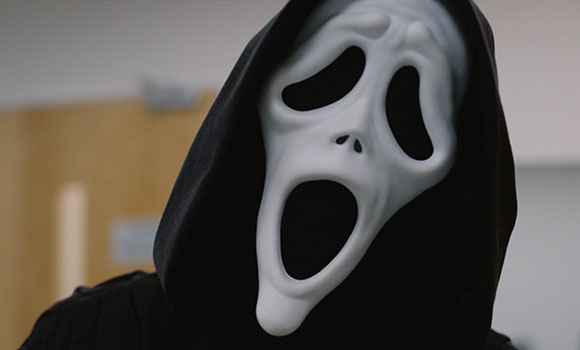
Released in theaters on June 5th, Paramount Pictures’Scary Movie is set 26 years after the appearance of masked killer Ghostface. The core four are back in the killer’s crosshairs, and no horror movie IP is safe from infringement.
Scary Movie stars Marlon Wayans (Shorty), Shawn Wayans (Ray), Anna Faris (Cindy) and Regina Hall (Brenda). The comedy was directed by Michael Tiddes and features an original score by composer Haim Mazar (pictured).
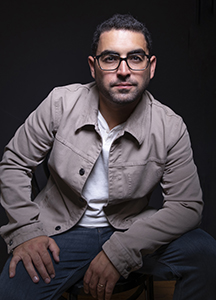
Mazar’s credits include Hulu’s Woke, Netflix’s Sneakerheads, Millennium Entertainment’s The Iceman, The Taking of Deborah Logan and Disney’s Versa. Here, he talks about his work on Scary Movie, the film’s musical needs and his creative process.
Haim, how did you get involved in this project?
“Scary Movie marks my second collaboration with director Michael Tiddes. Michael introduced me to Marlon Wayans and Rick Alvarez, and from the very beginning I felt the project was a natural fit. I’ve been fortunate to work on a very eclectic range of projects throughout my career, which has allowed me to write in many different musical styles and genres. At the same time, a significant part of my work has been in comedy, particularly meta-comedy, where the music often has to shift perspectives and support multiple layers of storytelling. That experience felt especially relevant for Scary Movie, a film that references and parodies so many different genres while still needing to feel like a cohesive cinematic experience.
“Before I had even seen any footage, I was inspired to start writing music and developing ideas for Michael and Marlon to hear. I wanted to demonstrate how I thought the score could support both the comedy and horror elements, while still feeling cinematic and contemporary. That led to a meeting with Marlon. We discussed the musical direction in-depth, and he really responded to the approach and the sound I was developing. Shortly afterward, I was hired to score the film. It was an exciting opportunity, especially given the legacy of the franchise, the return of the Wayans brothers, and the chance to help bring a new chapter of Scary Movie to life.”
How did the comedy/horror genre affect your choice of instrumentation?
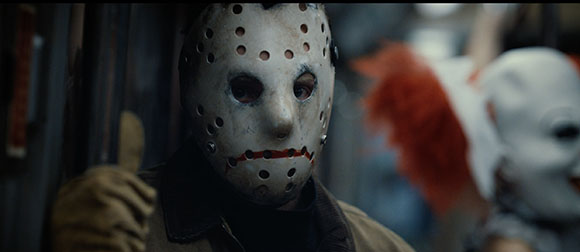
“One of the core creative principles for Scary Movie was that the music should ‘play it straight.’ Michael Tiddes and Marlon Wayans wanted the score to feel like a genuine Hollywood horror film, embracing the tension, suspense and spectacle of the genre. The music isn’t in on the joke. In many ways, the more seriously the score takes itself, the funnier the movie becomes. The score’s job was to establish the mood, create real stakes, and then know exactly when to step aside and clear for the joke.
“To achieve that scale, I recorded a full symphony orchestra with the Budapest Scoring Orchestra. The orchestra gave the score the size, weight, and impact needed to match the scale of the film and the many different corners of the horror genre being referenced throughout the story. Because Scary Movie parodies such a wide range of films and genres, the score had to be flexible enough to move between suspense, action, nostalgia and outright absurdity while still feeling like one cohesive musical voice. The timing was especially important. Comedy is incredibly precise, and every scene required careful consideration of where the music should support the moment and where it should pull back. Marlon often described it as ‘setting up the mood and then clearing for the joke,’ and that became a guiding principle throughout the scoring process.”
How many cues did you create and how much screen time does it represent?
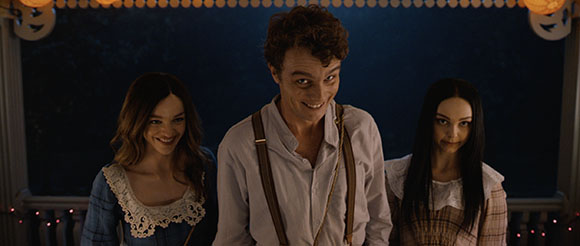
“I wrote approximately 60 cues for the film, representing about 63 minutes of music across the movie’s 95-minute running time. That’s a substantial amount of score, particularly for a project that was recorded with a full symphony orchestra and continued evolving throughout post production. From start to finish, I had roughly three months to write, record and mix the entire score. During much of that time, the film was still being edited, so I was constantly conforming, revising and adapting the score to an evolving cut while continuing to compose new material. That made efficiency and flexibility especially important throughout the process.
“One of the biggest challenges on a comedy is that editorial timing is constantly being refined. Small picture changes can have a major impact on how a joke lands, which means the music often needs to be adjusted, reworked or completely rethought as the edit evolves. Over the years, I’ve developed a workflow that allows me to stay flexible and responsive while maintaining a high level of detail in the music. That efficiency helped keep the score fluid all the way through the final mix and allowed the filmmakers to continue shaping the film without the music becoming a limitation. On a project like Scary Movie, that adaptability is incredibly important because timing is everything.”
What is your recording setup and process for developing cues?
“I primarily compose at the piano and in my studio. I do almost all of my work there, where I have both a writing room and a live recording space.
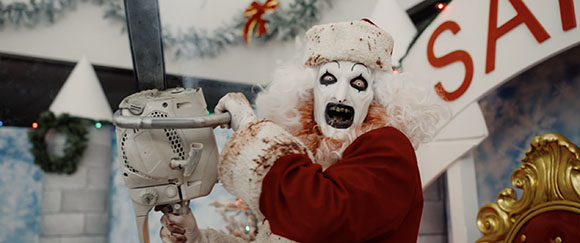
“My workflow is centered around Logic Pro, where I compose, orchestrate and produce detailed mockups using orchestral sample libraries, virtual instruments, electronic elements and live soloists when needed. I spend a significant amount of time refining these demos because they serve as the blueprint for the final score and help the filmmakers clearly understand the musical direction before we move into recording.
“Once the score is approved, I prepare the music for the recording sessions by creating the orchestral notation, click tracks and pre-recorded stems that will accompany the orchestra. Those materials are then prepared in Pro Tools and delivered to the scoring stage. After recording, I mix the orchestral performances and blend them with the electronic and production elements to create the final score. The finished music is then delivered to the dub stage as separate stem groups, typically divided into strings, brass, woodwinds, percussion, choir and additional elements. Providing the score in stems gives the filmmakers and re-recording mixers maximum flexibility, allowing them to carefully balance the music with dialogue and sound effects, and ultimately create the best possible theatrical experience.”