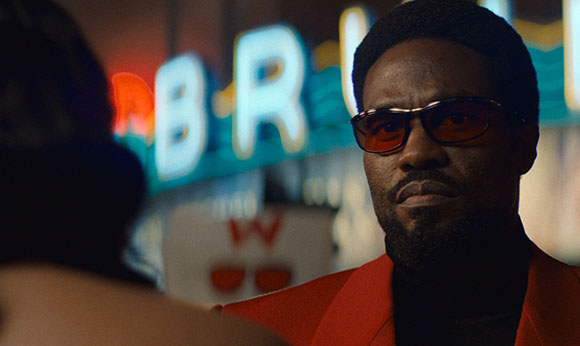
In Marvel TV’s Wonder Man, aspiring actor Simon Williams (Yahya Abdul-Mateen II) is struggling to get his career off the ground. During a chance meeting with Trevor Slattery (Ben Kingsley), an actor whose biggest roles may be well behind him, Simon learns legendary director Von Kovak is remaking the superhero film. These two pursue life-changing roles in the film while giving the audience a look behind the curtain of the entertainment industry.
Emmy-winner Nena Erb, ACE, edited Episodes 103, 104, 107 and 108 of the eight-episode Disney+ series. In 2016, Erb received an Emmy for her work on HBO’s documentary series Project Greenlight. Her second Emmy came in 2020 for her work on Season 4 of Insecure. And a nomination came again in 2022 for the final season.

“I was pleasantly surprised when Jon Goldsmith at Marvel reached out to see if I’d be open to meeting about Wonder Man,” says Erb, noting that the industry can often box editors in, based on the genres they’ve work on in the past. “I was especially thrilled when Destin Daniel Cretton, Andrew Guest and Brian Gay brought me onto the project, since I hadn’t yet cut anything in the superhero space.”
For Erb, what stood out right away with Wonder Man was that the series isn’t that of a typical superhero story.
“It isn’t built on spectacle,” she shares. “It’s about things we all recognize — belonging, ambition and friendship. Simon isn’t trying to save the world, he just wants an audition. He wants to be seen and accepted, but he’s carrying a secret he can’t say out loud. That felt deeply human to me. My real challenge in the edit was balancing comedy, drama and satire without giving the audience emotional whiplash. Comedy lives in timing, so you want sharp cuts and forward momentum, but not so much that you fly right pasts the joke. Drama needs room to breathe so you can reflect. My job is knowing when to push and when to hold. Destin, Andrew, and Brian gave me the trust and space to explore and experiment.”
From an editing standpoint, Erb approached the series like a slow build of pressure, rather than a traditional comedy setup-punchline rhythm.
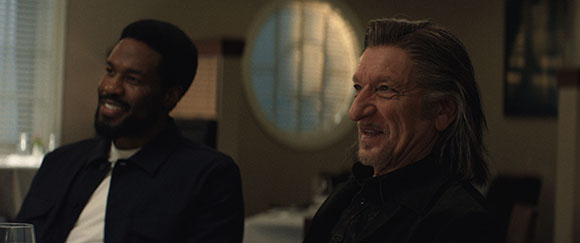
“My goal was to keep building the pressure until the joke or emotional beat was the only release and to make sure the audience felt that shift.”
She points to the interview scene with Kathy Friedman, Simon and Trevor.
“It plays like a tightening vice at first, where Simon is bracing for the truth to come out, and then he learns his brother is proud of him, and he never exposed his secret, and then the scene opens up. Trevor stays charming and Simon is at ease, but the cutting doesn’t race ahead like you might expect. It stays controlled. That restraint is draining the air out of the room one cut at a time.”
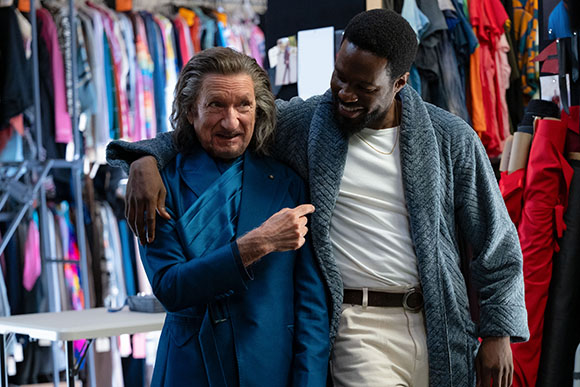
When Kathy reveals the video of Trevor’s arrest, there is a cut to Simon’s reaction and the moment lands like a gut punch.
“When Simon finally breaks – all the rage, betrayal, and repression he’s been carrying all season comes rushing out,” she shares. “Instead of pacing it up and cutting it like an action scene, I slowed it down. The set, designed by Michele Yu and Cindy Chao, starts falling apart around him, and Armando Salas’ cinematography captures the haunting quality of his breakdown. I hold on the shot of him with the set disintegrating slowly. It plays less like an action sequence and more like grief — the collapse of a friendship and the dream that had been chasing.”
She also cites the series’ final episode – “Yucca Valley.”
“I kept thinking about how empty success can feel if you don’t have anyone to share it with,” she notes. “That idea shows up in two moments: when Simon is on-set after Trevor’s arrest, and again at the Wonder Man premiere.”
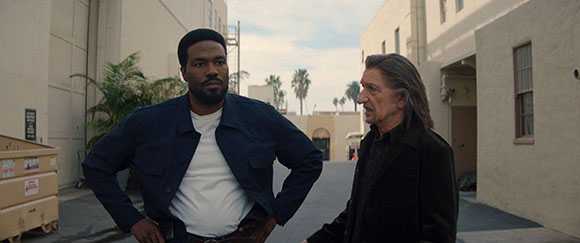
After Trevor’s arrest Simon is called to the set. When the audiences sees him in the Wonder Man suit – designed by Joy Cretton – it should be his defining moment. But instead of feeling triumphant, he feels alone.
“The general editing instinct would be to stay in close-up, and lean into the emotion, but that would have tipped it too far into sentimentality,” shares the editor. “Instead, I wanted to hold on a wide shot with negative space around him so we could feel his isolation and the emptiness he’s carrying. We were careful not to let it become too sappy so we pivoted to a shot of Simon delivering his lines to a tennis ball on a C-stand — funny because it’s absurd, but also emotionally vacant. For me, that helped make the moment feel more human and vulnerable, while also leaning into the satire of Hollywood. Even though Simon is in the movie of his dreams, it still feels wrong because Trevor isn’t there.”
This leads him to break Trevor out of prison. The prison infiltration plays almost like a comedy caper at first. The pacing gets lighter and more observational. All of this is framed by Joel West’s score that music editor Annlie Huang shaped around each tonal shift.
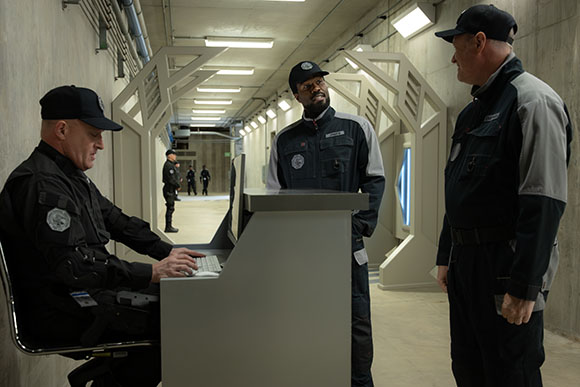
“Once he reaches Trevor’s cell, everything slows down again,” she explains. “That shift in tempo mirrors the emotional turn from plotting Trevor’s rescue to the two friends reuniting and ultimately the prison break where the two friends escape. The series doesn’t end with resolution. This was an intentional choice on Destin, Andrew and Brian’s part. They wanted it to mirror the western buddy film Butch Cassidy And The Sundance Kid.”
At its core, Erb says Wonder Man is really about Simon and Trevor’s friendship.
“Shaping their friendship in the edit from their first meeting, all the way through Simon’s betrayal, to Trevor’s redemption and rescue, was the most rewarding part of the edit. The hardest scenes to cut weren’t the big VFX moments — they were the quiet ones because that’s where the real humanity lives.”