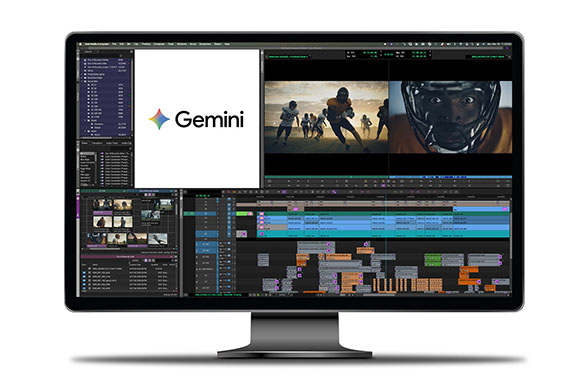
BURLINGTON, MA – Avid (avid.com) and Google Cloud have entered into a multi-year partnership to integrate generative and agentic AI into Avid’s creative tools. By embedding Google’s Gemini models and Vertex AI directly into Avid’s solutions, the collaboration aims to transform video editing from a mostly manual process into an intelligent, AI-assisted experience.
Production teams are facing growing pressure to manage massive volumes of high-resolution media, often using legacy, on-premises hardware. To address these challenges, Avid is integrating Google Cloud’s AI and data analytics capabilities into two key areas of its technology stack: the Media Composer nonlinear editing system and Content Core cloud-native SaaS platform. By leveraging Gemini and Vertex AI, these platforms can now analyze and understand media context automatically, allowing production teams to query content using natural language. It also enables agentic AI workflows, with digital assistants capable of autonomously managing complex tasks, such as matching visual styles, identifying emotional cues in raw footage and streamlining metadata logging.
“Customers are asking for intelligent tools that plug into existing workflows and scale with their creativity,” explains Wellford Dillard, chief executive officer at Avid. “This partnership with Google Cloud strengthens our ability to deliver secure, AI-driven innovation while keeping Avid interoperable and adaptable across the broader production landscape. Through our collaboration with Google Cloud, Avid is redefining what’s possible in modern media production by expanding intelligent capabilities across our products.”
“By embedding agentic AI directly into the tools video editors live in, we’re moving beyond simple automation,” adds Anil Jain, global managing director, strategic industries, Google Cloud. “With Avid Media Composer and Google Cloud, an editor can now collaborate with an intelligent agent to create assets on the fly and handle the heavy lifting of matching styles and filling timelines, enabling them to focus on storytelling instead of infrastructure.”