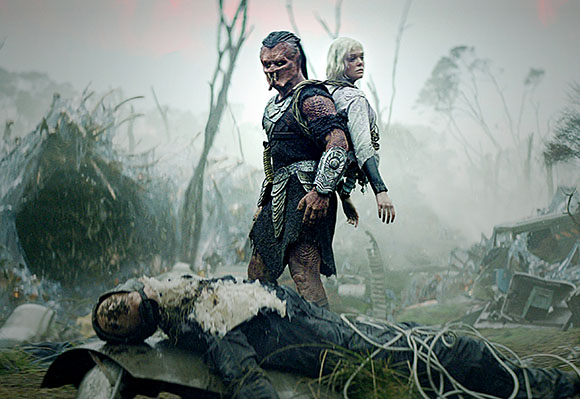
The latest chapter in the Predator franchise began streaming on Hulu on February 12th. Predator: Badlands is set in the future on a deadly, remote planet. There, Dek, a young and undersized Predator, is outcast from his Yautja clan. In an effort to prove himself, he embarks on a journey to a dangerous planet with the goal of killing and returning home with the head of the Kalisk – a creature feared by even the most accomplished Yautja. Along the way, he finds an unlikely ally in Thia – and synthetic human – and the two continue on the hunt, with Dek later finding out Thia has her own reason for wanting the Kalisk.
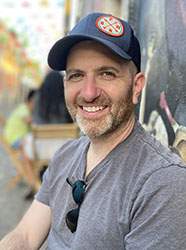
David Trachtenberg, brother of director Dan Trachtenberg, was a co-editor on the film, working in collaboration with Stefan Grube. Unlike past films in the franchise, this Predator is the protagonist, and rather than playing straight-ahead with action and violence, the film adds a buddy-movie element, along with occasional spots of humor.
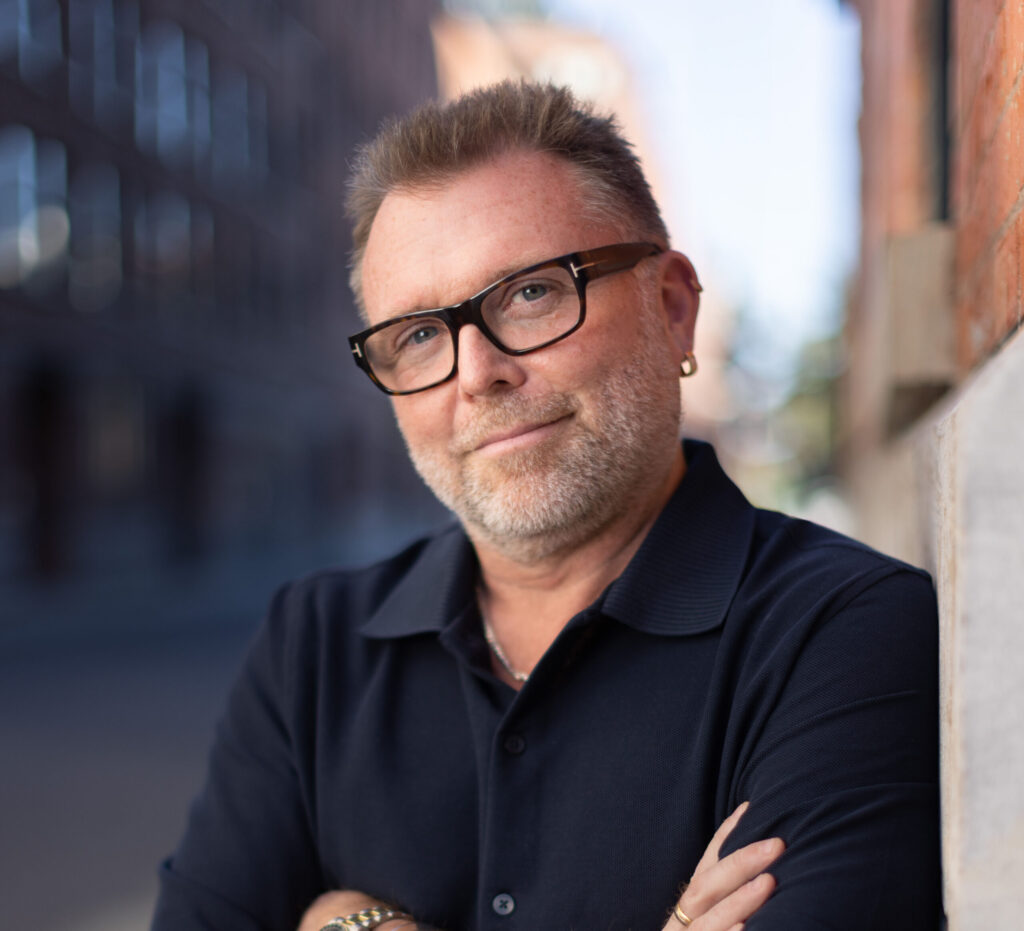
Here, Trachtenberg (pictured, right) and Grube share details on how the VFX-heavy film came together.
Predator: Badlands is different from other films in the franchise’s long history. How did director Dan Trachtenberg’s reimagine it playing out in the cutting room?
David Trachtenberg: “Dan wanted to make a buddy movie of sorts and present the Predator (Dek) as a hero, rather than a villain. Editorially, we focused on moments that painted him in that light. He still had to be badass, but not as a character you fear, but one that you can root for and bond with.”
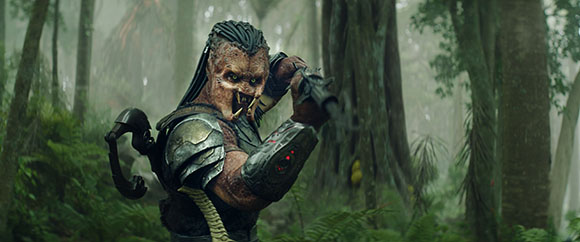
Stefan Grube: “We were secretly making an action/adventure, as opposed to an action/horror movie – something different from any Predator film that came before. Fun, and sometimes funny. Because of that, the question of tone was something we talked about constantly. We kept asking, ‘Is this insane? Is this going to work?’
“The first reel in the movie goes pretty hard, setting the stage for the audience to buy into the rest of the craziness that ensues. I give Dave a lot of credit for that opening. It just reels you in.”
What were some of the more challenging or pivotal scenes and how did you address them?
David Trachtenberg: “Introducing Thia was a balance. Is she too goofy? Is she fun? Who is she? It was a tricky thing we kept navigating over and over again. She needed to be introduced into the story in a very strategic way to not make too hard a turn into something so different from expectations of Predator movies, but remain committed to the idea that she would be a little quirky and fun.”
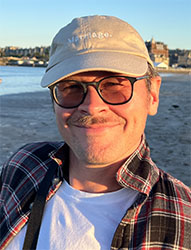
Stefan Grube (pictured, left): “What Thia establishes the first time you meet her goes deeper than setting up the plot twist in which it’s revealed that she has been misleading Dek. It’s a tone-setter. You see her split in two, and you’re like, ‘Okay, better get on board.’ But yeah, we passed those first few scenes with Thia back and forth a lot. We kept finding something new in the dailies and saying, ‘We gotta get that in!’”
David Trachtenberg: “An equally challenging objective was to find the tone and the relationship between Thia and her twin sister Tessa (also played by Fanning). The big scene where they first meet in the convoy was a beast, and I give Stefan full credit for making it work so beautifully. He really found the rhythm and the tone of that moment, and how they interacted and related to one another.”
Stefan Grube: “I’d throw that back to Dave. I only did the final pass that made it into the movie. We probably passed that scene back and forth more than any other, and it was also a scene that ended up being re-shot. The first version was wholly different from where we eventually landed. And the process of how we got there truly speaks to the benefit of editing as a team.”
David Trachtenberg: “After we re-shot and figured out the exact version that ended up in the movie, it all made perfect sense. Stefan really nailed it.”
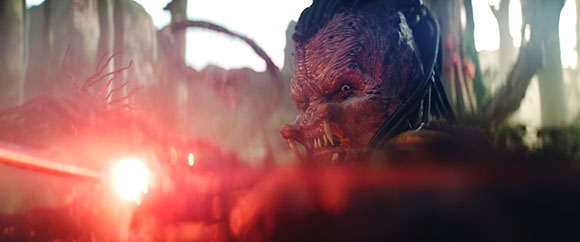
Dimitrius Schuster-Koloamatangi performed without a mask before VFX added it in. Tell us how this shaped the edit?
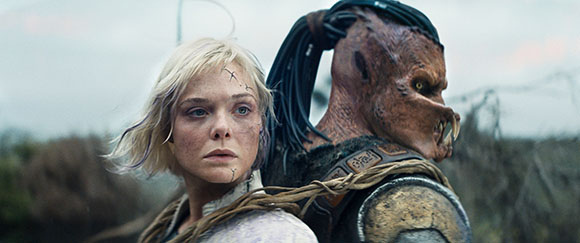
David Trachtenberg: “We approached Dek’s scenes very much like cutting traditional dialogue scenes. It was pretty straightforward in the sense that we could use the nuance and complexity of Dimitrius’ performance in live action, and then the VFX crew did their thing, filtering his performance through the CG mask.”
Stefan Grube: “Yeah, there was no imagining. Dimitrius gave an amazing performance and then our VFX team knocked it out of the park.”
David Trachtenberg: “The bigger challenge for the VFX team was getting the Dek mask to reflect the actor’s emotional nuances — like an eyebrow raise or a smile — since the alien features of the Predator differ vastly from a human’s. They masterfully captured facial expressions and emotions, which was much harder than the editing.”
Can you talk about your collaboration with the VFX team and some of the sequences that were challenging?
Stefan Grube: “The benefit of working on a VFX-heavy movie is the necessity of decision-making. We had to make bold decisions early on for these huge sequences that they were building –– unlike a movie with few VFX, where you get towards the end, and every reel is kind of open for change. But we had a great team. Our VFX editor, Ben Howdeshell, was the most ‘can-do’ part of our process, helping us create and modify elements to streamline the editing. He fabricated these amazing temp shots for us to use early on because those big sequences take time to make.”
David Trachtenberg: “Dan calls Ben his secret weapon because he can do so much to a rough cut, and it immensely helped the editorial process. Dan had a very specific direction and vision as far as VFX was concerned. He was there in every review and involved in every single detail, leaving nothing to chance, which allowed us to focus on our role as editors and trust that we had everything we needed.
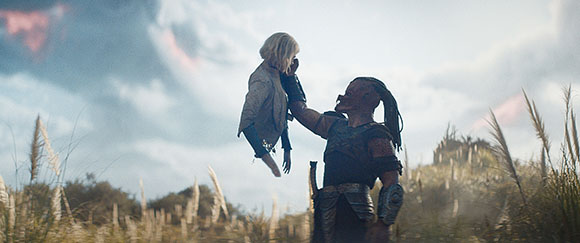
“Also, this was the first movie I did on this scale of visual effects. What I found interesting was that there were so many different VFX techniques, including some practical effects. For example, in the scene where Dek lifts up Thia and carries her off, she did it practically — she just pretended she was legless, and it worked. I love that sort of movie magic.”
What was the thinking behind having two editors on this film?
David Trachtenberg: “The studio wanted two editors because the turnaround was too tight for one person. Although I had never co-edited before, I wasn’t nervous because Stefan had experience working this way and had some insight into the process. Plus, I’ve known him for years. He cut Dan’s first feature, 10 Cloverfield Lane. We first met during one of those friends-and-family screenings.”
What are the challenges and the benefits of co-editing, especially with respect to ensuring a unified creative vision?
Stefan Grube: “One of Dave’s strengths is super measurable: he is very fast. I’m not nearly as fast as he is, and his ability to come up with great ideas so quickly was super helpful day to day. It was a harmonious partnership.”
David Trachtenberg: “I may be quicker in that capacity, but Stefan can marinate on a scene and come back with these ideas seemingly out of nowhere that truly elevated the film.”
Stefan Grube: “You could say, co-editing this film, David was Dek, and I was Thia. But in all seriousness, it simply brings another perspective, and having a partner who really knows the footage and that you can trust to bring fresh ideas and honest feedback was huge on this film. I also hear Dave happens to have a very personal relationship with Dan, being his brother and all. So, they have this unique dynamic and understand each other in a different way.”
How did you divide up the work?
David Trachtenberg: “Stefan was finishing Dan’s other movie, Killer of Killers, when I was getting started putting together that first fight against the ‘elephant trees’ so it could be handed off to VFX. But, we made a point of watching all the dailies together every day. And then once Stefan was fully on-board, we shared everything throughout. I would say we both had a hand in 95 percent of the scenes, just bouncing ideas off of each other. No one was proprietary about any one scene.”
Stefan Grube: “This was definitely the healthiest kind of sharing. We were never siloed and were always in the know of what the other was doing at any given moment.”
Tell us about your editing setup.
David Trachtenberg: “We both worked on Avid on a shared system. We were set up at opposite ends of the hallway, with our assistant team in the rooms between us, and Dan would truck to one room or the other.”
Stefan Grube: “Our assistant team was incredible on this. Unflappable. Warren Paeff and Shay Yang. They were both reliable and creative. Because of our screening schedule, they did a lot of temp sound work for us. They were constantly asked to come up with new ideas. We threw a ton of challenges their way, especially in the sprint to the finish.”
Beyond your Avid system, what other tools did you rely on?
David Trachtenberg: “There’s an Izotope software plug-in that allows you to de-noise dialogue, which I use a lot. For instance, there was a waterfall scene where the noise was so bad, and it helped tremendously for rough-cut purposes. Also, Stefan taught me a trick with reverb tracks, which is now a go-to part of my process on every show.”
Stefan Grube: “It’s a method I learned from the incredible editor Tanya Swerling. It mimics how our sound effects editors work and has changed the way I approach a cut. Coming from the world of trailers, where sound is a major focus, building these tracks lets me worry less about sound because it smooths out the rough edges.”