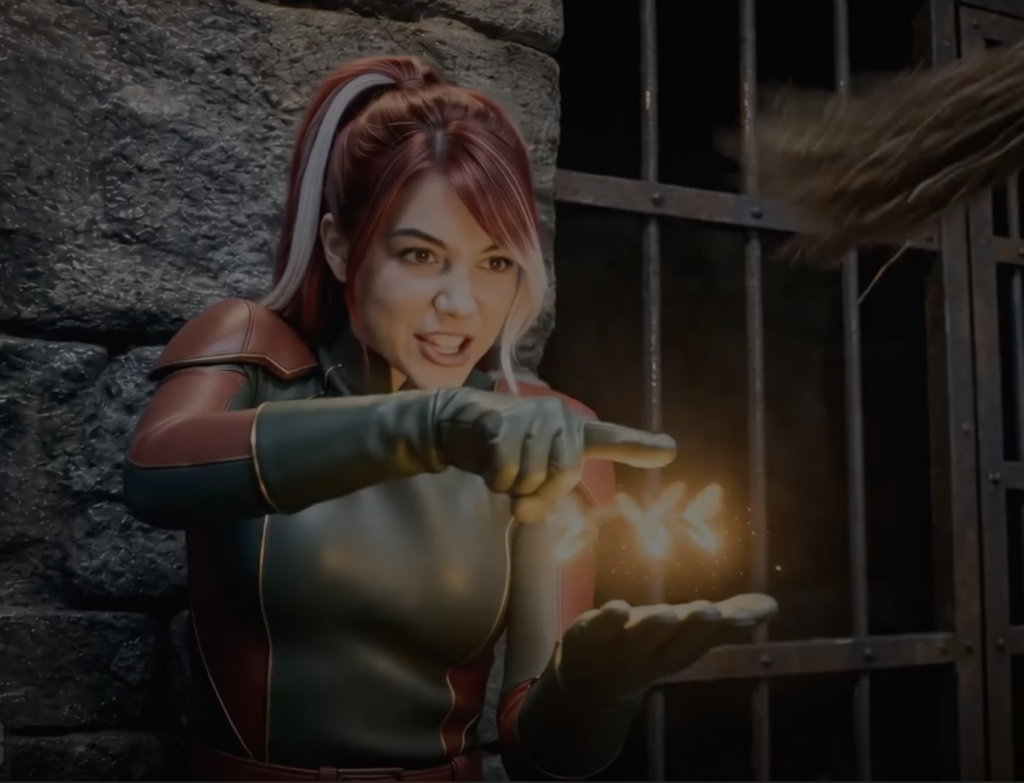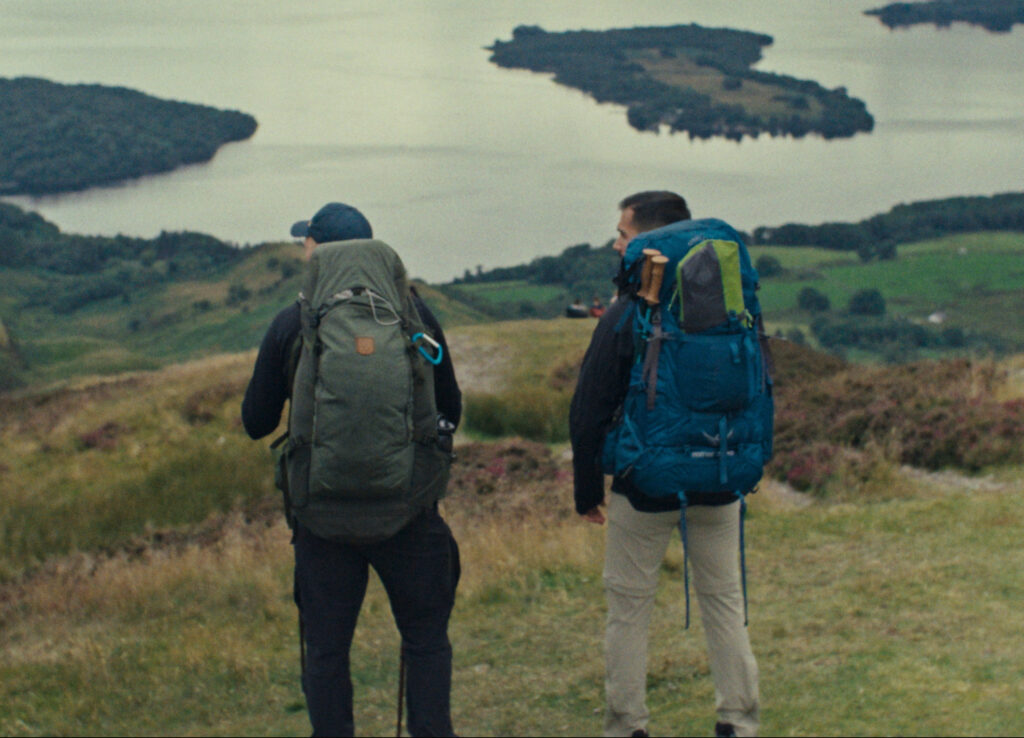
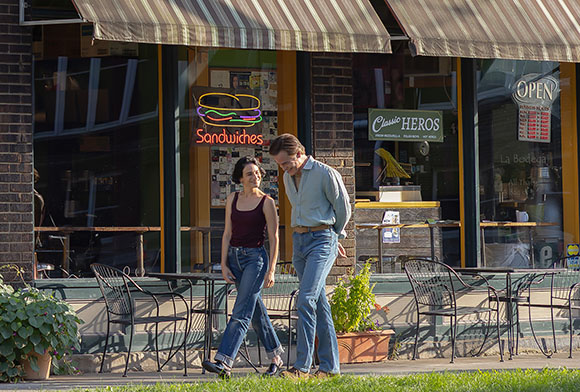
In the rom-com drama Carousel, a divorced doctor’s life in Cleveland is upended when a past love returns to town, forcing him to confront his own choices. The film stars Chris Pine as Noah, a doctor running his family medical practice while also looking after his daughter. Jenny Slate plays old high school girlfriend Rebecca. Abby Ryder Fortson, Sam Waterston and Katey Sagal also star.
Rachel Lambert wrote and directed the project, which was shot by Dustin Lane. Ryan Kendrick edited the film and says Lambert sent him the script three years ago.
“She had written it in between the time that we locked picture on Sometimes I Think About Dying and our premiere at Sundance,” he shares. “In the fall of 2003, Rachel and the DP, Dustin Lane, went to Cleveland to shoot 35mm film of spaces and seasonal elements that would be an inspiration for the tone of the film. I cut together a companion film with music scored by our composer, Dabney Morris, that would be passed around with the script.”
It was two years later that principal photography actually began, with Lane shooting on 35mm.
“We did all of our processing and scans at FotoKem in LA,” Kendrick explains. “I was editing in Nashville, so FotoKem created ProRes files of our scans and sent them to me digitally. We created dailies at Open Water Post using a LUT created by Mike Howell with the DP.”
At Open Water Post, the team uses mostly Adobe Premiere, so the film was set up as a Premiere Production.
“This allowed my AE, Andie Bradley, and I to work simultaneously without any hiccups,” says Kendrick. “A super helpful tool for us during the syncing process was the ‘Scene Edit Detect’ in Premiere. When we receive scans from FotoKem, they are all the length of the full mag that was shot. That was usually anywhere from 11-minutes to six-minutes long, with multiple takes or setups on each one. We were able to use that tool to automatically find each point that the camera cut and create at edit point at that instance so that we could log and sync much faster.”
Kendrick says one of the film’s most challenging and interesting scenes to cut was the fight towards the end of the film.
“It’s around 10 minutes long and was shot from a very voyeuristic perspective,” he shares. “There is probably a strong instinct from an editor’s perspective to want to highlight and accentuate that scene by cutting in to close ups or moving time around, but we wanted the fight to feel real. We wanted it to feel like the viewer was being let into something that they shouldn’t be seeing. It becomes ambiguous. Who is right? Who is wrong? Who is telling the truth? So, as an editor, my role in that scene was to get out of the way and let the characters speak for themselves, rather than have me impose my perceptions of them.”