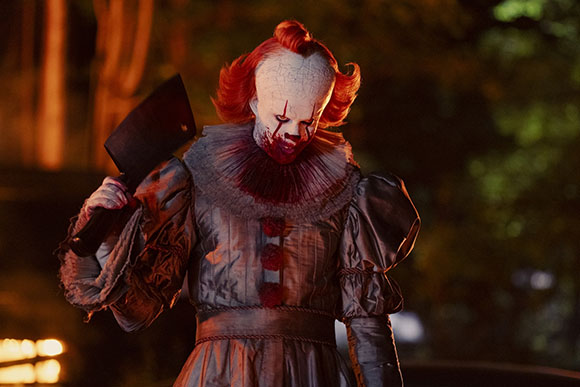
It: Welcome to Derry is the dramatic series from HBO and Warner Bros. Television. Set in the world of Stephen King’s It universe, the show is based on King’s novel and expands the vision established by filmmaker Andy Muschietti in the feature films It and It Chapter Two.
The eight-episode series began streaming weekly in October, with the finale being released on December 14th. The show’s cast includes Jovan Adepo, Taylour Paige, Chris Chalk, James Remar, Stephen Rider, Madeleine Stowe, Rudy Mancuso and Bill Skarsgård.
Set in the 1960s, It: Welcome to Derry required seamless visual effects that reflected the supernatural forces haunting Derry while maintaining the authenticity of the era. Daryl Sawchuk served as visual effects supervisor on the show and recently shared insight into its needs and challenges.
Daryl, can you talk about the overall VFX approach for the show and how you helped create its supernatural elements?
“The overall VFX approach for the supernatural and scare elements throughout the season was to ground everything in reality as much as possible. We aimed to capture as much practically on-set, working closely with production design, costumes, prosthetics, makeup FX and special effects, and then built on that foundation.
“I’m a strong believer in pushing effects as far in-camera as we can, capturing the mood, atmosphere and lighting exactly as the DP intends in the final frame, before stepping in to enhance, replace or augment digitally. Most, if not all, of the major scare sequences were thoroughly developed in advance. We collaborated on storyboards and character designs, and created previs passes to give the entire team a clear visual roadmap on-set. From there, the goal was always to elevate and refine those moments rather than reinvent them in post.”
The series is set in the 1960s. How did that period influence your work, particularly in terms of environments and world-building?
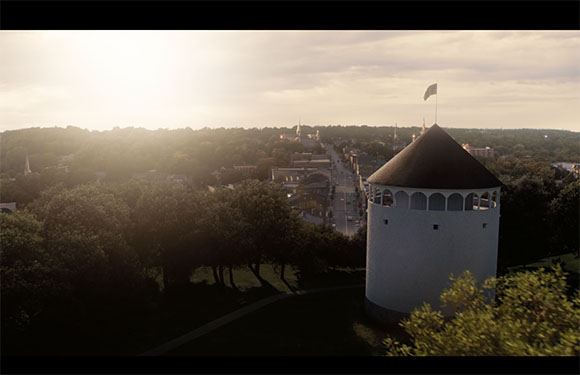
“The world was very clearly established by the incredible production design team led by Paul Austerberry, which gave us a huge advantage from the outset. The practical photography we captured was not only beautiful, but deeply rooted in the time period, providing a strong and authentic foundation for our work.
“From there, our world-building focused on subtle but extensive period enhancements — augmenting buildings and backgrounds that couldn’t be fully realized on-set due to time or budget constraints. A significant portion of our work was intentionally invisible, addressing challenges like weather and scheduling. For example, we transformed winter locations into summer environments with added foliage, and conversely, replaced summer elements when needed. In some cases, we also had to digitally reconstruct building facades and roadways that couldn’t be dressed due to large-scale city construction that was unavoidable during filming.
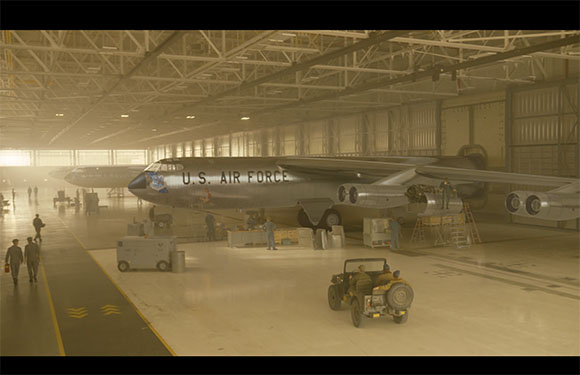
“The art department also created a comprehensive visual bible of reference imagery and design work, which was instrumental in helping us bring the Derry Air Force Base to life. By combining real-world locations, practical set builds and extensive digital enhancements —including aircraft, hangars, set dressing and crowds — we were able to fully realize the scale and authenticity of that environment.”
What did your collaboration look like with the other departments, such as production design and makeup?
“It was important to me to build strong working relationships with all departments, knowing that collaboration early on would only elevate the final result. We made a point of having open conversations and getting our asks on the table as early as possible, giving teams the opportunity to incorporate those needs into their process.
“There’s always a balance — you’re walking a tightrope between asking for too much and not having what you need months later in post. For me, it came down to transparency and alignment: bringing everyone into what we were trying to achieve and clearly communicating how any additional effort on their part would directly translate into a stronger final image. That shared understanding made a huge difference.”
Can you walk us through one key sequence that best represents the scope of the VFX work and the challenges involved in bringing it to life?
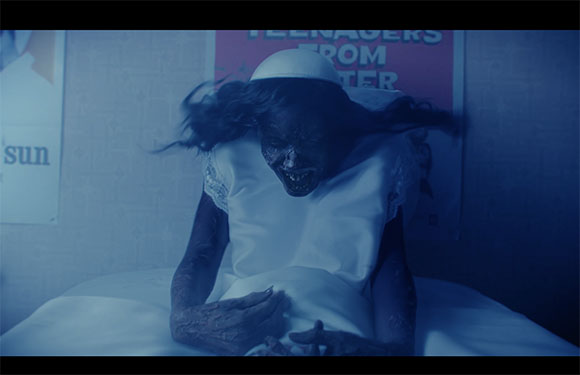
“The ‘Mother Thing’ sequence in Episode 2 was a great example of a complex and challenging scare. It was important to Andy to capture a genuine performance for mom in-camera, so we designed a practical approach that allowed two actors to inhabit the same character — one performing the legs, and another delivering the upper body and facial performance.
“Because the creature needed to feel roughly one-third larger than life, the shoot required multiple passes: clean plates of the room, separate performances against blue screen, and then a careful composite in post to bring everything together seamlessly. In scenes involving Ronnie, the complexity increased further — we had to shoot the bed elements proportionally closer and lower, effectively ‘scaling’ them by a third so that perspective and eyelines would align correctly in the final composite.
“The prosthetics team also contributed incredible practical elements, including a physical ‘womb’ environment and a 15-foot intestine that the actress could physically interact with, complete with practical slime and blood. This gave her something tangible to perform against, which grounded the moment. From there, our work focused on extending and enhancing those elements — rather than replacing them — so they could integrate with the digital belly creature and mummified effects on mom, that was added later in post.”
How did you approach blending practical effects with digital VFX to create a seamless final image?
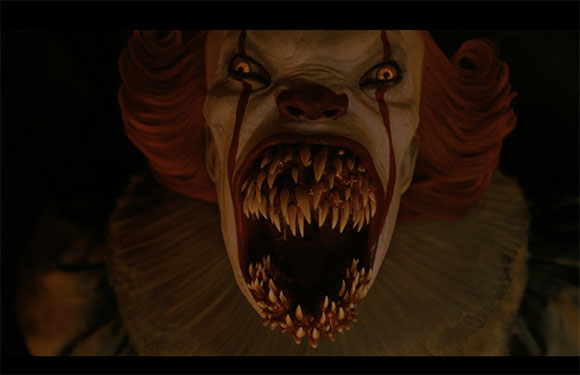
“The ‘Pickle Jail’ sequence was a natural extension of that same philosophy. We built a miniature set of supermarket shelves and filled hundreds of real jars with pickles and brine, grounding the environment with as much practical detail as possible. In-camera lighting flicker effects helped sell the instability of the world as it began to unravel.
“When the dad’s head comes alive inside the jar, we used a practical prosthetic made up of sliced head elements placed directly in the jar, which gave us incredibly valuable lighting and texture reference. A real glass jar was then thrown and shattered on the ground, with the prosthetic replaced in post by our CG version of the head, along with enhanced glass shards and liquid FX to elevate the moment.
“For the large-scale destruction beat, the FX team engineered a rig that could push entire walls of jars over, shattering them and spilling their contents. By shooting these events in separate passes, we were able to combine them in comp and achieve a sequence that feels largely practical, despite its scale.
“Whenever the actress needed to interact with the digital character, we puppeteered the same prosthetic head on a stick. This served a dual purpose: providing a strong eyeline for performance, and physically interacting with the pickles and fluids on the ground. That practical interaction became invaluable reference, allowing us to extend and enhance the performance digitally rather than build it entirely from scratch.
Can you talk about some of the specific tools or techniques you called upon to complete the VFX?
“Our approach to large-scale environments relied on a combination of roundshot panoramas, drone plates and LiDAR scans, which gave us the data needed to accurately recreate and extend the world.
“For the mutant baby car sequence in Episode 1, we used an array camera system to capture driving plates that could be stitched together and played back on an LED volume wall, allowing for fully interactive lighting and reflections during the interior shots.
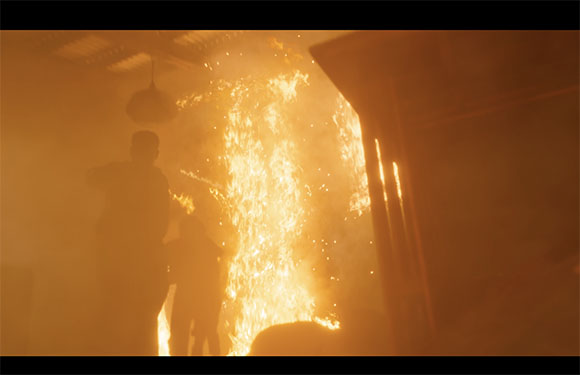
“We also conducted a dedicated three-day FX elements shoot, capturing a wide range of practical fire that served as the foundation for the burning of the Blackspot in the penultimate episode. Those real-world elements became an essential base layer that we could build on and enhance digitally.
“Beyond the tools and techniques, the work ultimately came down to an enormous team effort — a global group of VFX artists contributing countless hours to bring everything together. It was a massive undertaking, and that collective effort is really what made the scale and complexity of the series possible.”
The battle in the finale is an iconic sequence. Can you tell us more about the VFX work that helped create and enhance it?
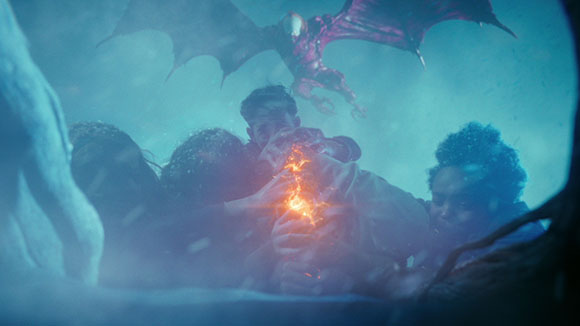
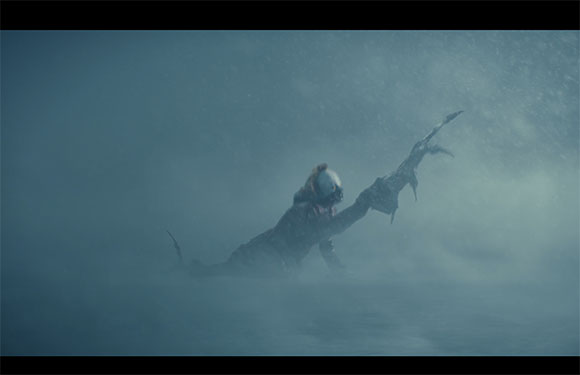
“The ‘Final Fog Battle,’ as we came to call it, needed to deliver an epic conclusion — showing It at its most powerful. The storm Pennywise conjures to engulf Derry in fog and snow, allowing him to traverse the frozen Penobscot River and attempt to free himself from the cages that have held him for centuries, had to feel immersive, overwhelming and dangerous.
“Early on, building on what we learned from the Blackspot fire sequence, we collaborated closely with the SFX team to fill a massive soundstage with as much practical fog as possible. This gave the DP, Dani Vliar, the ability to light the environment in a way that naturally obscured visibility and grounded the atmosphere in-camera. As the shoot progressed, and we pushed toward the edges of the stage, however, the illusion began to break — we’d pick up blue screens, lighting rigs and crew. With limited time to constantly reset, it meant that virtually every shot required some level of VFX intervention.
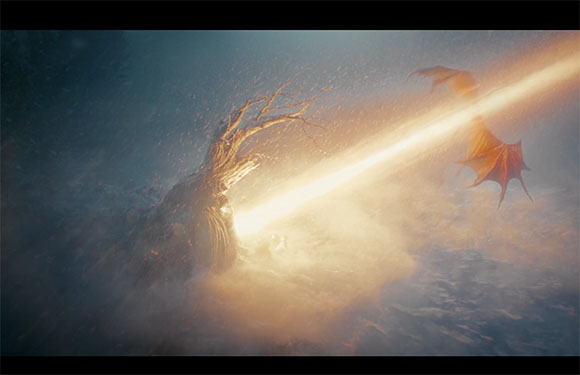
“The scope of the sequence also expanded significantly in post, ultimately tripling in size. To manage that scale, we developed a workflow that allowed two vendors to work simultaneously, sharing the same FX elements — fog, snow and environmental simulations — to maintain a consistent look across the sequence.
“From there, the creative work really opened up with Pennywise’s transformations. We explored a range of moments — from his head being violently destroyed and regrowing in a diminished form, to a brief, eerie Deadlight interaction with Leroy on the ice, and finally his climactic evolution into a bird-like manifestation. Each beat required detailed creature FX work to push the sequence into something both terrifying and operatic.
“The finale culminates in a massive burst of light as the dagger is returned to its rightful place, reactivating the cages that have imprisoned It for centuries. In that moment, all of Pennywise’s various forms begin to peel away — shedding the identities it has assumed throughout the series — before collapsing back into pure light and being drawn once again into its cage.”