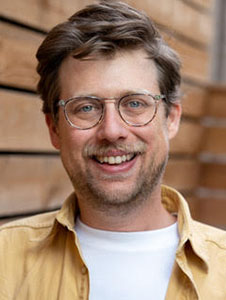
At Saturday Night Live, the final beats of a pre-taped sketch are often being shaped only hours before it airs. Ryan Spears, ACE, is one of the editors responsible for making that happen.
Throughout over a decade in the industry, Spears has built a reputation as an editor with a strong knack for timing, performance and visual storytelling. His approach balances the importance of technical precision with comedic and creative instinct, allowing him to work at breakneck speed without losing sight of the characters or ideas at the center of a sketch.
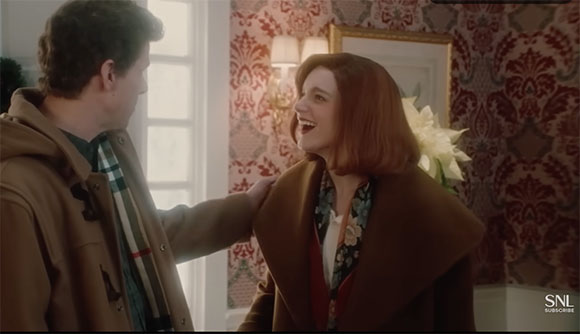
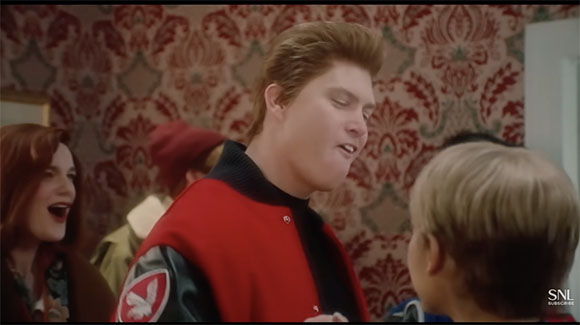
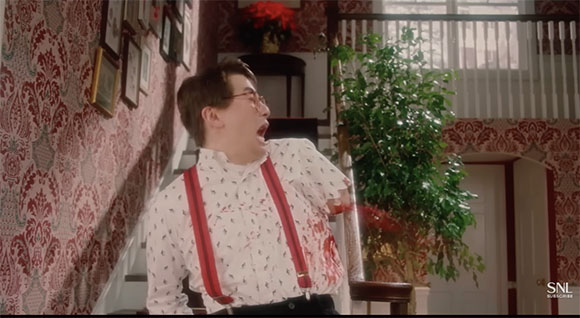
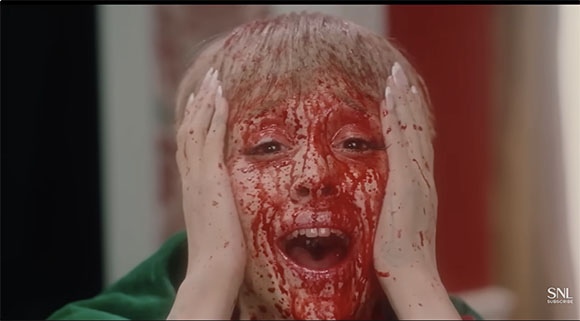
Spears is currently up for his second Emmy, thanks to his work on the SNL sketch, “Home Alone.” The bit features Ariana Grande, who takes on Macaulay Culkin’s famous role as the young Kevin McCallister. In this version, Kevin’s family arrives home in time for Christmas, but the house is still booby trapped, leading to an unexpected horror element.
Spears spoke with Post recently about his path into the world of editing, the experiences that have shaped his career, and what he’s learned from working in SNL’s fast-paced and collaborative environment.
SNL has a very established visual and comedic identity, but every generation of the show feels different. As an editor, how do you work within that established language while still finding opportunities to bring your own sensibility to the material?
“It’s an interesting question. I think we often look back on recent history when a sketch calls for it, either a commercial parody or a music video, and I think we’re keenly aware of a lot of the film work that’s been done in the post ‘Lonely Island’ era. But, going back further, it’s a much different era and style of film pretape. If you look at the early seasons, the films were really mostly their own self-contained shorts, first by Albert Brooks, then others. There’s the Schiller era, then the Signorelli era, and those pieces frequently filmed further in advance of their airing and often only featured cast members, rarely hosts, and were usually commercial parody or short films. Then the Lonely Island guys really showed what you can do in such a short amount of time by filming Friday and airing Saturday, and that became the new status quo.
“So, I do think there is a freedom that we get that’s implicit in the language of the show, which is that that language is always changing and evolving, and you’re encouraged to take risks and try new things and change the formula. With Mike Diva, the director I work most with, I feel we’ve shifted the formula of the music videos to be less text heavy, and Mike brings some real music chops to the mix, so we always approach it as if we’re just trying to make a really good music video, regardless of the comedy. And then, every once and a while, we do get these very throwback pieces. I think of the Shane Gillis sketch ‘A Coupla Beers.’ It’s such a ‘90s style commercial parody. You have this unusual product that’s the whole game of the sketch, and the jokes just flow from that and Shane’s performance as the pitch man for the product. It has this vibe that’s not far off of something you might have seen Phil Hartman in.
“My own sensibility, which has really grown in my time on the show, is to let performances shine, find something unusual or unexpected to the writers and the director, lean into truth and to always be adaptable, collaborative, and open to creative problem solving.”
Comedy is so dependent on rhythm. When you’re cutting a sketch or pre-taped segment, what tells you that a joke is landing? How much can changing a cut by even a few frames affect the comedy?
“Comedy is all about rhythm. At the same time, I don’t think there's always a consistent formula to that rhythm. There are so many nuanced variables that feed into that timing - things like performance, music, reactions, sound design, coverage and camera work. For me, it’s become a gut feeling. There’s almost a gravitational pull to the jokes. You can piece it together with takes and a pace and cutting pattern you think will work, but you feel nothing, so you know, ‘OK, something is off here.’ So, maybe you change a take or you change the coverage, then all the sudden you start to fall into that gravitational pull and you’re getting closer. Then you start fine tuning the frames around the cut - maybe add a reaction or swap a take -then all the sudden it clicks.
“After doing it for so long, it becomes intuitive and you just feel it. And once you’ve got it to that point, it becomes collaborative in the room. You show it to the director and writers, who bring their own point of view to it, and they either feel that click too and it just works, or they want to explore it, take it apart, look at takes, look at music - any number of things. Sometimes you end up where you started, which is nice because it makes you more confident in the joke, and sometimes you unlock these new surprising and delightful spins on that joke, and your edit is better for it.”
SNL is produced at a super-fast pace. What does the timeline actually look like from the moment footage reaches you to the finished piece airing?
“So my unit almost exclusively shoots during the day on Friday. Usually that means camera is up around 9am, give or take a few hours. Then, by around noon, we’re starting to get footage from set as they pull cards between setups and upload the rolls to our server at 30 Rock. My cutting assistant, Nahuel Attar, and our team of one or two additional assistant editors, sync the footage and break it down into setups for me. I usually arrive mid-afternoon and start screening what’s been shot so far and picking my selects. Sometimes there’s enough to start cutting with, sometimes it’s one side of a scene, so maybe I’ll layout my selects then narrow it down. Or, I’ll start thinking about music. Or, I’ll touch base with our VFX and GFX teams or post supervisor Matt Yonks. Every week is a bit different. By the time the shoot wraps, I’m well on my way to a rough cut and I’ll have something I’m happy with by 3am on Saturday. That means I’ve tried to nail down the turn of the sketch, the pacing for the biggest jokes, laid in some rough music, and Nahuel has done a sound design pass against my cut, so by the time I go get some sleep, it really is starting to feel real and I can send a link to the director and writers to give feedback on in the morning.
“My Saturday starts around 10am. I’ll get into any notes I’ve received overnight, and Mike Diva joins me in the edit, and we hit his biggest notes before writers start to join us around early afternoon. From then to around 7pm, the edit is constantly moving, shifting and evolving. We get visits from some of the show’s executive producers. They give creative feedback and we try to lock picture about an hour before our sketch is scheduled to run during dress rehearsal, which runs from 8pm to 10pm. That means having the best version of the sketch we can achieve in that time frame because it goes in front of an audience during dress rehearsal, and our sketches will live or die by the reaction of the audience. It tells us, ‘Does this sketch work?’ Because sometimes they don’t, and a sketch that dies at dress has a very slim chance of making it to air, or even online, so we have to put our best foot forward. If it does work, it may still tell us where it might be soft. Maybe a joke didn’t land during dress and didn't get laughs. We can then decide: Do we have ways of making this joke work, or do we cut it? If it’s a beat that isn’t necessary for story or for building on for a later joke, often it makes sense just to cut it and make the piece overall tighter and shorter.
“So between dress and air we’re making those final decisions. Usually, it is as simple as lifting a few jokes or finding a few places to tighten. Sometimes certain beats need a bigger rethink, but that’s rare. All the while, Nahuel is working on conforming in the color, if we didn’t get it in for dress already, and coordinating with Dave Eber and our incredible VFX team to get all the final renders into the edit for the live show. I have to send the control room at least a safety version of the cut about 15 minutes before you see it live on TV, but sometimes I’m sending new revisions with updated VFX really down to the wire, so it can get pretty intense.”
What initially drew you to editing and how did you arrive at SNL?
“I grew up loving film and television, but for a while I didn’t really know how to make it a career path. Then, in high school, I started dabbling in making my own home movies and playing with a DV camera and messing around in Windows Movie Maker at home and Avid News Cutter in my high school’s AV program. Computer stuff always came naturally to me, so I learned the ins and outs of the software fast, but I was really amazed by how powerful editing was, how much something like music could change the whole vibe of a piece or how you could completely rework what your original intention was into something new and different, and maybe even better.
“In middle school and high school I watched a lot of The Simpsons, Conan, Mad TV and SNL, which was being syndicated on Comedy Central at the time. I started watching SNL live when Andy Samberg and Bill Hader joined the cast. I was always drawn to comedy and loved the idea of making people laugh. I harbored dreams of being a writer, and in college I got to intern for the show in 2010/2011, which I think was Andy’s final season. It was a dream come true. Around that time I was feeling less confident as a writer and more and more finding myself drawn into editing, either on projects for friends or through work opportunities. After I graduated from NYU, I ended up with a job as an assistant editor at Broadway Video. Then, a year later, they launched a venture called Above Average, which was focused on web comedy content. I joined them as their in-house editor and built up a reel working with some really great talent, like Neil Casey, Tim Robinson, Paula Pell and Vanessa Bayer.
“Eventually I ended up back at 30 Rock as an assistant editor for SNL and worked up to taking the chair, as we say, around 2020. I just knew I loved cutting and I loved the fast-paced environment. There’s nothing like being able to see your work in front of an audience that quickly.”
You’ve worked across comedy, commercials and live programming. Has moving between those different formats shaped the way you think as an editor?
“I tend to think most good editors are very adaptable, and I like to be adaptable. There are a lot of very rigid genres, formats and styles, sure, but at the end of the day, the lodestar in editing is story and emotion. On SNL, we want people to understand the game of the sketch and laugh... In commercials, we want people to understand the upsides of a product or service and to associate a positive feeling with that…I also do a lot of doc work, and I think that’s always really refreshing to me as an editor and an artist. It gives me the opportunity to stretch myself creatively and to really deeply feel the story in a way that comedy might not always give you a chance to. And, I feel like that kind of shifting gears keeps me fresh and lets me appreciate what’s unique to comedy as a genre.
“The learning goes both ways. The comedy side gives me an inherent understanding of pacing and clarity. It helps for spotting when too much information in a documentary might clutter what’s important, or if we want to balance a story beat that is crucial to understanding what’s to come, but that story beat does not contain much emotionality. Then, when it matters, really slowing things down, getting out of the way of the subjects, letting them tell their story and convey their emotions rather than distract with too much cutting. And when coming back from doc, it really helps me with problem solving in comedy. Sometimes there’s a lot of improv, or certain scripts need a lot of structural reworking. Or, if it’s a commercial, we can no longer say line X, but it’s load bearing to the spot. So how do we solve that? I’m always happy to work off a script on a first cut, but sometimes down the line you just have throw it out and consider every option available to you.”
When it comes to multiple takes in a comedic performance, what are you looking for?
“Funny is subjective. There are things that absolutely will make me laugh every time and things that just don’t. But I’ve done enough comedy to know, ‘OK, maybe this isn’t my favorite style, but I know that this works and what the best version of that may be.’ And getting there involves watching the dailies. I need to see every take from every camera. Sometimes there are script notes on selects, but I like to ignore those until after I’ve screened everything because I don’t want it to taint my gut reaction. And what I look for is nothing fancy really. It’s what most editors would do. I look for the most believable performance, I look at eyeline. I look for pacing and the time they give before and after a line read. And I look for something that might be surprising or unique.
“‘Believable performance’ can really mean anything. Sometimes, based on your understanding of the character, it can be big, broad and trying to be funny. Other times it means small, minimal, direct and comedic in more subtle ways. When you edit a lot of comedy, you get the opportunity to edit a lot of people who are not comedic actors or even actors at all. They sometimes tend to go big and might throw out a line reading that is funny in a vacuum, but in context, it’s tonally off with the rest of the piece. So that’s why it’s not just about finding the funniest takes. I look at the eyes a lot, specifically, are they looking in the right place? Are they communicating what the performance is supposed to communicate? And it’s always helpful for actors to sustain character before, during and after lines, even if they’re not acting against a scene partner. Those silent moments are so crucial when pulling the reactions or setting the pacing that can make or break a scene.”
Has working under such tight deadlines changed the way you edit projects where you actually have more time?
“Without a doubt. I’ve learned to work quickly, so that means making decisions fast by following my gut, and I think I’ve developed a pretty good gut. When that first instinct isn’t right or isn’t aligned with the writers or director, there’s almost nothing I wouldn’t walk away from in :30 when a note comes to at least to try an alternative. That’s the Neil McCauley ethos of editing. And on a purely technical craft level, I can serve up new options very quickly, so the creativity can keep flowing. Seeing those options can unlock unique collaborative creative ideas or give us confidence that we’ve been on the right path. So, for projects with more time, that means more exploring, more collaborating…and more time polishing decisions in the cut.”