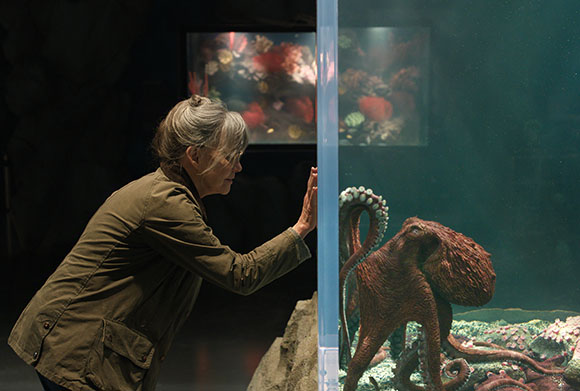
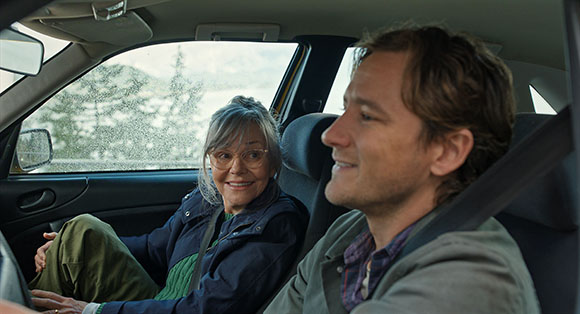
Writer/director Olivia Newman made her feature directorial debut with the boxing drama First Match, and followed that up with the critical and box office hit Where the Crawdads Sing. Her new film, the Netflix release Remarkably Bright Creatures, stars two-time Academy Award–winning actor Sally Field (Lincoln, Forrest Gump) as Tova, a lonely widow who works at a local aquarium and finds joy again when she forms an unlikely bond with Marcellus, a cranky, giant Pacific octopus (voiced by Alfred Molina), and Cameron (Lewis Pullman), a wayward and lost young man who comes to town in search of family. Together, they uncover a mystery that will lead them to a life-changing discovery and restore their sense of wonder.

Behind the camera, Newman assembled a creative team that included cinematographer Ashley Connor, editor Tamara Meem, VFX supervisor Chris Ritvo and colorist Nat Jenks. Here, in an exclusive interview with Post, she talks about the challenges involved, and her love of editing and post.
What sort of film did you set out to make?
“A movie about loneliness and grief, and how it can shape us, and how our connections with people and with animals are so key to our survival. And I wanted the movie to be a movie for everybody, so that anybody watching it could relate to aspects of it and see themselves in it.”
You previously adapted the novel Where the Crawdads Sing into a hit film, but adapting a novel can be tricky. You co-wrote the script for Remarkably Bright Creatures with John Whittington (Sonic the Hedgehog 3). What were the main challenges of adapting this for the screen?
“I felt a little freer with this one to move away from the structure of the book, where each chapter is written from a different character’s point of view. So, we decided early on to root it in Tova’s experience and point of view, and have Cameron enter her story, and cause this commotion and change in her life. In the book, Cameron and Tova’s stories run parallel to each other, and they don’t intersect until much later, and we wanted to have them really influencing each other’s lives and having more direct contact. So, dealing with that was the biggest challenge.”
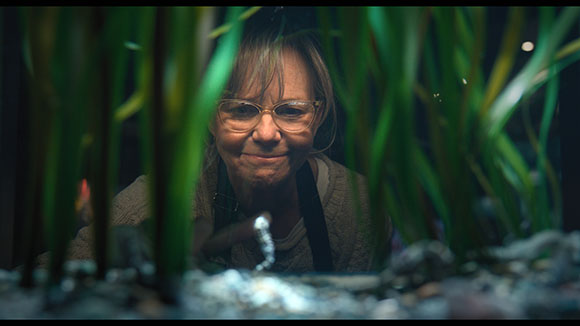
You got a fantastic cast, led by Oscar-winner Sally Field. What did she bring to the party?
“What didn’t Sally bring? She was attached to this before I came on, and she was incredibly involved every step of the way. She read every draft of the script. She gave copious notes. We noodled and improvised on the set. She brought all of herself and her insights into what it is to be an older woman, and everything you want from this character, and she was willing to be incredibly vulnerable and open, and use all of that vulnerability. She also has the most wicked sense of humor.”
What did prep entail, and what were the main technical challenges of dealing with the octopus?
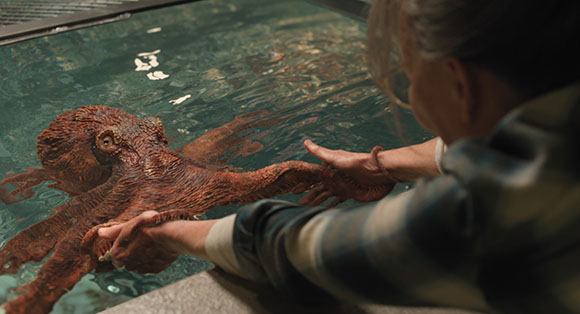
“The most amount of prep we did was on creating the octopus, so we did six months of research and design to figure out exactly how we were going to create an octopus that was as photoreal and grounded in reality as possible. And then it was finding all our locations in Vancouver where we shot.”
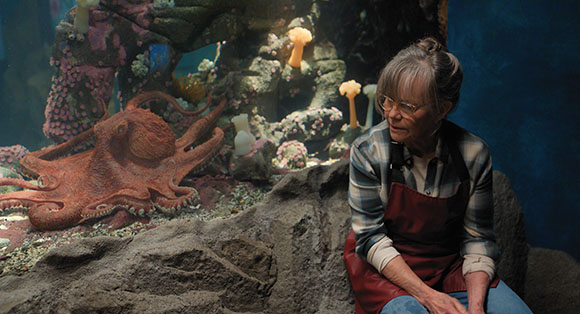
Fair to say that if you couldn’t create a believable octopus, this wasn’t going to work, right?
“Yes, and it was terrifying. The first thing we thought was, ‘Can we just shoot a real octopus?’ But we quickly learned that that would be impossible, because not only are octopuses too smart to be willing to be trained, they’re also moody, so you never know if you’re going to get an octopus who’s interested in touching you and tasting your arm or not. So, then it was: How do we make this octopus look as photoreal as possible, and able to interact with the actors, and give them enough to work with, and have the right lighting references? Because an octopus looks alien. Even in real life, it almost looks unreal, and they’re constantly moving.
“They have hundreds of suckers on every tentacle, and each sucker is moving separately from the other. And I really wanted to make sure that we were never taken out of the movie by a fake-looking octopus. So, once we knew that we had to do this in CGI, we did a couple of things. We cast our real octopus out of the Vancouver Aquarium. Luckily, they had a giant Pacific octopus who was the right size we wanted our CGI octopus to be when we were shooting. So, our VFX team at Untold Pictures, who did all our VFX, shot hours of footage of it in its tank, and when they were animating our CGI octopus, they would do side-by-sides so that everything was based on a real, live octopus. We never had the octopus doing anything that we couldn’t point to a real reference of an octopus doing.
“And then we shot in an actual tank, and we had a puppet built that was about the same size as our CGI octopus that had the same color and similar texture for lighting reference. So, it was a combination of puppet, VFX, and then an actual octopus. And the goal was always to shoot and use footage of the real octopus interchangeably with our CGI, so that hopefully the audience won’t know when they’re seeing the real versus the fake octopus.”
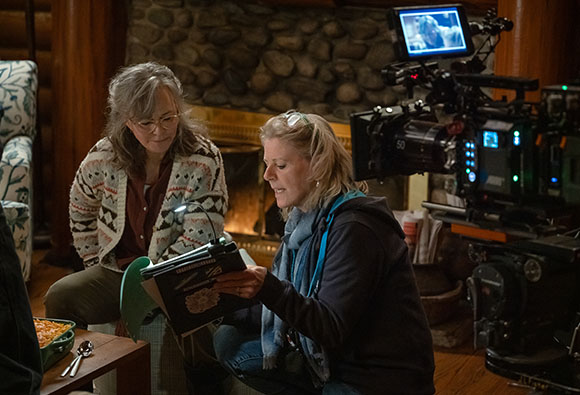
Tell us about the shoot.
“It was a very fast 33-day shoot, and we did also all the underwater scenes in Vancouver. We built our aquarium set on a stage, and then we also shot a couple of nights at the actual Vancouver Aquarium. And for all the underwater photography out in the wild, we had an underwater photographer who went down and shot us plates and tried to capture exactly what I had storyboarded so that we could place our CGI octopus into this real environment.”
Where did you do all the post?
“Here in LA, at Vortex. Post was so important on this because of the octopus and all the VFX, and just generally I think post is a complicated experience for a director. I always say it’s like therapy, because you come in and you unload all the trauma from shooting — all the things that you wish you had done differently or didn’t get, and your poor editor gets an earful. But I’ve worked a lot with my editor, Tamara Meem, who also cut my first movie, and a television show that I shot the pilot for and produced called The Last Thing He Told Me.
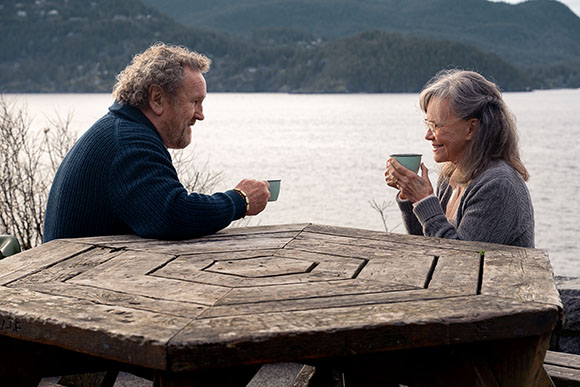
“We have the same taste, and she’s my second set of eyes. She’s incredible with cutting performance, and so it’s a joy to work with her every day, and I did my director’s cut at her house. She cut my first movie that way, and I want that privacy for my director’s cut. We had an amazing post team. Ryan Price was our post supervisor, and he was always 10 steps ahead of us, so we never felt that we were in a crunch. We always had goals set and knew what was coming, and never felt caught off guard.
“So, for this movie, it was actually one of the most pleasurable post experiences, because I really felt that I had a creative team that, while I was shooting, had my back, and was catching things that we might be missing or might want later. So, I came to the edit knowing we had everything that we needed, and we didn’t have do any reshoots, so we really could just focus on getting the best story out of it.”
What were the main editing challenges and how did post help shape the film?
“It’s interesting you ask that as, to get the film greenlit, we had to really be thoughtful about how much VFX we needed. And so we had to trim down as much as we could of the octopus in terms of his involvement in the story. And then, after our first cut, we realized we really loved Marcellus and we wanted more of him. So, the challenge was: How do we keep him present throughout the story with the footage that we’d shot? So, we ended up creating scenes that weren’t in the script. We created them in post just to bring back the octopus and keep him active, without taking away from the central storyline between Tova and Cameron. So, we rewrote part of the movie in post.
“The other amazing thing about post on this movie, and working with a CGI creature, is that you can re-block things. When we were shooting, we would have very specific blocking that we had in mind for the octopus. It had all been storyboarded, and we shot to those specifications, but when we were editing, we could move him around and use shots of the tank, and so we had this freedom that you don’t normally get to re-block one of your main characters. We also wrote and rewrote his voiceover to whatever we needed. So, we had a character who we could continue reshooting and reworking all the way through post, which was amazing.”
Dealing with all the visual effects must have been the heaviest lift for post?
“That was huge and took the longest, from prep all the way to the end, making sure that the octopus looked as real as possible. You have all the movements, color and texture changes, and so many details to pay attention to with the octopus, so that was a big priority. Chris Ritvo and Taylor Rockwell, our VFX producer, were both on-set with us the whole time and we were constantly checking in with them if we decided to change something we had storyboarded, because suddenly the lighting called for a different blocking, or if the actors wanted to do something different than what we had blocked for the octopus. We would have to describe it and make sure that it was going to work.”
How important are sound and music to you as a filmmaker?
“Hugely important. I’m married to a composer and musician, so music is central to my life. And the sound design, particularly with the octopus, was really important. Marcellus has a very specific personality that I wanted to capture through specific instrumental choices, and there was a Mal Waldron song that I loved called ‘Warm Canto,’ that has this bass clarinet that worked so well for an octopus slinking across the floor. We did the Dolby Atmos mix at Sony, and I was able to bring back almost my entire sound team from Crawdads to do the mix.”
Where did you do the DI?
“At Picture Shop with colorist Nat Jenks, who’s worked with my DP for over a decade, so they have a real shorthand. It was just about pushing what was already in-camera. We really wanted to make sure that the aquarium space felt different from the rest of Tova’s life — that it feels slightly otherworldly, as aquariums do. I love the way the film looks and I’m really proud of it. It turned out the way I hoped it would.”
For more on Remarkably Bright Creatures, check out Post’s coverage with VFX supervisor, Chris Ritvo.