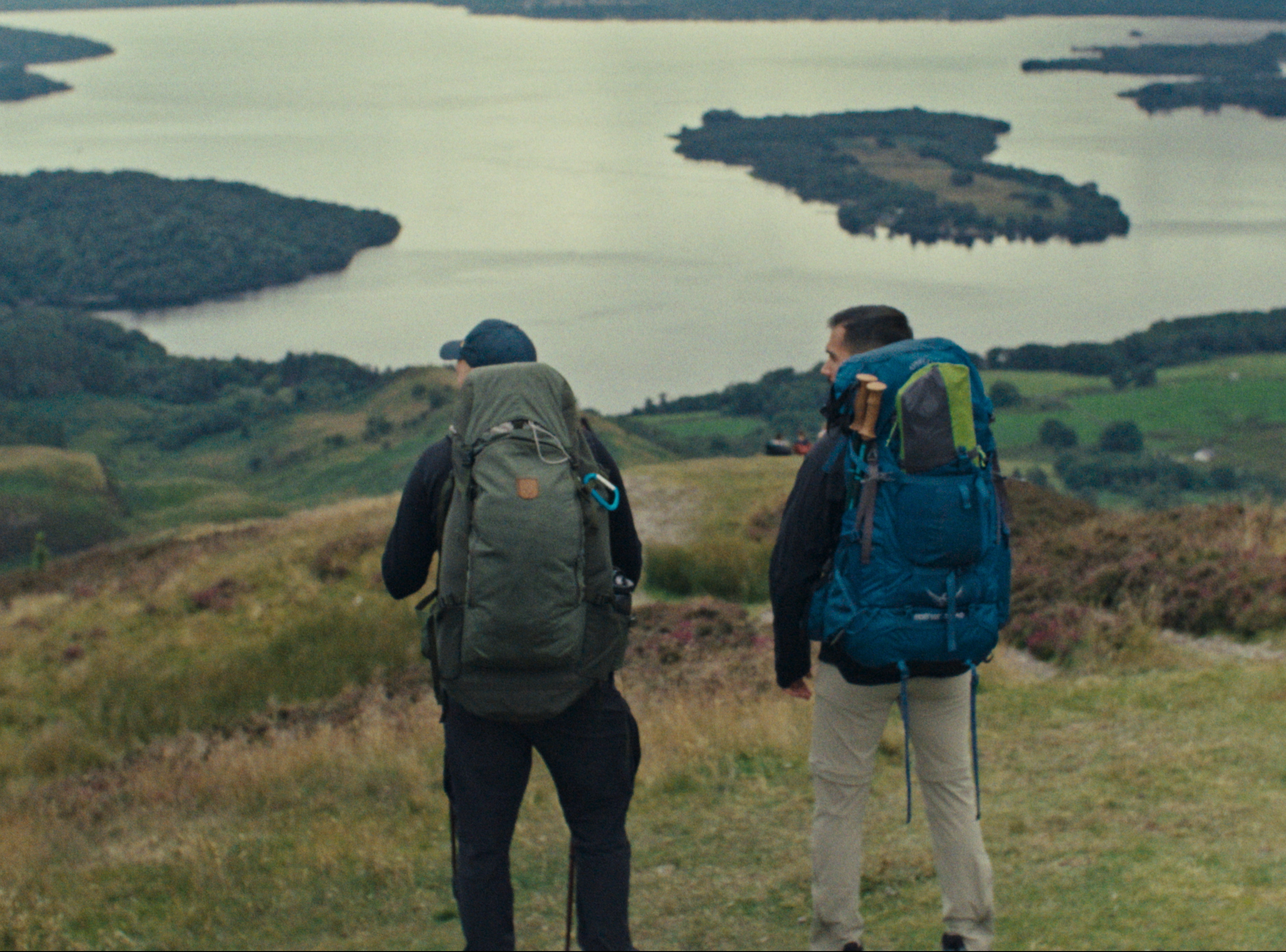
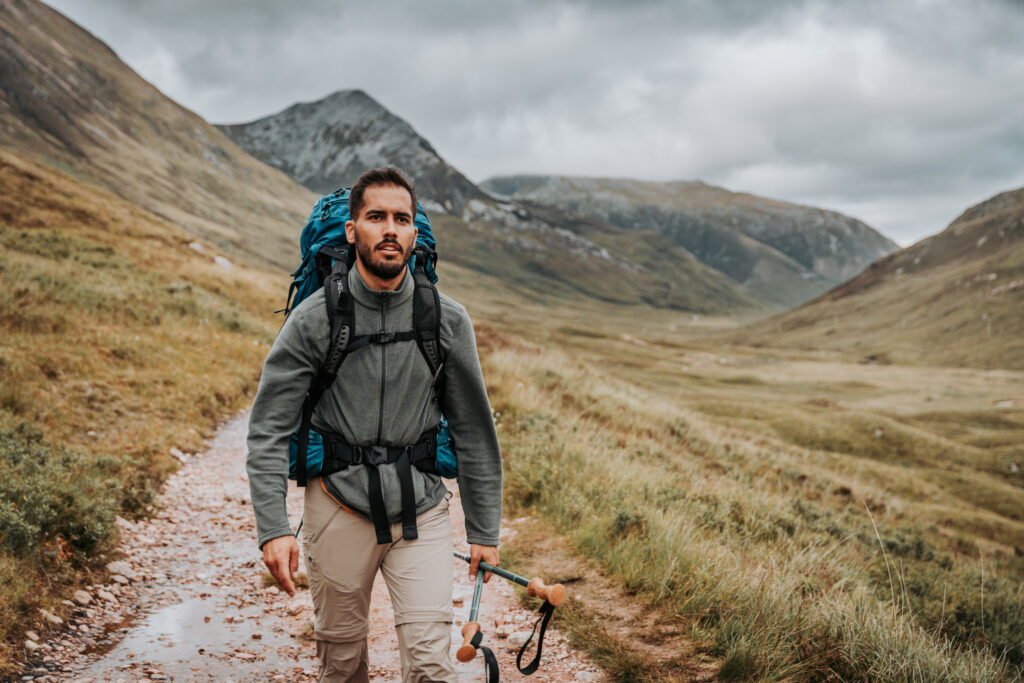
The North is a new feature that depicts the grueling and emotional journey of two friends who reunite after a decade to re-hike Scotland’s 330-mile West Highland Way and Cape Wrath Trail. The feature was shot over 16 consecutive days by a crew of just six. With no additional score, the viewer sinks into the sound of nature.
Bart Harder plays Chris, a Dutchman, while Carles Pulido is his friend, a Spaniard named Lluis. The film was written and directed by Bart Schrijver, who re-wrote scenes each night after shooting wrapped to account for the day’s events. Twan Peeters served as director of photography, having to deal with weather, terrain and ever-changing light. The feature was edited by Gijs Walstra, who cut the entire project using Blackmagic Design’s DaVinci Resolve.
“One of the main challenges of cutting the film was the pacing,” Walstra shares. “It’s a slow burn of a film, leaving lots of room for interpretation and contemplation to the viewer. However, at the same time, I feel as an editor, it’s my job to keep things moving along. The fact that it’s slow shouldn’t mean we allow it to be boring. Finding exactly the right moment to cut in the sometimes very-long takes was very interesting.”
Walstra says a very collaborative relationship with the director helped in overcoming such challenges.
“Bart and I had a great collaboration,” he notes. “We were able to spend a lot of time together in the edit, giving us time to sit with the material, discuss the film and talk about life.”
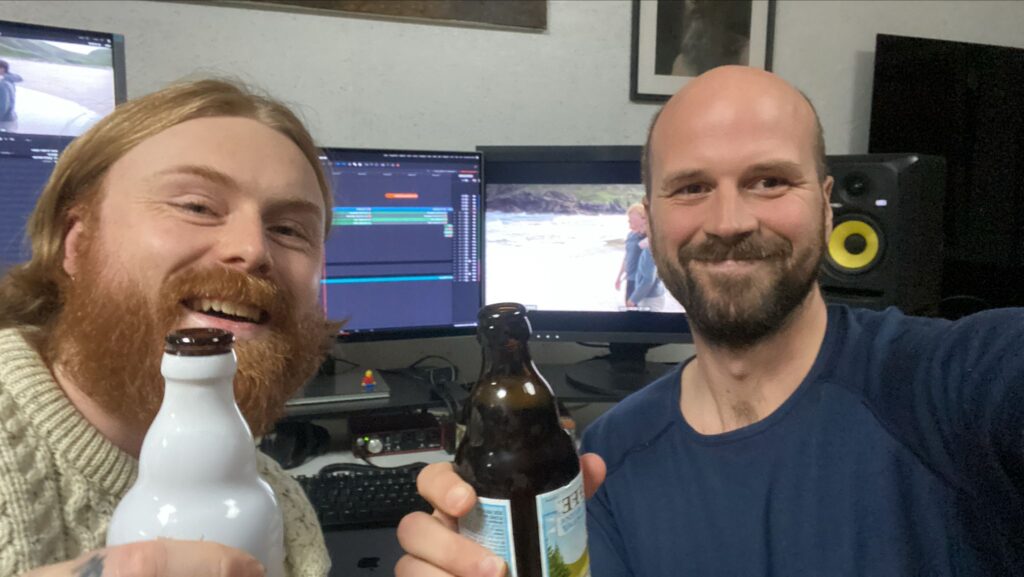
For Walstra, one of his favorite scenes to cut was the one where the main characters are setting up the tent in the rain.
“It was mostly improvised by the actors and shot almost like a documentary, giving me a lot of great material to work with and freedom to cut it in a more loose style than the rest of the film, which fits the frantic nature of the scene. Then, cutting to that moment of pure joy of them eating and playing cards in the tent, you could say that’s the heart of the film.”
Morten Brogaard and Birgit de Priester served as sound designers and re-recording mixers on the project, which was meant to feel real, immersive and gritty.
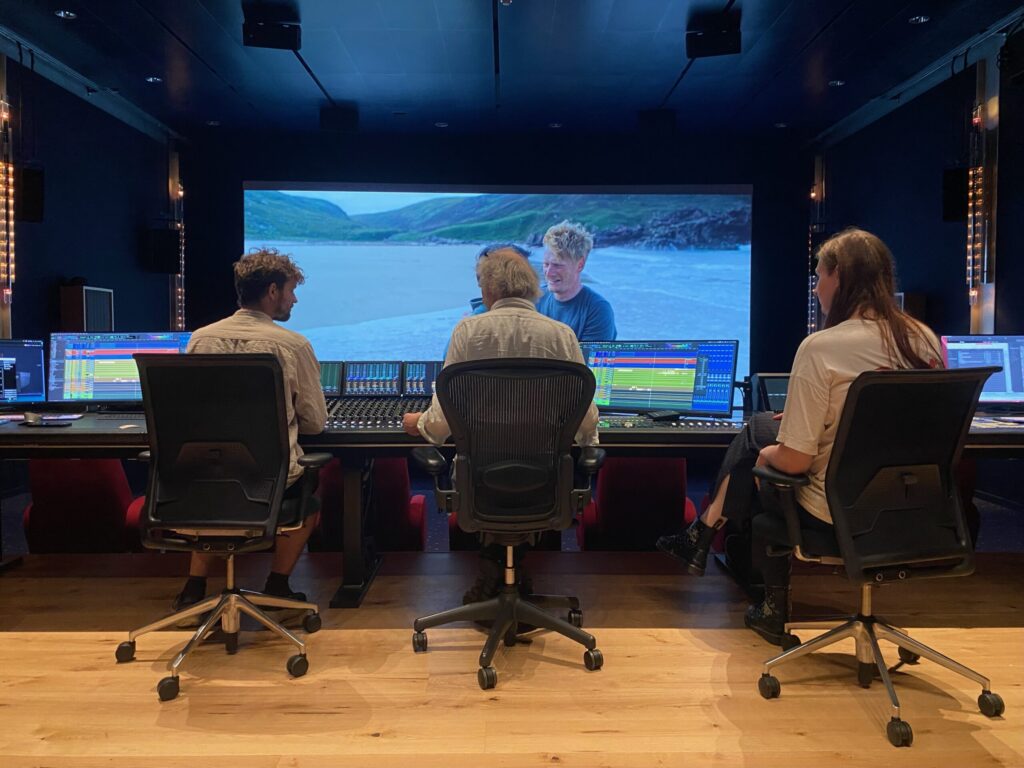
“Sometimes even a little rough and documentary-like, and often quite realistic in its sound,” says Brogaard.
The team uses Reaper recording software for the entire process, including dialogue editing and mixing.
“It’s an incredible tool because it’s so flexible, and our workflow has become really fast,” they note. “Reaper is open, so you can easily code your own scripts and even VSTs, and with things like Claude, you don’t even have to be very good at coding to get something working.”
The team recorded themselves working with screen capture and looked at the things they spent the most time and energy on. Most of these tedious tasks have since been removed with their own scripts.
They also use FabFilter plug-ins for basic things, like compression, limiting, loudness monitoring and EQ. Sometimes they will use the Pro-R reverb plug-in too.
“We found some settings that gave a nice sense of distance to mono sounds,” they explain. “In Reaper, it’s very easy and fast to just put it directly on the clip and, because it’s so light on the computer, we can have hundreds running on hundreds of different clips throughout the whole mix without the Mac breaking a sweat.”
In talking to the director about the general sound of the film, and it quickly became clear that he wanted the distance in each shot – even for dialogue – to feel real, especially in scenes that didn’t call for dialogue.
For the exterior delays they used In-Delay from Sound Particles. And to add a little diffusion to the delays heard in the outside world, they used a new reverb from Echotope called Mirage. Adding it to a scene made it feel much more believable, and they called on it for some of the interior spaces too.
Beyond the plug-ins and software, a big contributor to the sound of The North are sound libraries from Tonsturm and Pro Sound Effects, particularly their wind libraries. But even with great wind sounds from the libraries, it wasn’t enough to cover the entire film, so the pros set out to create their own material, spending months recording and making wind atmospheres before they even started working on the film.
Sounds were recorded in surround and then manipulated in the studio to create more conceptual and stylized winds. Most shots feature a lot of wind, so the rare times there is no wind or rain, they feel, are very freeing.