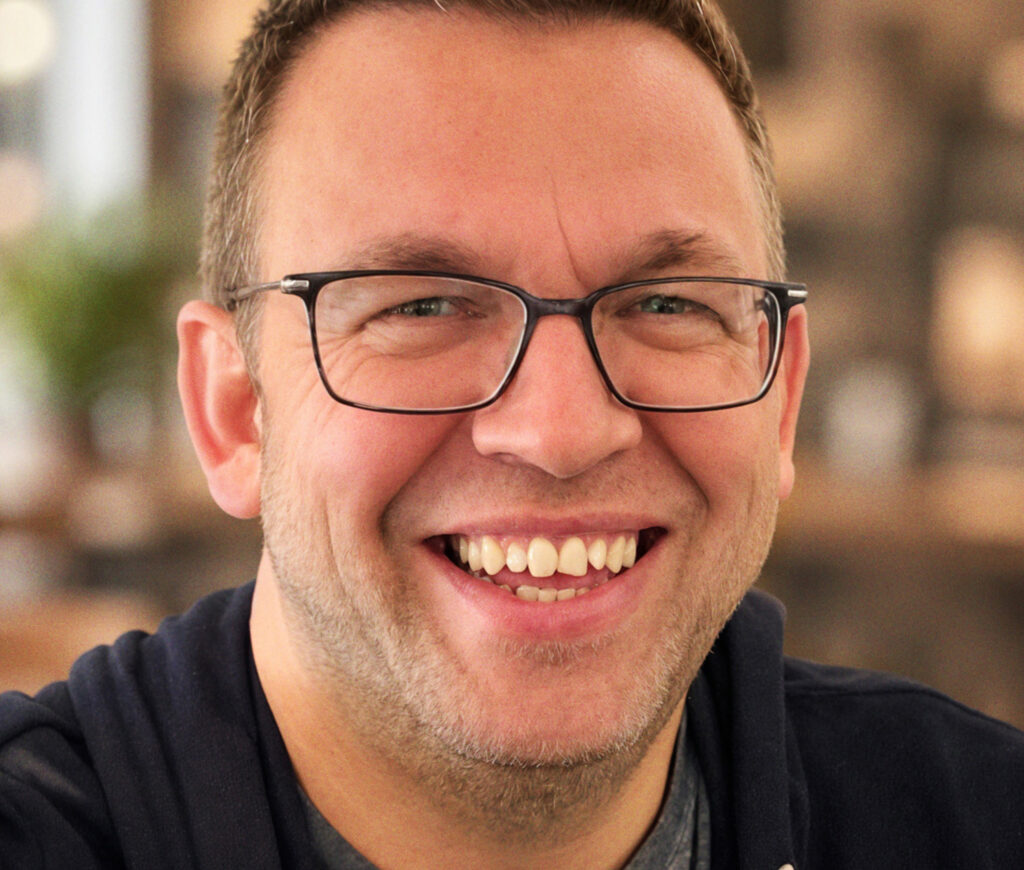
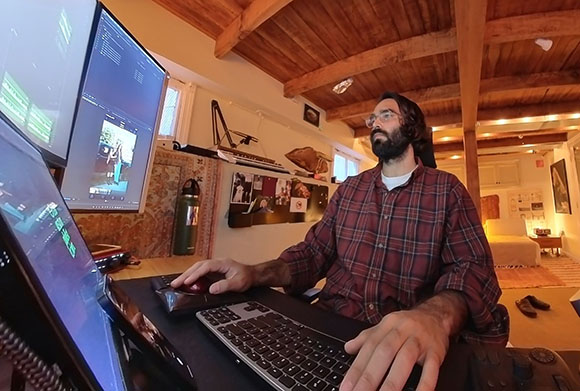
Originally from Rio de Janeiro, Brazil, Kauai is a film and video editor based in Portland, OR. As part of the editorial roster at Leap Year (www.leapyearpost.com), based in Brooklyn, Kauai’s experience spans a wide range of content, with an emphasis on commercials and documentary style branded content. Kauai’s talent has attracted collaborations with top brands that include Ugg, Amazon, FitBit, Meta and Lancôme. A signature of Kauai’s editing style is his profound use of sound to enhance narrative flow, making each piece not only visually striking, but also a rich auditory experience.
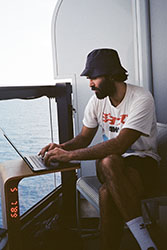
Here, he shares insight into his style and influences, as well as advice he’d offer to aspiring editors.
What first drew you into editing and storytelling, and when did you realize it was something you wanted to pursue professionally?
“Honestly? Jackass. As a teenager in Rio, my friends and I made our own horrible version of it – unhinged stunts, a lot of stuff I won’t describe in print. That was the first thing I ever cut. I’d known I wanted to make films since middle school. I was part of my school’s channel, always shooting something. And I was obsessed with VFX, muzzle flashes, After Effects, living on Video Copilot tutorials. The shooting was the fun part. That was all friends and chaos. But the editing I did alone, and that’s the part that stuck. What pulled me in was the experimentation, and the fact that I got to do it behind closed doors. That’s never changed. I’m a natural-born hermit, and editing is the perfect job for one. For the most part.”
Tell us about your background and education? Did you have any mentors or major influences early on?
“I’m from Rio. I went to an American school there, so I grew up speaking English, and my parents always wanted me to study abroad. I applied to two film schools in the States – Chapman and Emerson. I was sure I’d get into Chapman. I’d done a summer program there and had a recommendation letter from one of the professors. I figured Emerson was a long shot. So of course I got Emerson, not Chapman. I lasted a year in Boston. The cold was brutal, but the real reason I left is that my dad couldn’t afford to keep me there. I moved in with my mom in Inglewood and enrolled at the Art Institute in LA, mostly to hold my visa, while working an office job, testing video games and translating them into Portuguese to get by.
“The irony is that I got my real film education from Chapman anyway. My best friend, Tadeu Bijos, one of the best writers I know, went there, and I’d tag along on his sets. Almost everything I learned, I learned on Chapman sets I wasn’t enrolled in. That, and three weeks interning with an editor at a production company when I was in high school, sitting in on his sessions and assisting. My keyboard shortcuts are still his to this day.
“As for influences, the one that rearranged something in me was an experimental musician named Boris Hegenbart. I found him deep in a SoundCloud rabbit hole, and his music was so peculiar and fragmented and sound design-driven that it made me want to cut to it. It felt like the inverse of editing, starting with his sound and building images to match. That’s still how I think a lot of the time.”
Looking back, what were the key moments, opportunities or decisions that led you to where you are today?
“The turning point was a reel. At the Art Institute, a class had me make a mock commercial. A friend was sponsored by Loaded, the skateboard brand, and I had this idea to do a moody, black-and-white, sensory spot – a Jonathan Glazer-ish skate commercial – fully sound-designed, strange soundscapes. People reacted to it in a way I hadn’t seen before. So, I made a whole reel in that register, re-sound designed my favorite scenes from things I’d made – everything moody and dense with sound – and posted it online. I’d scored it with Boris Hegenbart’s music.
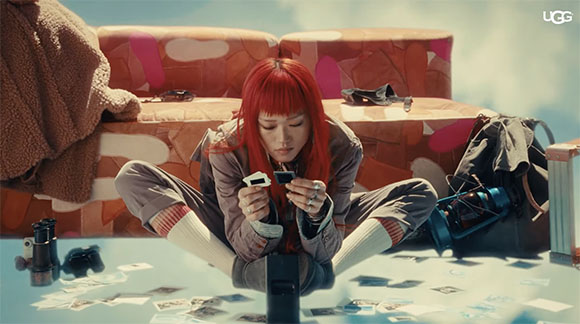
“Two things came out of that one reel. The first changed my career. My partner at the time worked for an agency that was starting to do Ugg’s spots, and she slipped my reel into the pile. They picked it. That kicked off seven years of directing and editing for Ugg, and opened the door to most of the work that followed.
“The second thing is the one I think about more. Boris himself found the reel – the man whose music made it – and reached out. He loved it and wanted to collaborate. We planned an entire film: a movie about plants, shot entirely on an endoscope. He even designed a custom microphone for me to use. I started shooting it. And I never finished it. One of my biggest inspirations reached out to make something with me and I let it slip. I still hate that I didn’t follow through. It’s the most useful regret I have. It’s why I finish things now.”
What inspires you creatively, both within and outside of film? Are there filmmakers, artists, musicians or experiences that continue to influence your work?
“Sound, mostly. And music. During the second or third pass of an edit, I start experimenting with music that doesn’t match the mood of what I’m editing. I’ll put on something completely unrelated just to see what it does to the pacing, to shake a rhythm loose. A lot of ‘80s funk for that. George Benson, that kind of thing. I’ve never cut anything to it, but it helps me find a pulse I wouldn’t have found otherwise. There’s an album I keep returning to lately, ‘Cidade Grande’ by Guerrinha, who’s from Rio too, this nocturnal, lo-fi, midi-jazz thing. There’s a track called ‘Adulto na Cidade Grande’ (‘Adult in the Big City’), and it’s become a private soundtrack for me: music for watching the adults move through a big city from a distance. I dream of cutting to it. Same with Sam Gendel’s ‘BlueBlue,’ though I’m almost afraid to say that one out loud, because I’m saving it for something.
“That watching-from-a-distance thing goes back to childhood. I collect binoculars, and my partner and I used to sit and watch life unfold through them: birds, plants, strangers, lovers, arguments. The films I’m proudest of are shot from across the street.”
You’ve worked across a wide range of projects and clients. Are there any recent pieces that feel particularly representative of where you are creatively right now?
“Honestly? Not really, and I think that’s the honest answer. Almost everything I care about right now is mid-process. Nothing’s finished, nothing’s out. I’m in that in-between phase where the work that actually represents me is still sitting on a timeline. The thing eating up all of my creative energy is a feature I’m cutting, and until that’s done, I don’t think I could point at anything and say, ‘That’s me right now.’ Ask me in a year.”
How has your perspective on editing evolved over the course of your career?
“When I started, I thought editing was a solitary thing – just me and the footage. And I still love that part. Getting lost in it alone is the whole reason I do this. But I used to think that was the entire job, and it isn’t. The real work is collaborative. You’re usually the last one in, and by the time you open the timeline, everyone else has been living with the thing for months. Learning to build with people instead of just executing in my cave is what’s made the work feel meaningful. The cut gets shaped as much by the conversations as by anything I do alone.
“The other thing that’s changed is my relationship to my own style. I’m known for a certain sound-driven, moody way of cutting, and for a long time I leaned on it hard. It was the thing that made me me. But at some point it started to feel like a formula. And the second something feels like a formula, it stops being fun, and I think it stops being good. So lately I’m trying to push out of it. It’s still very much who I am and how I cut, but I’m more aware of when I’m reaching for it because it’s right versus reaching for it because it’s familiar. I think when I was younger, I would’ve called that signature an achievement. Now I think the more honest thing is to keep making yourself a little uncomfortable.”
What advice would you give to aspiring editors who are trying to build a career in today’s industry?
“Be around it. I learned more tagging along on sets I had no business being on, sitting in on edits, just being near people better than me and watching how they worked. Pay attention to everything.
“And finish things, then actually put them out. When you’re young, you think the opportunities keep coming, that you can let one go and catch the next. But the ones you don’t finish are the ones that stay with you. I had a chance early on to make something with one of my heroes, and I let it slip. I still think about it.
“The flip side is just as real: my whole career started because I posted one reel, and I’ve gotten worse at that part. I barely share my work anymore, which in this industry is a problem, and something I’m trying to relearn. Make the thing, finish the thing, show the thing. The talent matters less than you’d think. Following through is the rare part.”
Looking ahead, what kinds of projects, stories or creative challenges are you most excited to take on next?
“My first feature, which I’m still in the thick of, is a fiction film entirely in Mandarin. I don’t speak Mandarin. I spent a month in Chengdu with the directors, and when the footage came in, there was barely any translation, so I just started cutting based on what I could see: body language, timing, the way a scene felt. I had no idea if I was getting it right. When the translations finally came in, it mostly lined up, which honestly shocked me.
“It’s the most challenging thing I’ve ever cut, so right now what’s next mostly means finishing this one and finishing it well. I’d like to keep doing more of this: more features, more ambitious ones, people who push me. But the thing I keep meaning to get to is smaller, and it goes back to those binoculars I mentioned. Years ago, I shot an entire film through them and never cut it. Nobody’s asking for it, which is exactly why it never gets done. I’d like to change that.”