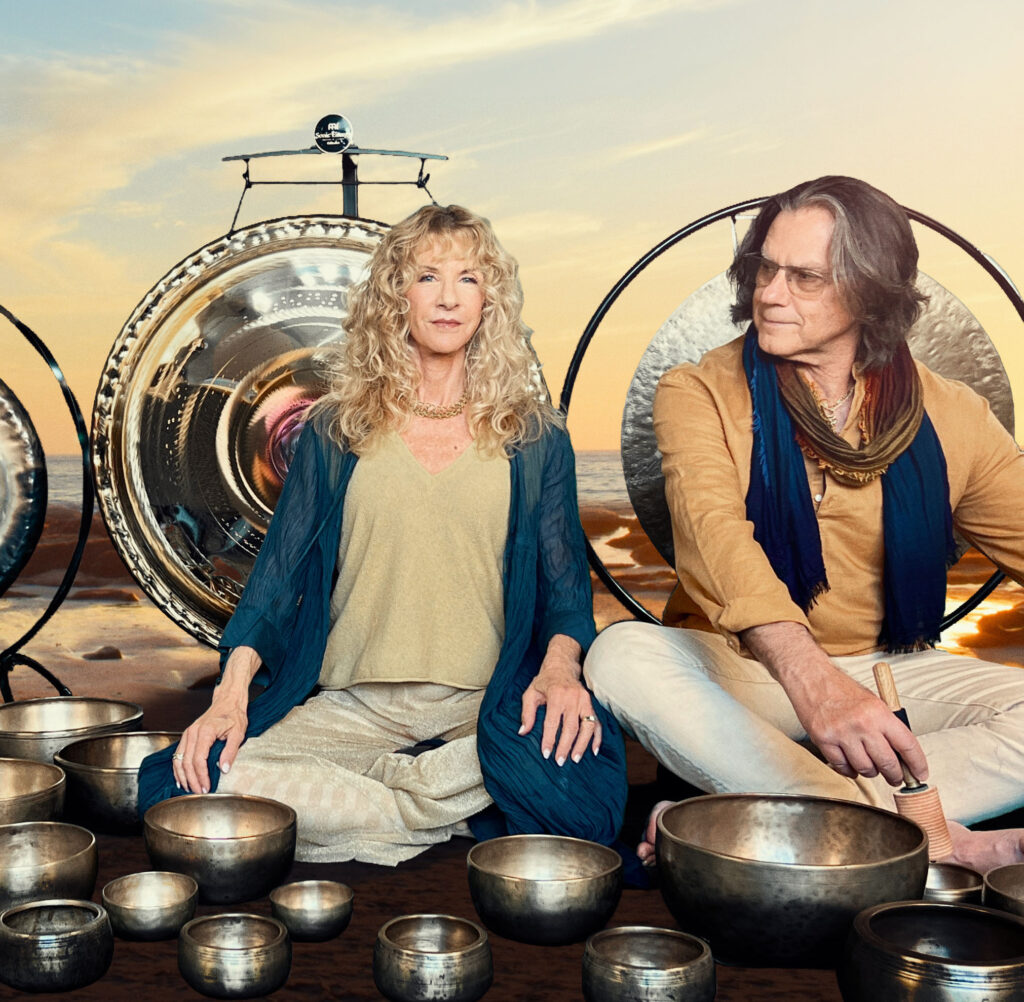
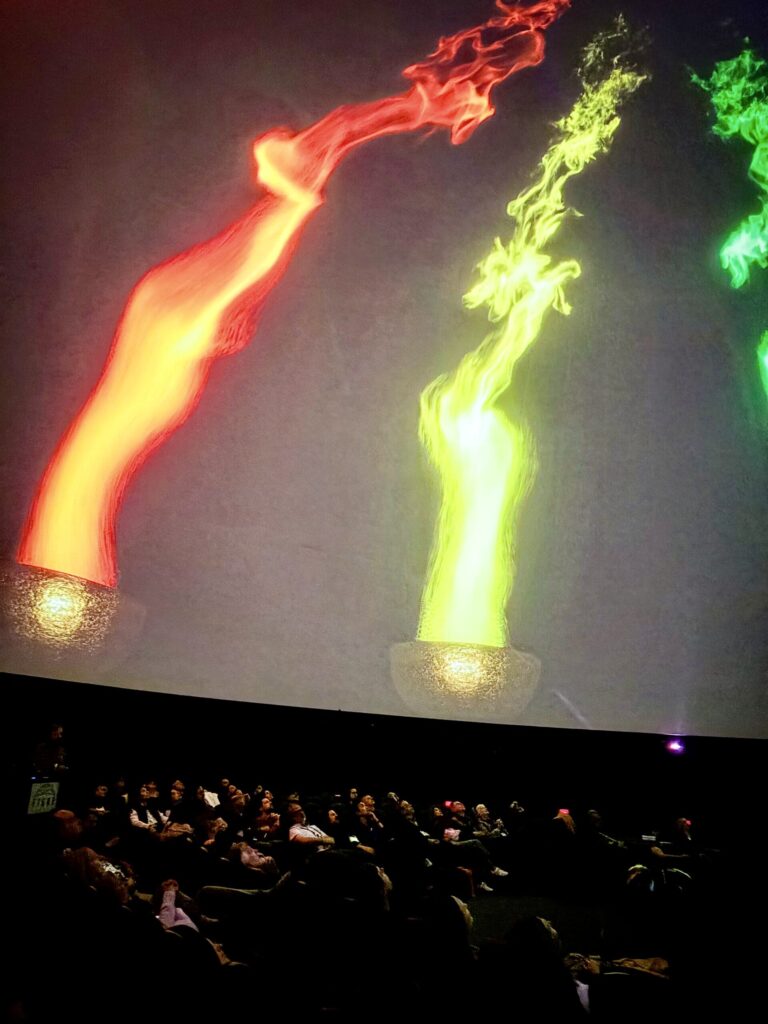
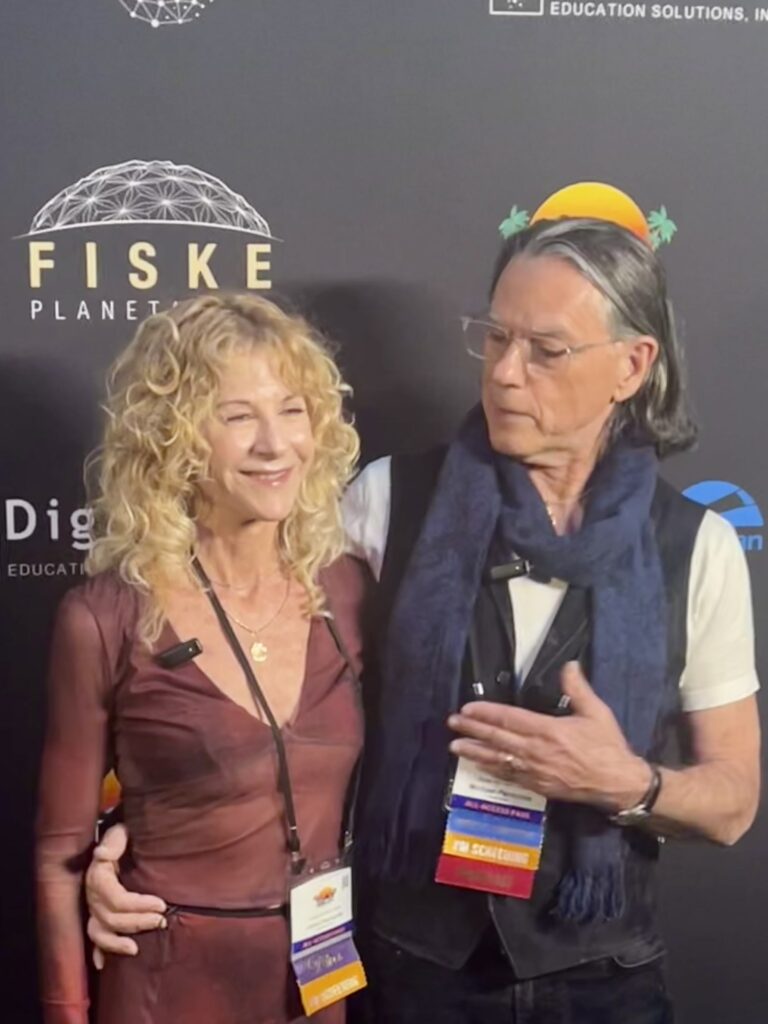
The Journey: From Formless to Form is an immersive experience of sound, vision and expanded awareness. The project is the creation of couple Michael & Jahna Perricone, who are composers, co-writers and co-producers. The Journey: From Formless to Form appeared at the Fiske Planetarium in Boulder Colorado back in April and is now in consideration for a Grammy nomination. The couple recently shared insight into their work with Post.
What is The Journey: From Formless to Form, and how can readers experience the album for themselves?
Michael: “We created The Journey: From Formless to Form with a simple intention: to offer an experience that is opening, inspiring and transformative – one that might even elicit a touch of awe. Above all, we curated it so that each person is invited to take their own unique journey, one where you aren’t told what to feel or where to arrive, but are given the space to meet whatever rises in you and let it unfold in its own time.
“It’s both an album and a full-dome film. I mixed both in Dolby Atmos spatial audio to enhance the possibilities of fully immersive entertainment and transformation.”
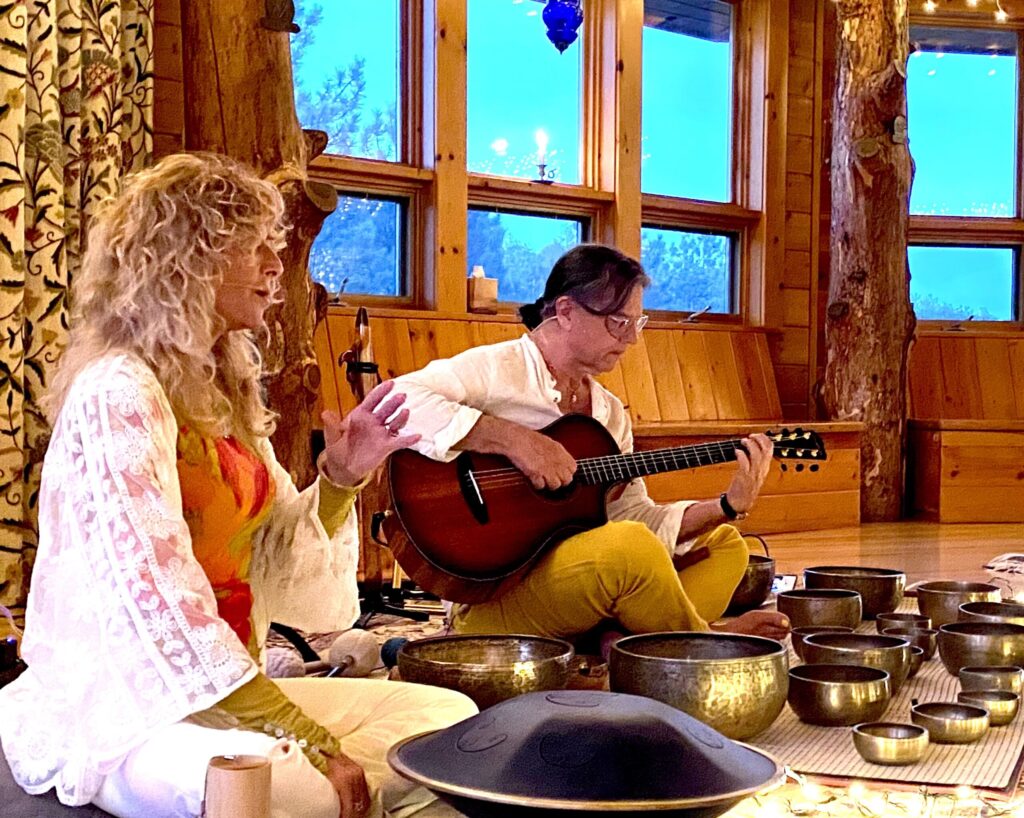
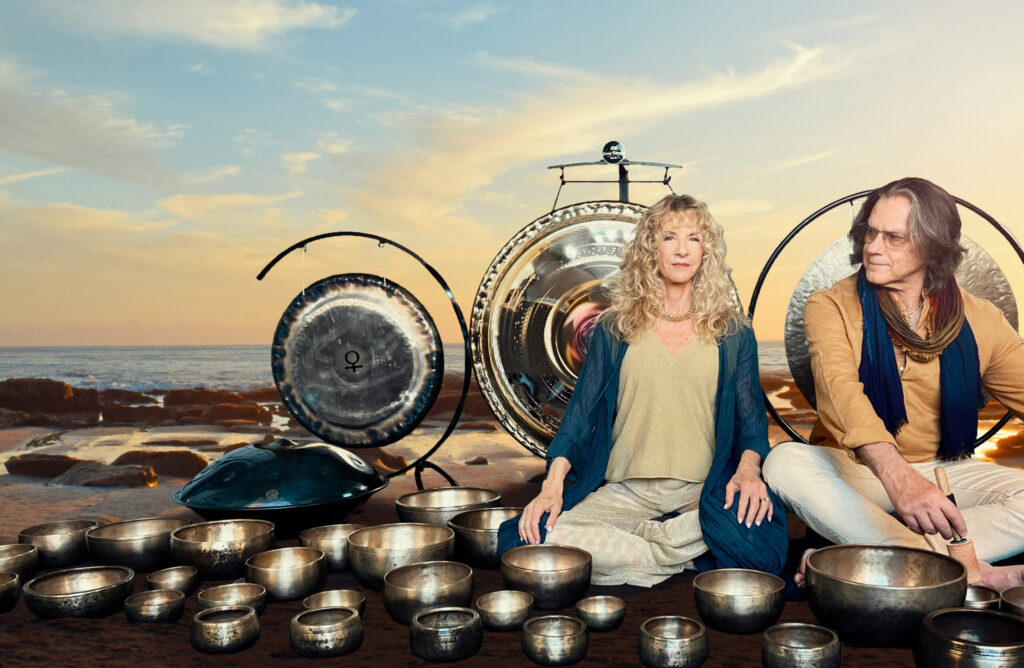
Jahna: “Honestly, The Journey started with a simple meditation. I was sitting there listening to Michael play his ancient Himalayan singing bowls live – they’re all between 300 and 600 years old – and suddenly this whole sonic, somatic, immersive feeling just dropped in. The entire arc of the music and the film arrived in an instant! Because it began from a formless state – an idea – and then became one of form – an immersive soundtrack album and film – it’s almost a meta-example of its own creation.”
Michael: “The Journey is a story about life – as we come into being on this planet and live our lives. Hopefully the music and sound design encourages each viewer to see themselves in their own journey.”
Michael and Jahna: “We composed the whole soundtrack, imbuing it with frequency and binaural beats, either coming from the singing bowls on their own or as part of its fully orchestrated score. In fact, there’s very promising science suggesting that when people are immersed in these tones, it enhances wellbeing, creativity, inspiration and states of awe.”
Michael: “We just signed a global distribution deal and so The Journey film will be coming to a planetarium near you soon! In the meantime, The Journey soundtrack album can be found on all the usual streaming outlets: iTunes Store, Spotify, etc. as well as our website: https://www.michaelandjahna.com.”
Jahna: “And we’re humbled and excited that the album has been submitted for a Grammy in the Best New Age, Ambient or Chant category. That’s been a beautiful journey of its own.”
Michael, tell us about your background as a supervising sound editor and re-recording mixer.
Michael: “I fell in love with sound at 13 and went looking for a studio job at age 19. I had a list of 300 recording studios in Los Angeles and proceeded to knock on a lot of doors. At one of them, which happened to be a music scoring stage, I noticed the owner would come out when the receptionist went to lunch. I waited for the next lunch opportunity and went in and met the owner, telling him I was ready to be in the starting line-up. He said he would give me a chance as an assistant, and told me to come back at 8am on Friday. So I came in and I set up for a full rhythm section: piano, bass, guitar, bass, drums and percussion. At 10am I tore that down and set up for strings. At noon everyone went to lunch, but I tore that down and set up for a brass section. Finally, at 6pm I set up for vocals and we recorded Alice Cooper until almost midnight. What a first day! Apparently it went well, because I got the job. Within a few months I was an orchestra scoring mixer. Orchestra scoring was in its waning days, so I later made the switch to post production sound design and mixing for more work opportunities. I love it and I’m still doing that today.
“Some of my favorite credits are the movies Hit and Run, with Kristen Bell, Bradley Cooper and Dax Shepard; Tully with Charlize Theron and directed by Jason Reitman; and Lear Rexstarring Al Pacino. In the middle of my mixing career, I took a break from sound for a few years to become a screenwriter, writing for shows like Star Trek: Voyager and Charmed. But I missed sound too much, so I went back to it.”
How did that background prepare you for your work on The Journey?
Michael: “Honestly, my whole career has been a kind of set-up for this project. I started out in recording studios in my teens, and then spent years as a scoring and post production mixer. What that gave me was a feel for how sound lives in a space. When you’ve spent decades shaping how an orchestra or a film mix surrounds a listener, a full-dome film in Dolby Atmos and 7.1 feels less like a new challenge and more like the place all of it was heading. You’re not mixing for a screen anymore. You’re building a room the audience steps into.
“The years I spent as a screenwriter helped too, more than I expected. The Journey has a real arc, from formlessness to form, and I think of the sound as the thing that carries people along it. Knowing how a story opens up, builds and lands made me approach the mix as ‘storytelling’ rather than just technical craft.
“And working on films taught me that the quietest choices often matter most. A shift in texture, a moment of silence, a voice that arrives at just the right time can change how someone feels without them knowing why. That’s exactly what we wanted here, since the whole point is to help people let go, listen deeply and feel lifted into clarity. So the technology is impressive, but it’s really just the vehicle. My background gave me the tools, and The Journey gave me a reason to use all of them at once.”
Jahna: “For me, it’s really about the two worlds I live in: the voice and the stillness. I’ve spent most of my life as a vocalist, singing everywhere from SXSW and Walt Disney Concert Hall to LACMA and other world museums, to small, intimate gatherings around the world. Those rooms are very different, but they teach you the same thing: a voice can change the feeling in a space before anyone has processed a single word. You learn to listen as much as you sing. When Michael and I were creating The Journey, this instinct guided me constantly. I wasn’t asking how the voice should sound. I was asking what it should do for the person listening.
“The other half is mindfulness. As a certified UCLA Mindfulness Facilitator, and through my private studio, I’ve guided a lot of people through the process of slowing down, softening and coming back to themselves. That’s the arc of The Journey, from formlessness to form. It mirrors what happens when someone can soften the noise and start to feel more clear about who they are and what they want. So, I thought a lot about pacing, about where to leave space, and about how to invite people in rather than tell them where to go. Even being a featured soloist in Lear Rex, with Al Pacino, taught me something: a single human voice, placed with care, can carry strong emotional weight.
“In a full-dome film, with surround sound all around you, that’s even more true. The voice can surround you, or it can feel like it’s coming from inside you. Since Michael and I are partners in life and sound, we wanted to create something that doesn’t just play for people, but opens something in them, so they leave feeling connected, empowered and ready to move toward what they truly want.”
Tell us more about the soundscape in The Journey. What were the key technical and creative considerations?
Jahna: “The Journey’s soundscape is truly its foundation. It is grounded in this. Because the story is anchored in the music, tones and it’s sonic arc, we were able to create the film around the music. Because we were nourished from the sounds, it was easy to develop The Journey’s story line. I’d love to give a shout-out to our incredible team at this time, because we all worked together in different capacities to make the film what it is today! Ed Lantz, Kate McCallum and Brianna Amore! We couldn’t have done any of this without them!”
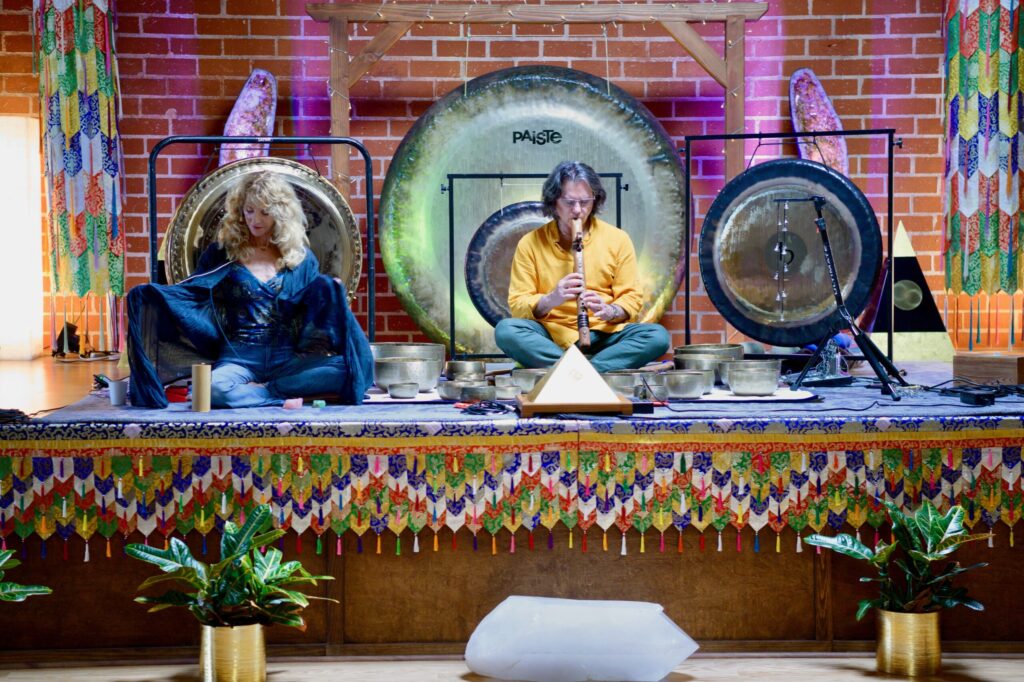
Michael: “Storytelling through sound has become a natural for me. When Jahna and Kate came up with the story for The Journey, I was instantly able to hear the soundscape in my head. As a start, I put together about an hour of music, both from pieces that Jahna and I created, to new pieces inspired by the story. We got together as a team and had to choose the final selections. The biggest hurdle was that we had too much music!”
How did mixing the sound for the film to play in an immersive dome/planetarium setting affect your approach?
Michael: “Creating a soundscape for immersive media requires a delicate hand. Everything has so much more effect in a dome or in immersive headphones. I chose sounds that would complement the music without demanding too much attention. I mixed it in a Dolby-calibrated theatrical stage at Smart Post West. The biggest issue with domes and planetariums is that there’s no standardization for sound systems. Some are 5.1 surround, some are 7.1, and some are odd formats. So, I endeavored to make a mix that would play in as many venues as possible. I’m currently working with members of the International Planetarium Society to create a standard for playback systems in the spherical environment.”
Considering The Journey’s spiritual roots, what made music and sound the appropriate tools for conveying these ideas?
Michael: “The world is sound. We are all vibrating. The cosmos is vibrating. You can’t see or hold sound, and yet it moves through you and changes how you feel. That’s why nearly every spiritual tradition has used sound, whether through chant, bells, drums or singing bowls. I’ve spent years working with Himalayan singing bowls, and what always strikes me is how they bypass the thinking mind. Nobody has to understand a bowl for it to work. You just feel the vibration settle in your body. It was natural to reach into that vibration to convey the soul’s journey. The film moves from formlessness to form, just as sound moves from random fluctuations to coherent tones. Organized sound is music. The audience experiences the idea of formation physically, which is much more powerful than being told about it.”
Jahna: “Yes, and vibration comes in a zillion forms! For me, I personally identify vibration as it moves through my voice and through my body. Michael spoke so beautifully about the expansive, profound nature of sound in general, and it got me thinking how my own body, mind, emotions and spirit are all part of the complete creation of sound through voice.
“I’m always remembering one amazing phrase I was taught: When we sing, our sound vibrations alight on an imaginary length of breath. And the word ‘breath’ traces back to the Classical Latin spirare, which comes from the root for ‘spirit.’ I am moved by how it all circles back to this one constant we share, which is vibration: the vibrations we feel, hear and sometimes even see, regardless of how we individually connect with it – vibration itself is the constant.
“Mindfulness has worked similarly in that when we bring awareness to something, and we embrace it with a sense of being open, curious and willing. We can find ourselves in yet another vibration of awareness, one that can open us to deep relaxation, inspirational and creative states.
“Sound creates a beautiful invitation in which to explore ourselves on many levels. When people tell us they felt something open up in them during The Journey, it’s rarely because of something they thought. It’s something they felt.”
Michael: “That’s really the heart of it. These ideas are about clarity, inner power and becoming who you are, and those aren’t things you can argue someone into.”
Jahna: “Right. Music and sound let people have the experience first, and the understanding follows.”